
A housing agent’s planner prompt is editable by case aides in a low-code console. What should security enforce?
Select an answer to reveal the explanation.
Short Explanation
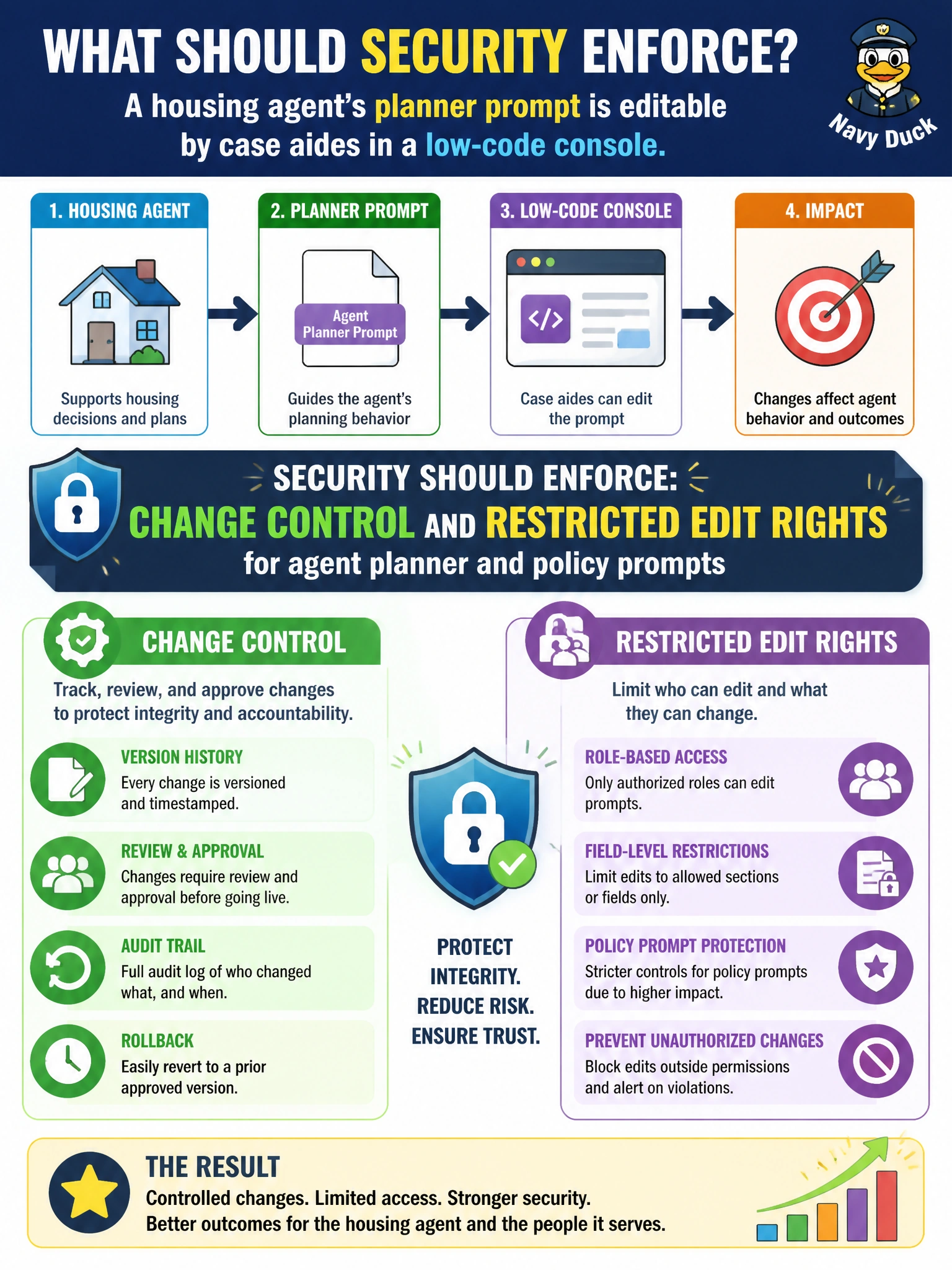
The planner prompt is the agent’s brain stem — you do not hand the edit button to every desk without change control. Lock who can change planner and policy text in that low-code console. Casual edits there can rewrite how casework agents behave overnight.
Full Explanation
A housing agent’s planner prompt that is editable by case aides in a low-code console is a privileged control surface governing goals, tools, and safety behavior. Security should enforce change control and restricted edit rights for agent planner and policy prompts so only authorized roles can alter the agent’s cognitive and policy configuration. In housing authorities, unreviewed prompt edits can disable guardrails, add dangerous tools, or change eligibility logic without the oversight applied to production code.
Allowing any aide to paste unrestricted shell tools into the planner fails by concept: it lets low-code users escalate the agent’s capability set without security review. Publishing the live planner prompt on the housing authority’s public site discloses internal policy and tool instructions that aid prompt-injection and abuse. Letting aides disable safety policies from the same low-code panel collapses separation of duties between case operations and safety governance.
Exam caveat: change control for prompts is configuration governance; runtime enforcement of tool allowlists and safety policies must still exist so a bad prompt edit cannot unilaterally re-enable blocked tools. Operational check: verify only designated prompt admins can edit planner/policy prompts, require ticketed approval for changes, attempt an aide-role edit and confirm denial, and ensure safety-policy toggles are not exposed on the same low-code panel as routine case fields.