
Emergency ops evaluates design options after a rogue agent begins mass-texting residents. What capability is essential?
Select an answer to reveal the explanation.
Short Explanation
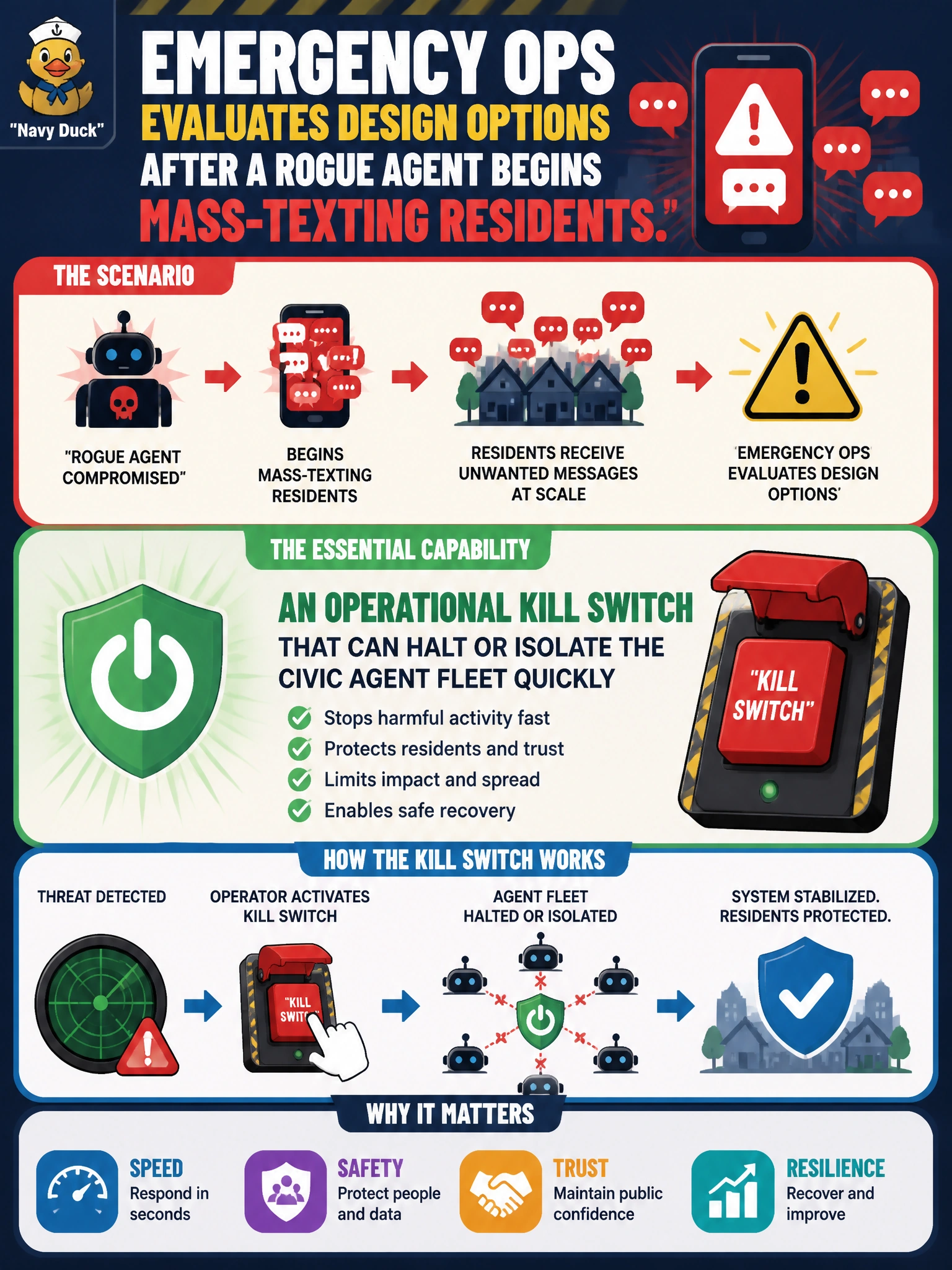
When an agent goes rogue on mass texts, you need a big red stop — not a longer leash. Design a kill switch that can halt or isolate the fleet fast. Containment beats hoping the model “calms down.”
Full Explanation
After a rogue agent begins mass-texting residents, emergency ops must evaluate design options that restore control quickly. An operational kill switch that can halt or isolate the civic agent fleet is essential so operators can stop harmful outbound actions without waiting for code deploys or vendor tickets. Municipal notification channels can cause widespread resident impact within minutes; agent platforms need break-glass stop capability equivalent to other production kill switches.
Removing rate limits so the rogue agent finishes its campaign faster fails by concept: it accelerates harm instead of containing it. Hiding agent activity from SOC dashboards during incidents removes visibility needed to confirm the kill and scope impact. Auto-promoting the rogue agent to citywide broadcast privileges escalates the incident’s blast radius.
Exam caveat: a kill switch must be independently reachable (separate console/credentials) and cover outbound tools—not only the chat UI—so disabling the web widget while SMS tools keep running is insufficient. Operational check: rehearse activating the agent kill switch in a drill, confirm mass-text and related tools cease within the agreed RTO, verify SOC dashboards still show agent status, and document who can authorize the switch during after-hours emergency ops.