
Your team wants an AI agent to plan a feature before any code is written. The plan must be reviewable and approvable by humans before implementation begins. Which GitHub artifact is best suited to serve as the planning surface where the agent records structured tasks that humans can inspect and approve?
Select an answer to reveal the explanation.
Short Explanation and Infographic
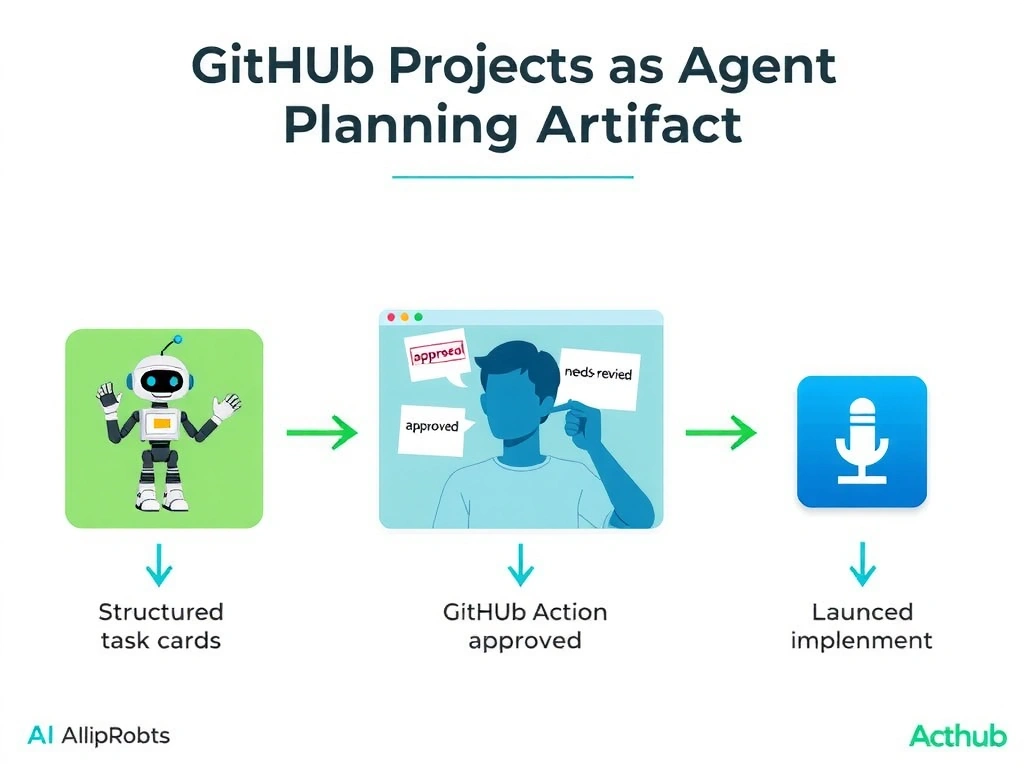
Think of GitHub Projects as the whiteboard in a project war room — it is visible, linkable, and humans can comment or close cards before anyone picks up a tool. The agent writes the plan as Issues on the board; a human approves by moving a card or adding a label, which then triggers the implementation workflow.
Full explanation below image
Full Explanation
GitHub Projects is the correct planning surface because it provides a human-readable, human-interactive view of every task an agent intends to perform. The agent can create Issues with structured metadata (labels, assignees, milestone), and a human reviewer can inspect, modify, or reject individual items before clicking 'approve'. The implementation workflow listens for a specific label or project-column event to proceed.
Option A (workflow artifact ZIP) is a valid output store for machine-readable data, but it is not interactive — a human must download and unzip the file to review it, and there is no approval gate built into the artifact system.
Option C (README.md on the feature branch) requires a pull request review cycle and is a poor fit because it conflates documentation with planning, and the branch itself is a work-in-progress container, not a planning space.
Option D (environment variable) stores data but is invisible to humans without navigating to settings, provides no comment or approval mechanism, and is read-only from the workflow perspective — it cannot be modified by a reviewer without admin access.
Using GitHub Projects as a planning artifact aligns with the SDLC separation principle: the analysis agent populates the board, a human validates it, and only then does the implementation agent begin work. This prevents the anti-pattern of planning and executing in the same unreviewed LLM call.