
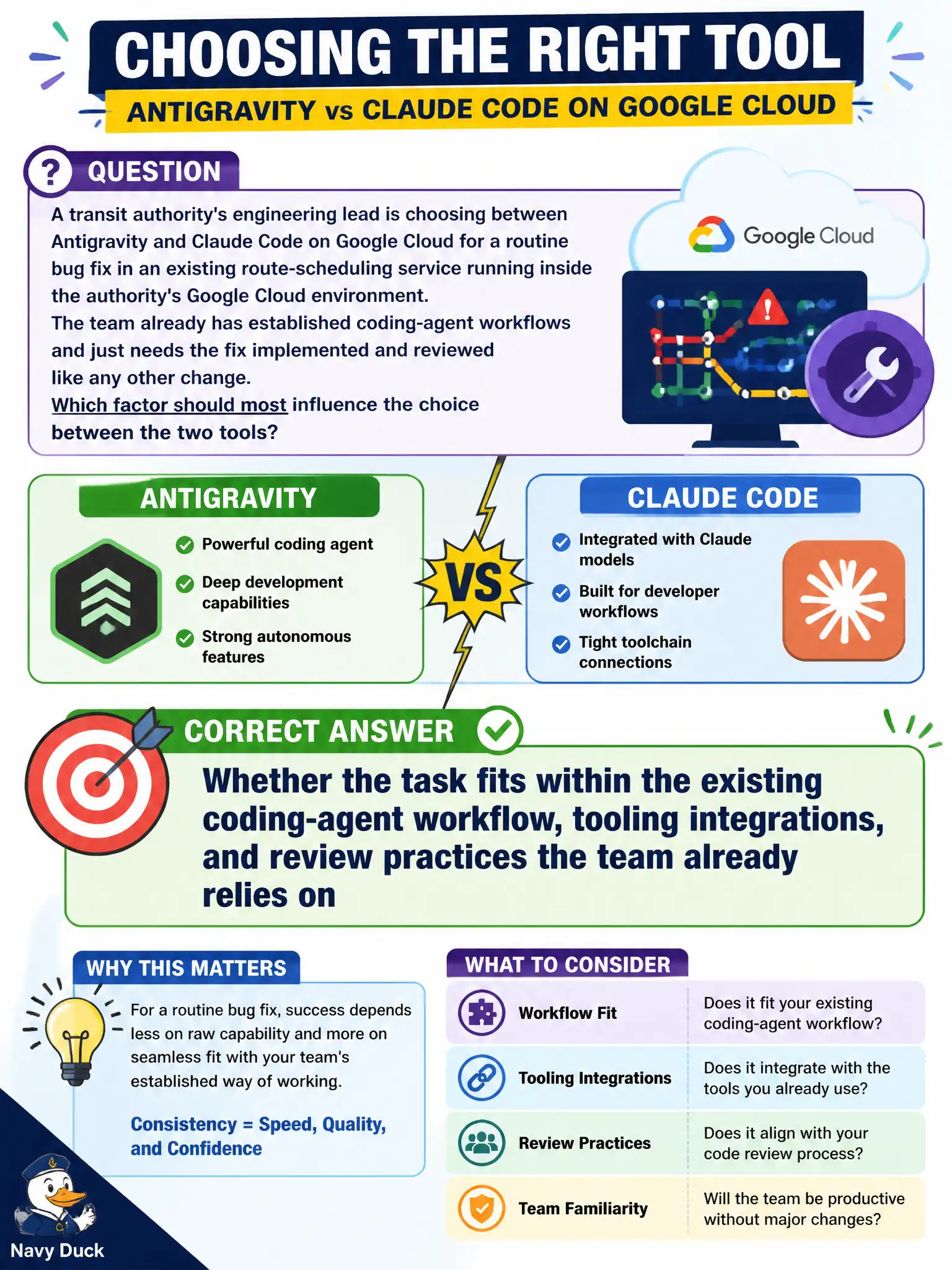
A transit authority's engineering lead is choosing between Antigravity and Claude Code on Google Cloud for a routine bug fix in an existing route-scheduling service running inside the authority's Google Cloud environment. The team already has established coding-agent workflows and just needs the fix implemented and reviewed like any other change. Which factor should most influence the choice between the two tools?
Select an answer to reveal the explanation.
Short Explanation
Picking a coding agent is a lot like picking which wrench fits the bolt already in front of you: both tools can turn it, so the real question is which one is already set up in your toolbox. For a routine fix inside an established workflow, what matters is how well the tool slots into the team's existing pipeline, hooks, and review habits, not some inherent superiority. Fit beats brand name every time.
Full Explanation
Antigravity and Claude Code on Google Cloud are both in-scope coding agents for professional-level agentic architecture work, and the exam guide treats tool selection as a fit-for-task decision rather than a fixed hierarchy. For a routine change inside a team's established coding-agent workflow, the deciding factor is whether the tool integrates cleanly with the sandboxes, skills, hooks, and review gates already in place, since re-tooling for a small fix introduces friction with no offsetting benefit. Judging a tool by how its name sounds mistakes branding for architecture and provides no basis for a defensible design decision. Basing the choice on who most recently touched the file conflates version-control history with tool capability; edit provenance says nothing about which agent handles the task better. Tying the decision to Cloud Run versus GKE elevates a deployment-runtime detail that is unrelated to the coding agent's own function, since coding agents operate on source and don't inherently favor one hosting target during a routine fix. A concrete check an architect can run is to look at the team's existing pipeline configuration and confirm the chosen tool already has a working integration point, rather than introducing a second tool that needs its own onboarding.