
A transit kiosk agent's engineers want to pinpoint exactly which stage of a multi-step itinerary-building workflow is contributing the most latency before they decide where to optimize. Which capability should they use?
Select an answer to reveal the explanation.
Short Explanation
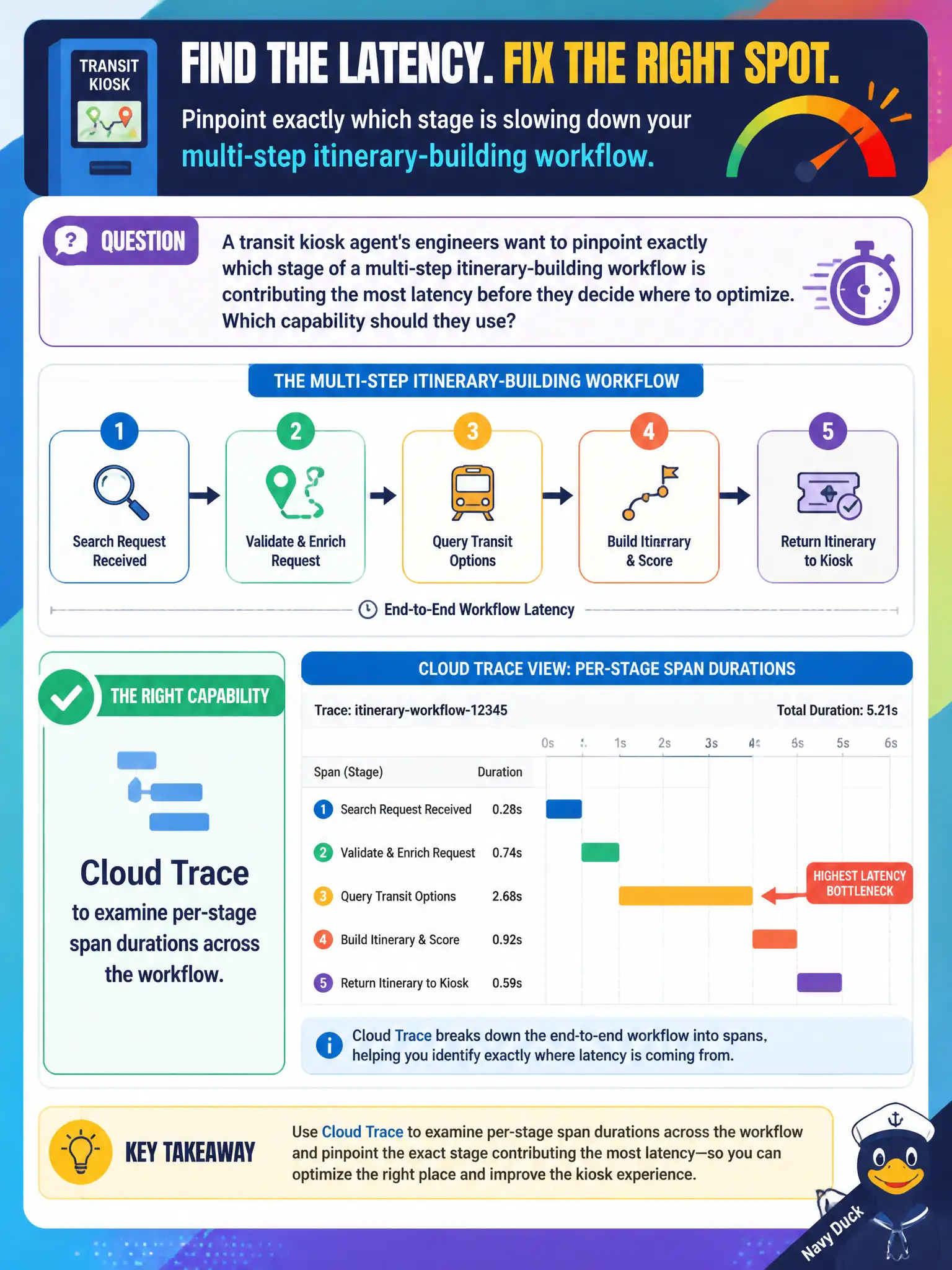
Distributed tracing works like splitting a road trip into legs and timing each one instead of just clocking the whole drive. Cloud Trace breaks the itinerary workflow into spans so engineers can see exactly which leg is slow. That's a timing question, and Trace is the tool built to answer timing questions.
Full Explanation
Cloud Trace instruments a request as a series of spans, one per stage of the workflow, and records how long each span takes, so engineers can visually and numerically compare stages to find the slowest one and target that specific stage for optimization rather than guessing. Cloud Logging captures the content and sequence of what happened at each step, which is valuable for understanding a decision but isn't built for comparing timing across stages. Model Armor is a security control for screening risky content, unrelated to performance profiling. Agent Gateway's traffic monitoring identifies which agent issued which call for governance purposes, not per-stage duration breakdowns within one workflow. Scope caveat: trace data shows where time goes but not always why a stage is slow, so a slow span often still needs a follow-up look at that stage's own logs or dependencies. Operational check: open the trace for a slow request, identify the span with the largest duration, and confirm that stage's downstream dependency or computation matches expectations for its size.