
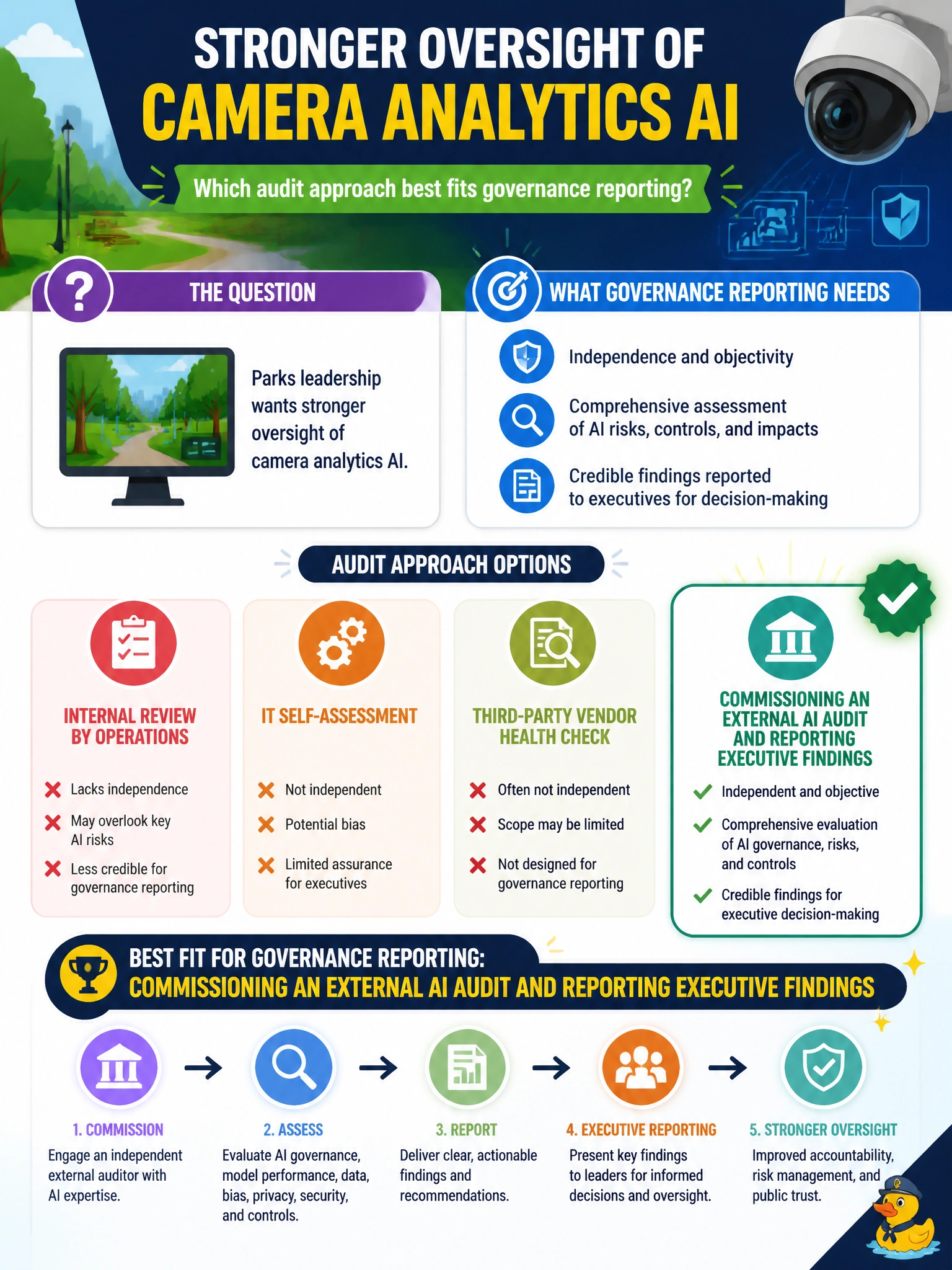
Parks leadership wants stronger oversight of camera analytics AI. Which audit approach best fits governance reporting?
Select an answer to reveal the explanation.
Short Explanation
Sometimes you need fresh eyes on the park cameras. Bring in an external AI audit and tell executives what matters—sunshine for governance, not a secret drawer of findings.
Full Explanation
Parks leadership seeking stronger oversight of camera analytics AI should commission an external AI audit and report executive findings to leadership. Independent review reduces self-assessment bias; executive reporting ensures funders and governors see residual risk, control gaps, and required actions rather than burying results in an operational drawer away from budget and policy owners.
Relying only on informal staff opinions with no documented scope lacks methodology, evidence, and repeatability for governance reporting. Keeping all findings sealed from executives who fund the program breaks accountability and prevents resource decisions about privacy, retention, and accuracy controls. Substituting a vendor self-attestation for any independent review lets the interested party grade its own homework.
Exam caveat: governance-grade civic AI oversight often requires independent audit evidence plus executive transparency, not informal opinion or vendor self-grades alone. Operational check: define audit scope for camera analytics (privacy, retention, accuracy, access), contract external review, brief executives on findings and remediation plans, and track closures on the parks governance calendar.