
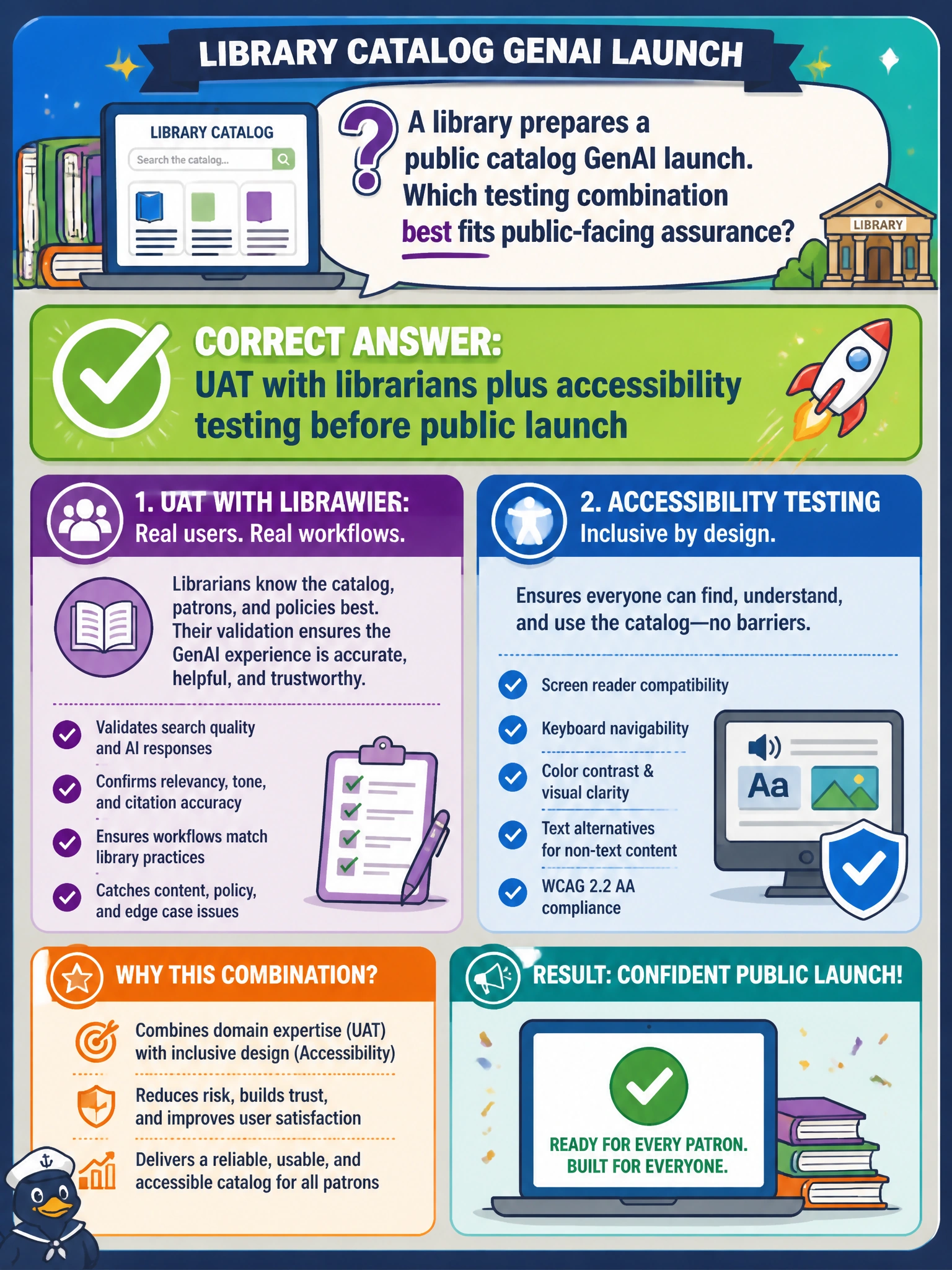
A library prepares a public catalog GenAI launch. Which testing combination best fits public-facing assurance?
Select an answer to reveal the explanation.
Short Explanation
Catalog GenAI isn’t done when engineers smile. Put librarians through UAT and run accessibility checks before the public walks in—like opening day after a dry run with staff.
Full Explanation
A library preparing a public catalog GenAI launch needs UAT with librarians plus accessibility testing before public release. Librarians exercise real catalog and reference workflows the vendor demo may not stress; accessibility testing ensures patrons who use assistive technologies can complete the same journeys. Together those practices fit public-facing municipal assurance better than engineering-only confidence before opening day.
Only backend unit tests with no librarian or patron accessibility review miss usability and inclusion failures that dominate public complaints. Launching without UAT because the vendor demo looked polished confuses sales theater with operational readiness for branch staff and patrons. Deferring accessibility checks until after widespread public complaints externalizes harm onto patrons and violates inclusive-service expectations for civic digital services.
Exam caveat: public-facing civic GenAI assurance combines domain UAT and accessibility evidence before broad release, not after complaints. Operational check: complete librarian UAT scripts, run accessibility checks against adopted standards, remediate blockers, and record sign-off in the assurance package before flipping the catalog GenAI to public.