
Transit reviews an ETA model used across corridors. Which assurance activity best addresses fairness?
Select an answer to reveal the explanation.
Short Explanation
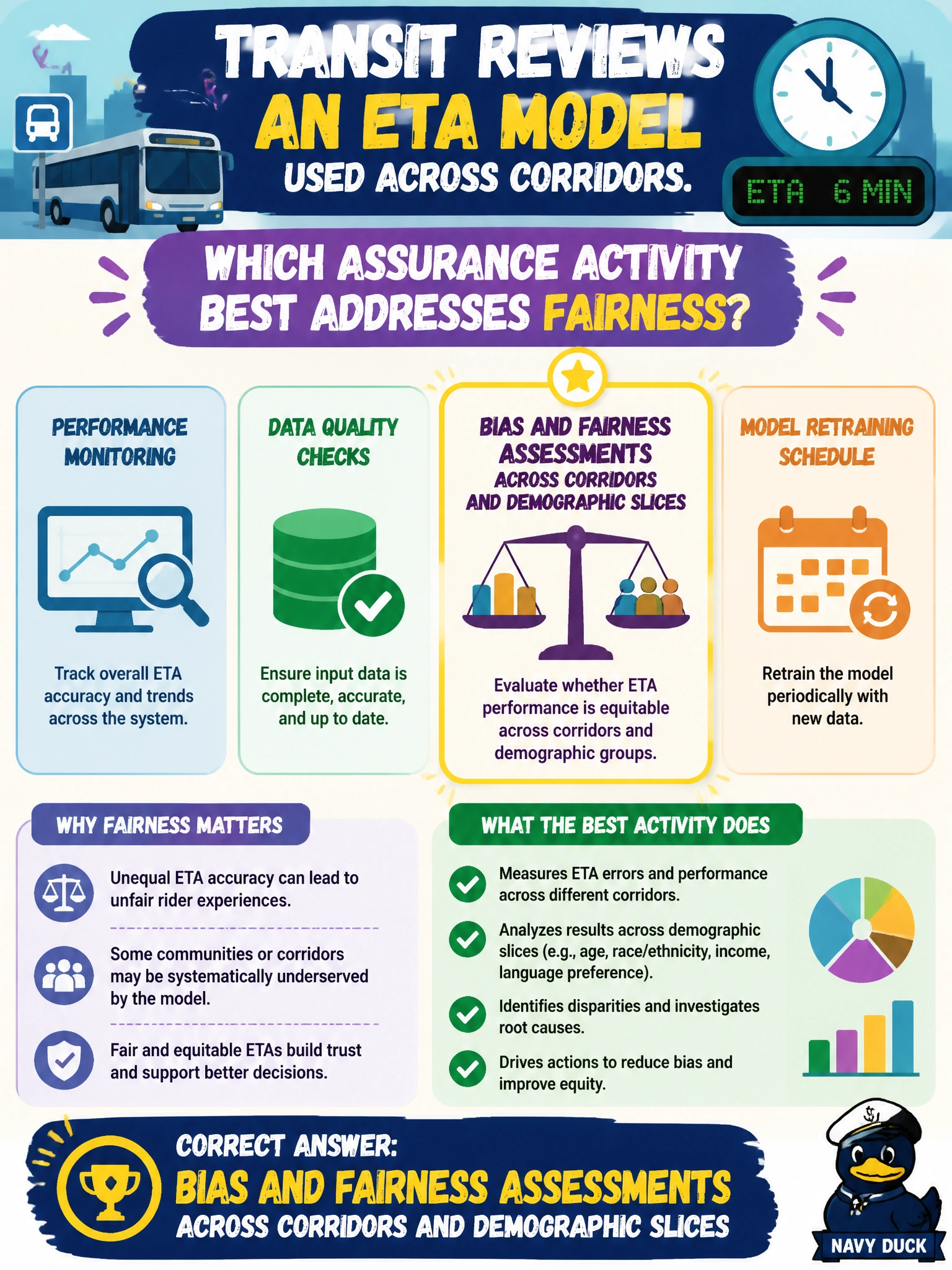
A citywide average can hide a corridor that always gets the short end. Slice the ETA errors by place and demographics—like checking every neighborhood’s bus stop, not just the downtown hub.
Full Explanation
Transit reviewing an ETA model across corridors best addresses fairness with bias and fairness assessments sliced by corridor and demographics, not citywide averages alone. Aggregate MAE can look acceptable while one neighborhood or rider group systematically receives worse predictions, which undermines equitable service and trust in municipal transit AI that riders rely on for connections and accessibility planning.
Publishing only citywide average error and ignoring corridor slices conceals geographic disparity that operations and equity offices need to see. Assuming fairness is automatic if overall MAE looks acceptable confuses global accuracy with equitable error distribution across communities. Retiring demographic analysis because it slows the release calendar trades schedule convenience for unexamined disparate impact—unacceptable for public-service prediction systems.
Exam caveat: fairness assurance for civic prediction systems requires disaggregated evaluation; overall metrics are necessary but not sufficient. Operational check: define corridor and demographic slices up front, set disparity thresholds with transit and equity stakeholders, re-run slices after each model update, and require remediation or documented risk acceptance before promoting a new ETA model citywide.