
A public hospital district wants periodic confidence in its clinical AI aids. What monitoring approach fits?
Select an answer to reveal the explanation.
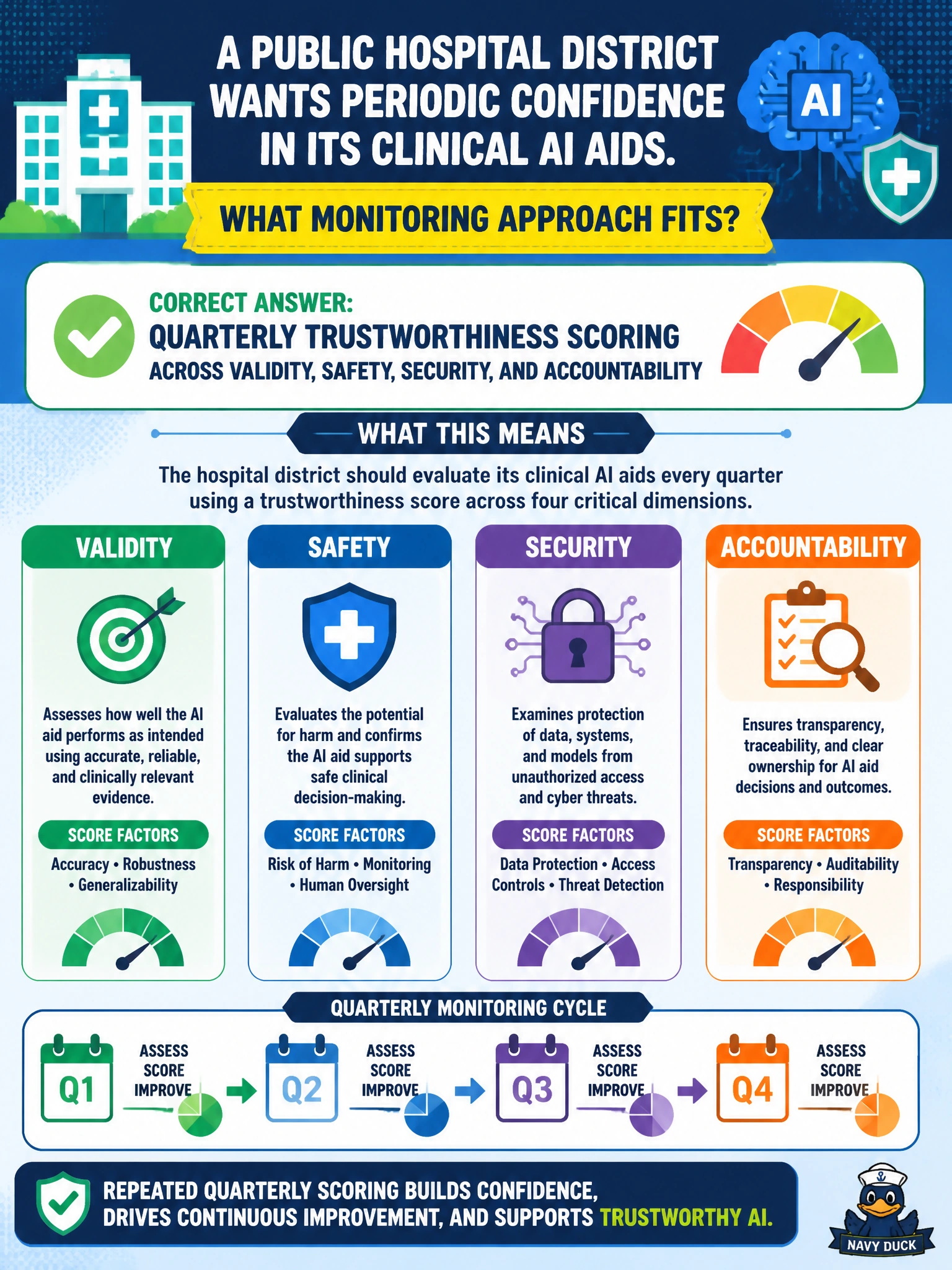
Short Explanation
Trust isn’t a ribbon-cutting photo. Score validity, safety, security, and accountability on a schedule—GPUs humming doesn’t mean patients are safe.
Full Explanation
A public hospital district using clinical AI aids needs periodic, structured confidence—not a launch celebration. Quarterly trustworthiness scoring across validity, safety, security, and accountability fits: validity checks whether outputs remain clinically appropriate; safety tracks adverse events and unsafe recommendations; security covers model/data integrity and access; accountability verifies human oversight, logging, and escalation. Scheduled multi-dimension scoring detects drift and governance gaps that a single go-live applause cannot.
One-time launch applause with no later measurement fails because clinical environments and data shift; trustworthiness is a living property. Scoring only marketing sentiment from social posts fails as a clinical quality signal and can miss silent safety failures. Measuring only GPU utilization as the sole trust signal fails conceptually: infrastructure load says nothing about correctness, equity, privacy, or accountability of clinical aids.
Exam caveat: trustworthiness monitoring frameworks for AI emphasize multiple pillars; infra metrics alone are distractors. Operational check: run a quarterly scorecard with named owners, thresholds, and remediation triggers for validity/safety/security/accountability; tie failing scores to model pause, human-only fallback, or change-control review before the next clinical use expansion.