
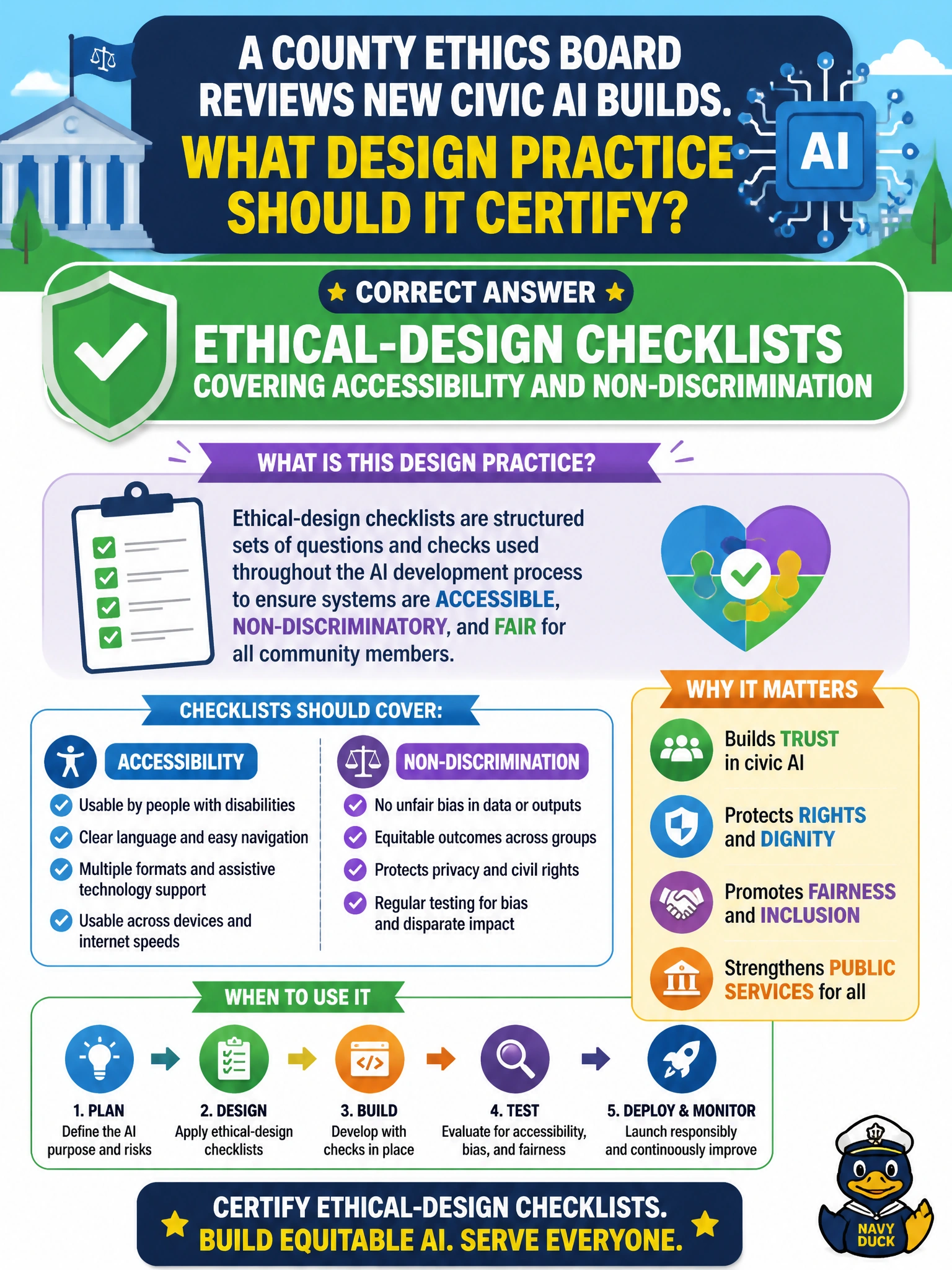
A county ethics board reviews new civic AI builds. What design practice should it certify?
Select an answer to reveal the explanation.
Short Explanation
Pretty colors aren’t ethics. Certify checklists that cover accessibility and non-discrimination—automation doesn’t get a free pass.
Full Explanation
A county ethics board reviewing civic AI builds should certify ethical-design checklists that cover accessibility and non-discrimination—keyboard and screen-reader usability, plain-language outputs, accommodation paths, disparate-impact review of ranking or eligibility logic, and documentation of residual risk. Ethics certification for municipal AI is about who can use the service and who is harmed by it, not visual polish.
Checklists that only verify color themes on the landing page fail because aesthetics are not ethical design criteria for AI systems that allocate services or information. Approvals that ignore accessibility because AI is automated fail conceptually: automation does not exempt digital civic services from accessibility duties; bots and portals remain public-facing interfaces. Waivers that skip non-discrimination review for pilot tools fail governance: pilots still touch real residents, and early biased tools can lock in harmful patterns before “production” labeling appears.
Exam caveat: ethics review for civic AI commonly centers accessibility, fairness, and human oversight—not UI theming. Operational check: require completed accessibility and non-discrimination checklist items before ethics certification, sample real user journeys with assistive technology, and refuse waivers that skip those domains for pilots serving the public.