
Parks runs AI cameras for trail safety analytics. What public trust artifact should the department issue?
Select an answer to reveal the explanation.
Short Explanation
Camera AI spook people if you stay quiet. Publish a transparency report—uses, retention, audits—so residents aren’t guessing in the dark.
Full Explanation
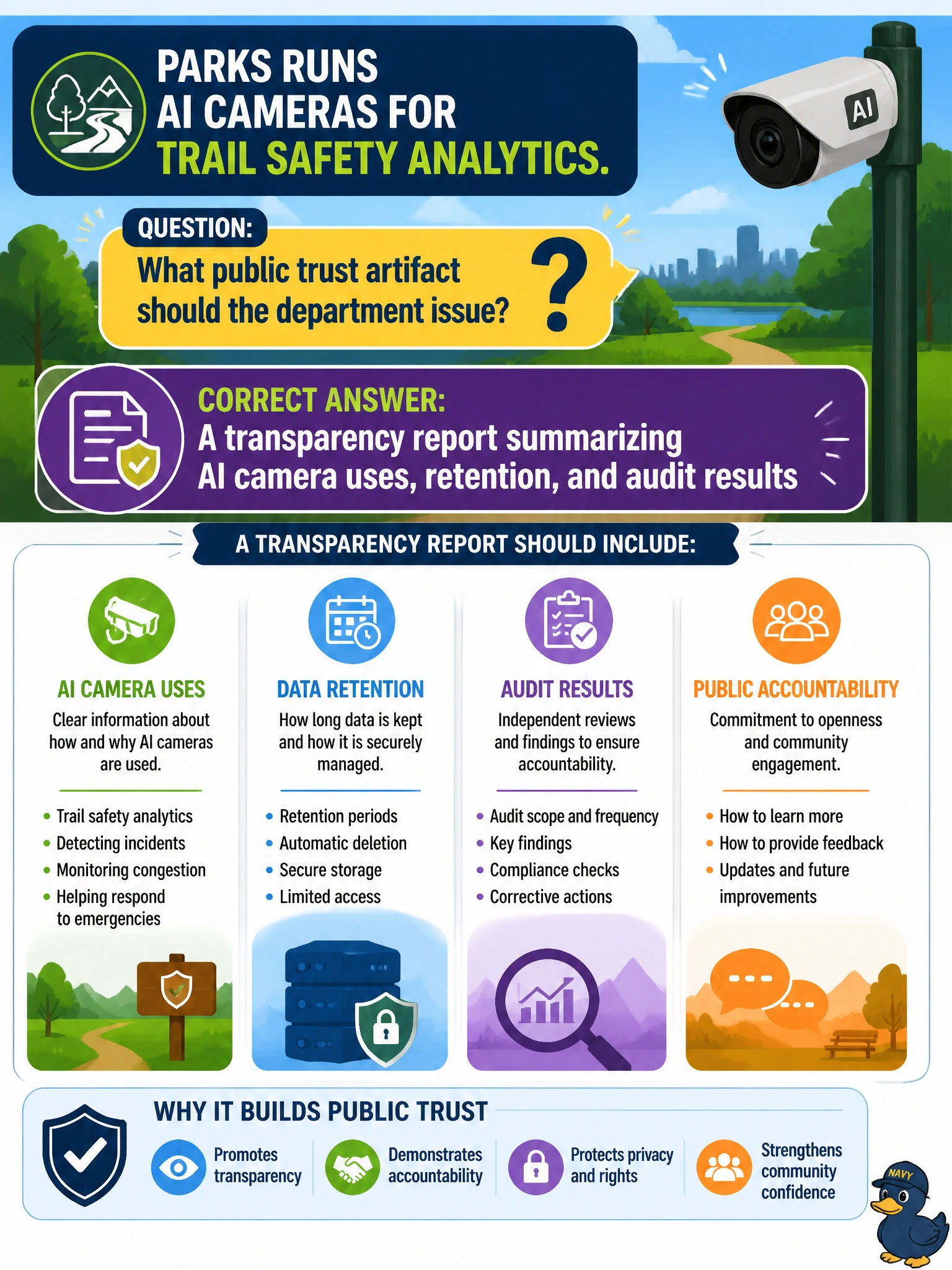
Parks AI cameras for trail safety analytics raise predictable public concerns about surveillance scope, retention, and oversight. A transparency report summarizing AI camera uses, retention periods, access rules, and audit results is the public trust artifact that lets residents evaluate the program with evidence rather than rumor. Confidential IT notes and marketing gloss do not meet the civic expectation for accountable sensor AI in parks.
A confidential memo that never leaves the IT ticket system fails as a public trust artifact because residents and oversight bodies cannot see it; internal hygiene is necessary but insufficient. A promise that cameras never retain anything, with no evidence, fails because unverified assurances collapse at the first incident or records request. A marketing flyer that omits retention and audit outcomes fails by concept: it may advertise safety benefits while withholding the very controls that determine privacy risk.
Exam caveat: transparency reports are recurring accountability products, not one-time launch blogs. Operational check: issue a scheduled transparency report covering camera AI purposes, data elements, retention, vendor roles, audit findings, and changes since the last report; align it with posted trail signage and the records-retention schedule actually enforced in storage systems.