
Property owners dispute AI-assisted valuation flags. What trust mechanism should the assessor add?
Select an answer to reveal the explanation.
Short Explanation
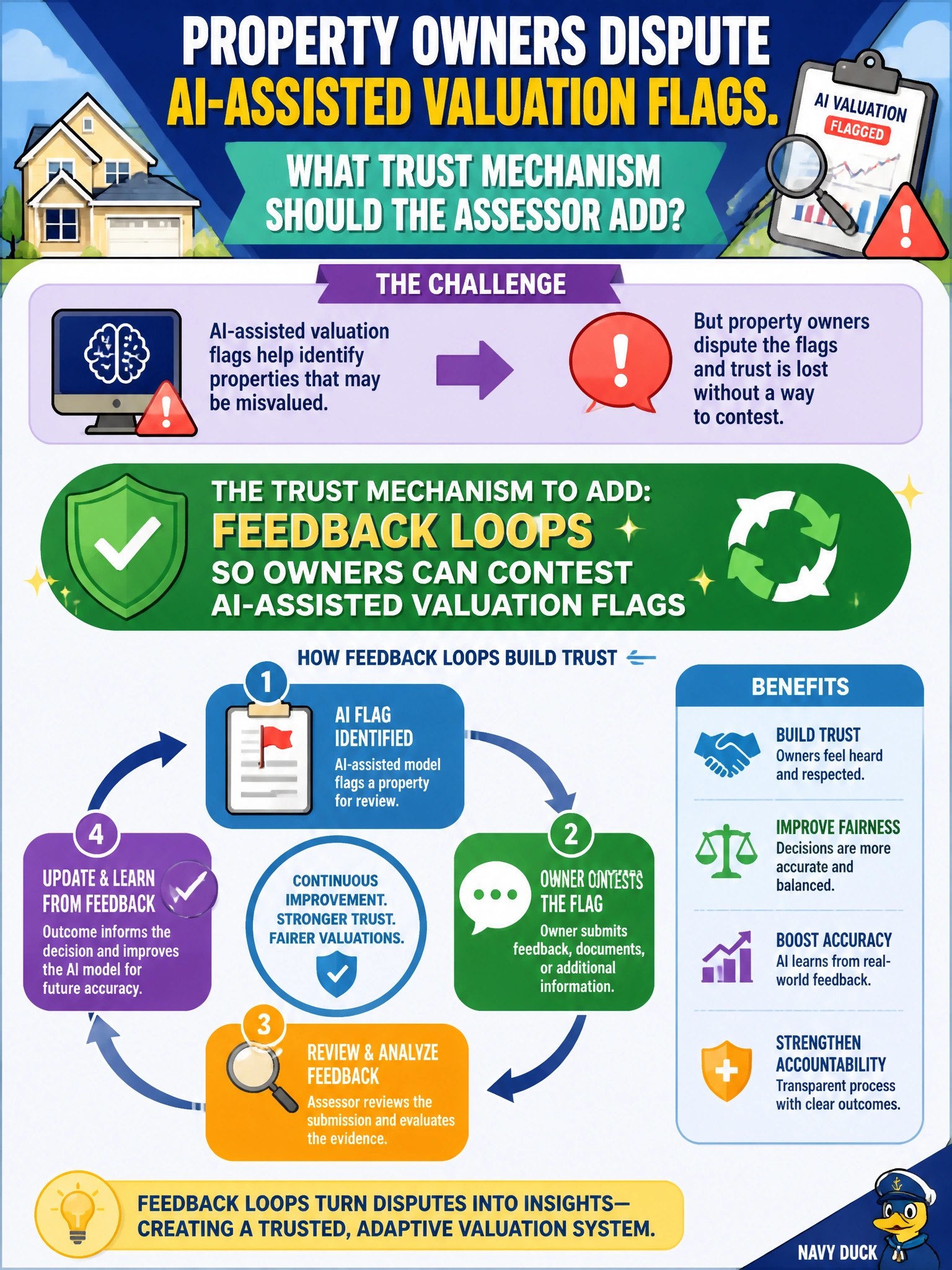
Flags without a protest door feel like a brick wall. Let owners contest AI-assisted valuation flags—feedback builds trust faster than silence.
Full Explanation
AI-assisted valuation flags affect property owners’ trust in the assessor’s process even when a human still finalizes assessments. Feedback loops that let owners contest flags—submit corrections, upload evidence, and receive a reviewed outcome—turn opaque alerts into accountable civic procedure. Contestation also improves the model and business rules by surfacing false positives the office would otherwise never see.
Treating all AI flags as final with no owner input channel fails procedural fairness and invites appeals chaos later; finality without recourse is a trust destroyer in property taxation contexts. Hiding flag criteria and refusing contest submissions fails transparency: owners cannot meaningfully respond to a black-box allegation about their parcel. Routing contests only to the model vendor with no local review fails accountability; the assessor’s office owns the valuation relationship with residents, and vendors should not be the sole adjudicator of civic disputes.
Exam caveat: trust mechanisms for scoring AI in government often combine explanation with contestability, not either alone. Operational check: publish how to contest an AI-assisted flag, define local review SLAs, log contest outcomes into model/quality feedback, and ensure contested cases are not auto-closed solely by the same model that raised the flag.