
Fire/EMS hosts a public GenAI widget. What safety control should block harmful outputs?
Select an answer to reveal the explanation.
Short Explanation
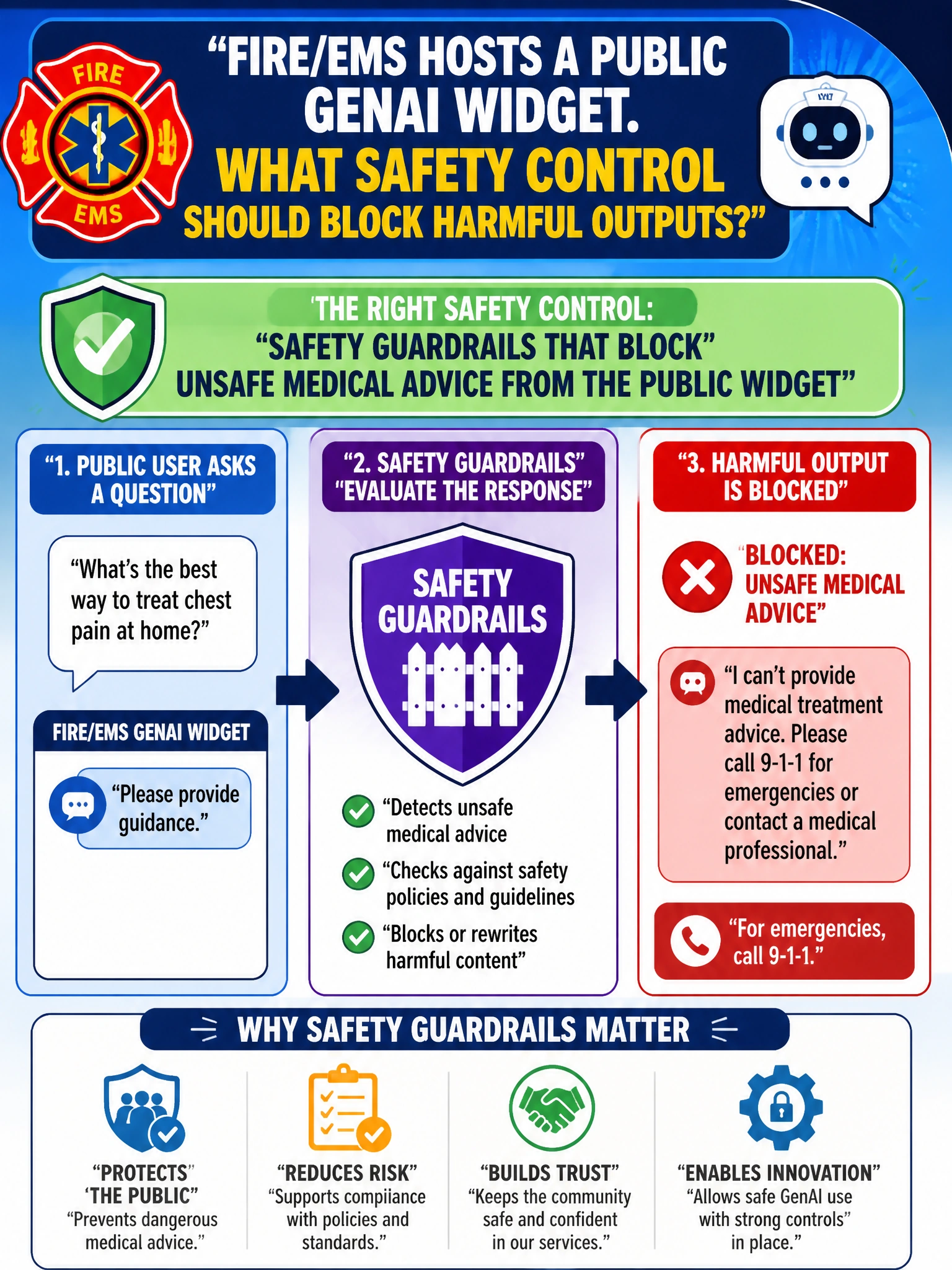
A public EMS bot that plays doctor is a hazard. Put hard safety guardrails on medical advice—disclaimers alone won’t catch a bad dose tip.
Full Explanation
A public-facing Fire/EMS GenAI widget can be asked for doses, triage steps, or “what should I do right now” guidance. Safety guardrails that block unsafe medical advice—policy filters, refused categories, escalation to call-911 messaging, and monitored override paths—are the control that prevents harmful outputs before a disclaimer is ever read. Completeness is not a virtue when the audience may follow the bot during a medical emergency.
Allowing any medical instruction to keep responses complete fails because unconstrained clinical content from a general GenAI interface can cause real physical harm and municipal liability. Relying only on a disclaimer footer without output filtering fails by concept: disclaimers shift legal language but do not stop generation of dangerous instructions, and many users never see or understand the footer under stress. Training the model on unverified social-media first-aid tips fails data and safety governance; low-quality sources amplify hallucination and unsafe heuristics.
Exam caveat: for public safety GenAI, output safety controls outrank branding and conversational completeness. Operational check: enforce medical-advice blocklists and classifiers, test red-team prompts for dosing and emergency care, force clear emergency redirection, log blocked attempts for review, and keep a human clinical authority in the approval chain for any allowed health content.