
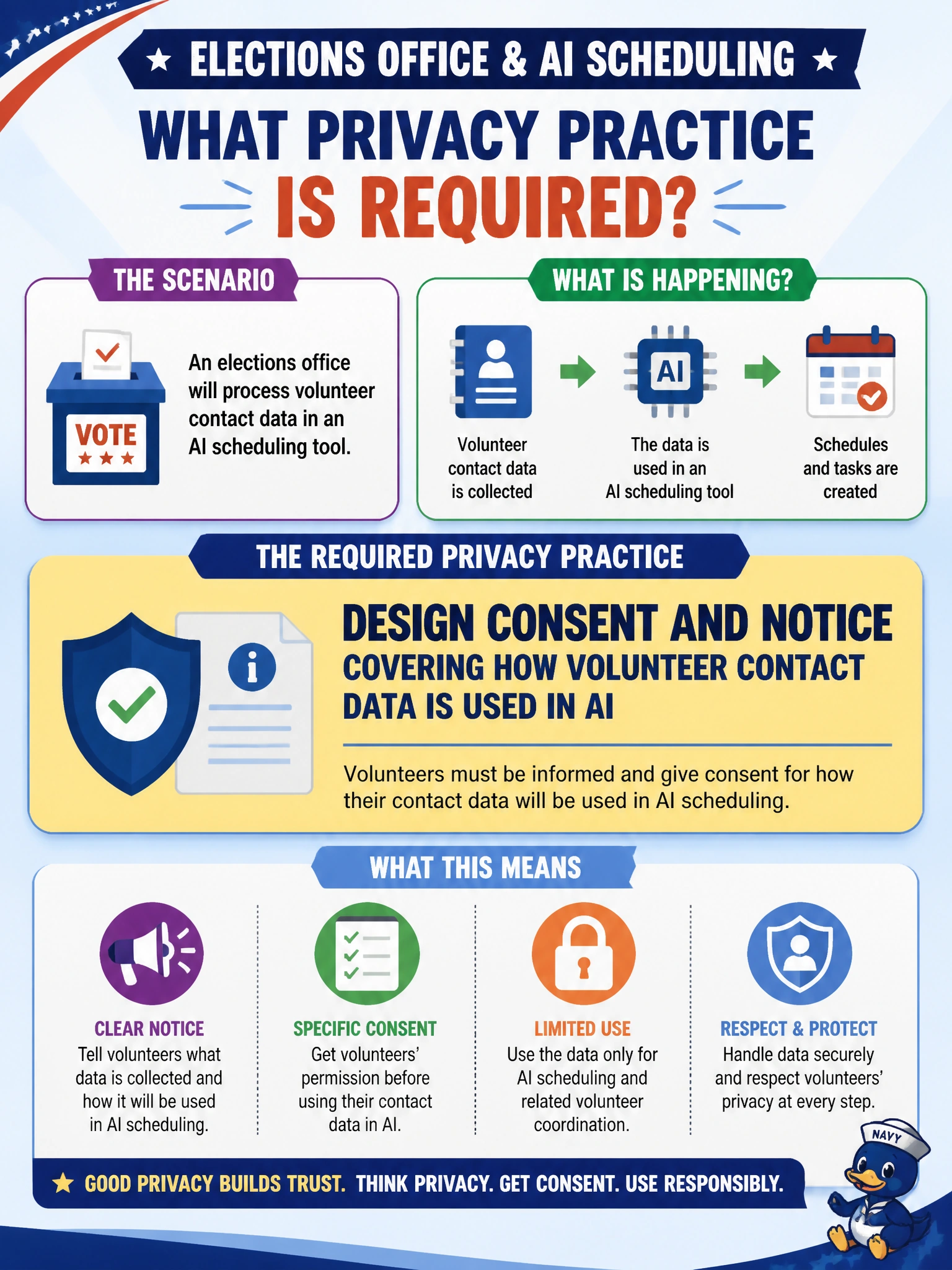
An elections office will process volunteer contact data in an AI scheduling tool. What privacy practice is required?
Select an answer to reveal the explanation.
Short Explanation
Volunteer phones aren’t free training fuel. Put clear notice and consent around AI use—‘elections are public’ doesn’t wipe privacy duties.
Full Explanation
Volunteer contact data processed in an AI scheduling tool remains personal data: phones, emails, availability, and affiliation can identify people and support unwanted contact or profiling. An elections office must design consent and notice covering how volunteer contact data is used in AI—what is collected, whether it trains or fine-tunes models, who the vendors are, retention, and choices available—before importing lists into automated schedulers. Public character of elections does not dissolve privacy duties owed to volunteers who are not “fair game” for opaque AI reuse.
Importing volunteer lists with no notice because elections are public fails by misreading publicity of electoral processes as a license to process individuals’ contact details without transparency. Sharing volunteer phones with any campaign AI vendor by default fails purpose limitation and vendor governance; default sprawl creates unnecessary disclosure risk. Skipping consent because scheduling tools supposedly never create privacy risk fails conceptually: scheduling AI still stores, matches, and may retain sensitive contact graphs, and tool category does not erase risk.
Exam caveat: notice and consent design must fit local law and the nature of the relationship; “public election” is a classic distractor, not a privacy exemption for volunteer CRM/AI. Operational check: publish plain-language notice, capture consent or other lawful basis as required, restrict vendor contracts to stated AI scheduling purposes, minimize fields imported, and verify deletion or return of contact data when the event ends.