
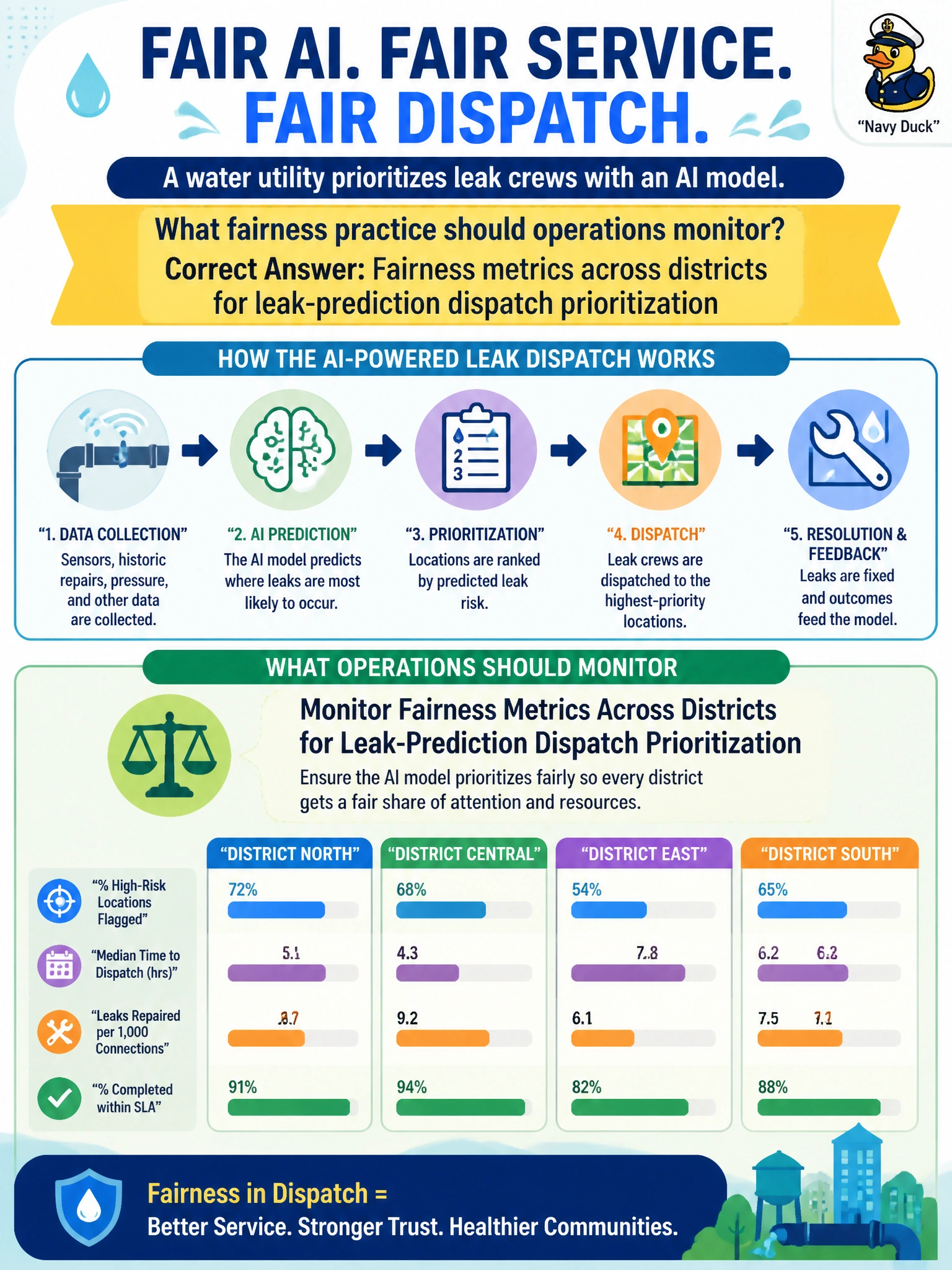
A water utility prioritizes leak crews with an AI model. What fairness practice should operations monitor?
Select an answer to reveal the explanation.
Short Explanation
Leak AI can quietly starve one neighborhood. Watch fairness metrics by district—citywide totals can hide who waits longest for a crew.
Full Explanation
An AI model that prioritizes leak crews can systematically underserve some districts if training data, sensor coverage, or historical work-order patterns are uneven. Operations should monitor fairness metrics across districts for leak-prediction dispatch prioritization—comparing detection lead time, priority scores, crew arrival latency, and unresolved leak duration by geography and relevant community segments—so disparities surface before they become equity and trust failures. Physical pipes do not make allocation politics disappear; the model’s ranking is a civic resource allocation decision.
Optimizing only for total citywide leaks without district comparisons fails because aggregate success can hide concentrated harm in one neighborhood that waits longest. Assuming fairness because pipes are physical infrastructure fails conceptually: infrastructure is physical, but data coverage, complaint propensity, and model features are social and historical, which is where bias enters. Disabling monitoring once the first week looks busy fails as a control: early busyness is not evidence of equitable prioritization over time, and drift can appear after seasonal or sensor changes.
Exam caveat: fairness monitoring for municipal AI is often geographic and service-level, not only demographic parity in the abstract. Operational check: dashboard district-level fairness metrics for leak dispatch, set thresholds and owners for investigation, correlate with work-order outcomes, and document mitigations (reweighting, coverage fixes, human override rules) when disparities exceed policy limits.