
A court clerk AI assists administrative case routing. What rights-oriented control should leadership require?
Select an answer to reveal the explanation.
Short Explanation
If AI helps steer a case, folks deserve a plain-language why. Wire right-to-explanation workflows—silent black boxes don’t belong near the clerk’s desk.
Full Explanation
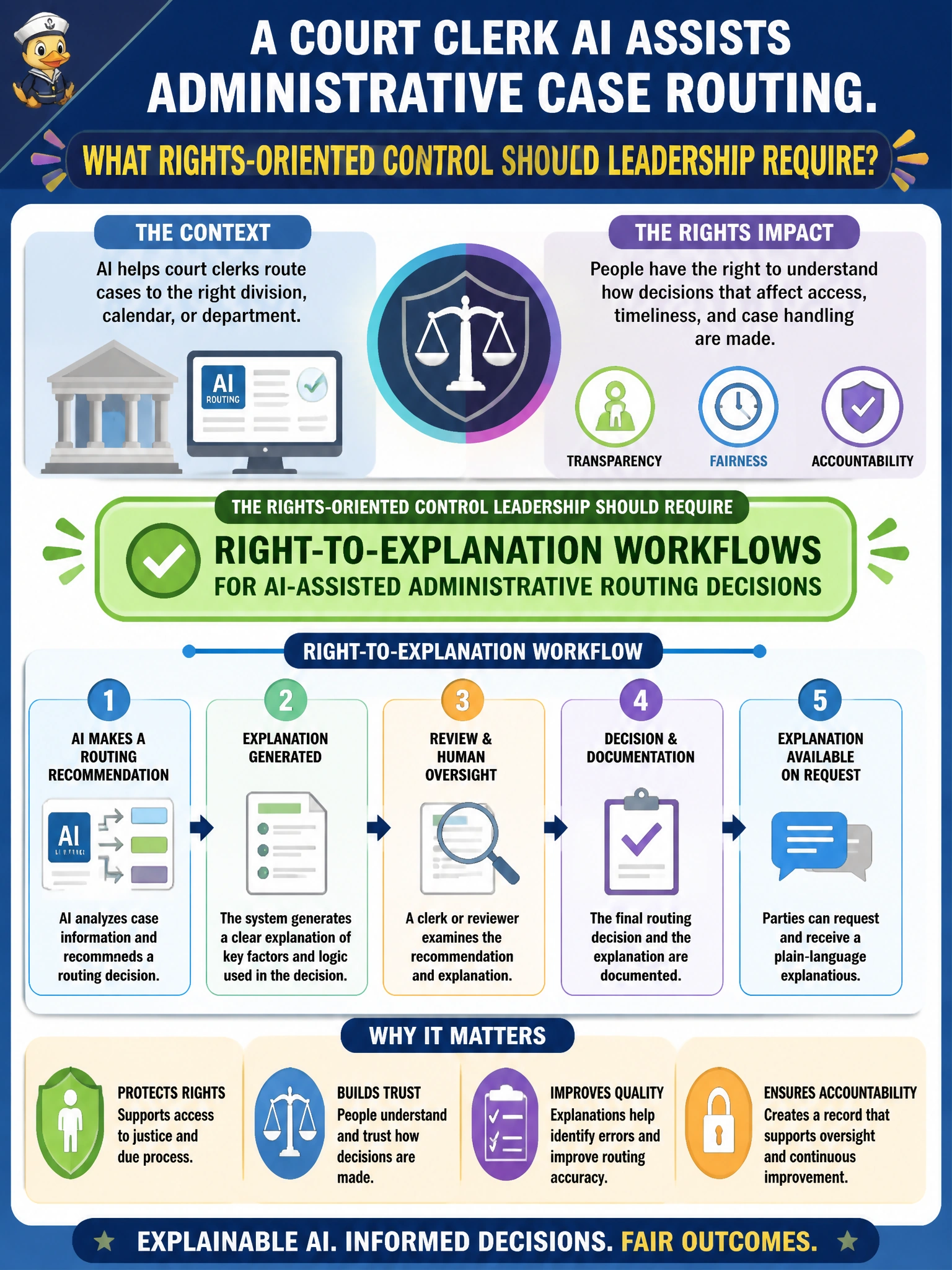
When AI assists administrative case routing in a court clerk’s office, routing choices can affect timelines, workload, and access to justice even if a judge still decides the merits. Leadership should require right-to-explanation workflows: documented, plain-language accounts of material AI-assisted factors; retention of enough decision metadata to reconstruct what the system recommended; and a path for parties or authorized staff to obtain that explanation under court policy. Rights-oriented control keeps automation from becoming an unreviewable black box near the docket.
Silent routing with no record of AI involvement fails because it destroys accountability, complicates appeals or complaints, and prevents clerks from detecting systematic misrouting. Banning explanations because clerks already understand the docket fails conceptually: human familiarity with paper practice does not substitute for explaining machine-scored prioritization to affected parties or supervisors. Allowing only vendors to see how routing scores are produced fails governance: the public body—not the vendor—owns the duty to justify administrative AI assistance affecting case flow.
Exam caveat: “right to explanation” in civic AI often means meaningful information about the logic involved, calibrated to administrative—not necessarily fully automated adjudicative—contexts. Operational check: verify explanation templates, logging of AI involvement flags, access procedures consistent with sealed or sensitive matters, and periodic sampling that explanations match the actual model features in production.