
Residents distrust terse 311 bot replies. Which trust-building UX should the city add?
Select an answer to reveal the explanation.
Short Explanation
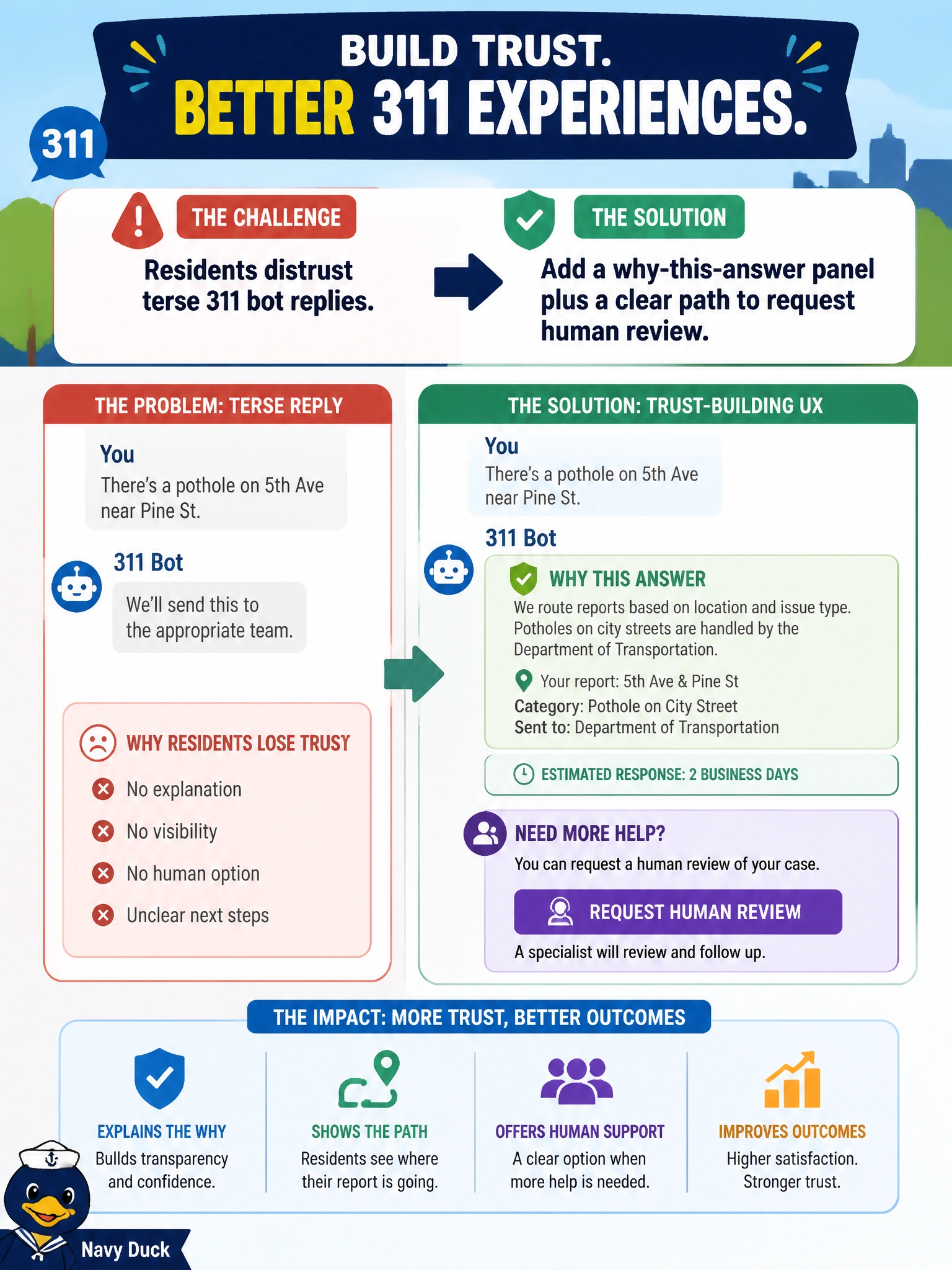
People forgive a short answer if they can see the why and grab a human. Add a reason panel and an escalation door—speed alone won’t win trust.
Full Explanation
Terse 311 bot replies feel dismissive when residents cannot see why an answer was given or how to reach a human. A trust-building UX pairs a why-this-answer panel—citations to the policy, knowledge snippet, or routing rule used—with a clear path to request human review. That combination preserves automation speed while restoring procedural fairness: people can verify the basis of the reply and escalate when the bot misses context, accessibility needs, or edge-case eligibility rules.
Removing all explanations so chats finish faster fails because speed without rationale is a frequent driver of distrust and repeat contacts; faster wrong answers increase load on humans later. Blocking every escalation so bots handle all cases alone fails by design: municipal 311 includes disputes, emergencies-adjacent issues, and ambiguous eligibility that require accountable humans. Replacing the bot with an unsearchable PDF of city codes fails as UX and as service design; static dumps are not conversational help and do not provide case-specific reasoning or escalation.
Exam caveat: trust UX for civic GenAI is not only tone—it is rationale plus recourse. Operational check: instrument the why-panel and human-review request, measure escalation completion time, audit whether explanations cite current policy, and ensure the human path is reachable from mobile without forcing residents through dead-end loops.