
Transit riders ask why AI-estimated arrival times jump. What trust mechanism should the agency publish?
Select an answer to reveal the explanation.
Short Explanation
When the board flips the arrival time, riders want the why. Share plain explainability notes—secrecy and ‘trust us’ ads don’t build trust.
Full Explanation
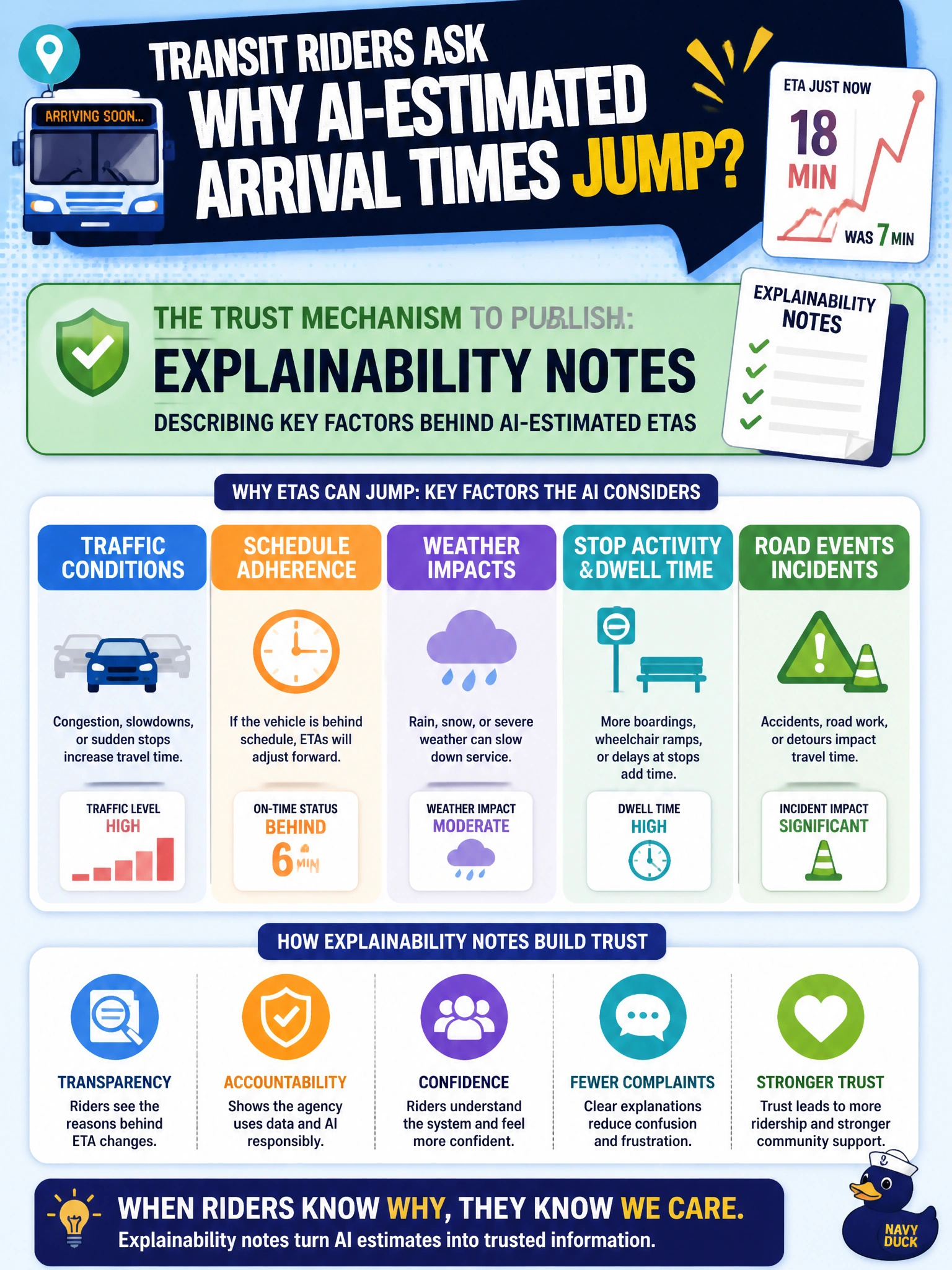
When AI-estimated arrival times jump, riders experience the system as opaque and unreliable unless the agency publishes explainability notes that describe key factors behind the ETA—vehicle GPS freshness, schedule adherence, dwell and traffic signals, crowding heuristics, or known disruptions. Explainability here is a trust mechanism: it need not expose proprietary weights, but it should give residents a plain-language account of why the board flipped so they can plan trips and escalate anomalies intelligently.
Hiding all ETA logic so competitors cannot reverse-engineer routes fails as a trust strategy because total secrecy leaves riders with no basis to believe the number, and competitive sensitivity can be protected with high-level factor notes rather than full model disclosure. Telling riders to ignore the app and call a supervisor for every trip fails operationally and by concept: it abandons the digital channel’s purpose and does not scale for a municipal transit network. Publishing only marketing claims that the model is always accurate fails because overconfident advertising without explanatory substance increases distrust when estimates move, and it conflicts with honest civic communication.
Exam caveat: explainability for public services is often “meaningful factors,” not full white-box disclosure of IP. Operational check: publish rider-facing ETA explainability notes, link them from the app when estimates change sharply, log the top contributing factors for support staff, and review complaint themes to refine which factors residents actually need to see.