
A public hospital district reviews AI architecture diagrams. Which approach best strengthens the review?
Select an answer to reveal the explanation.
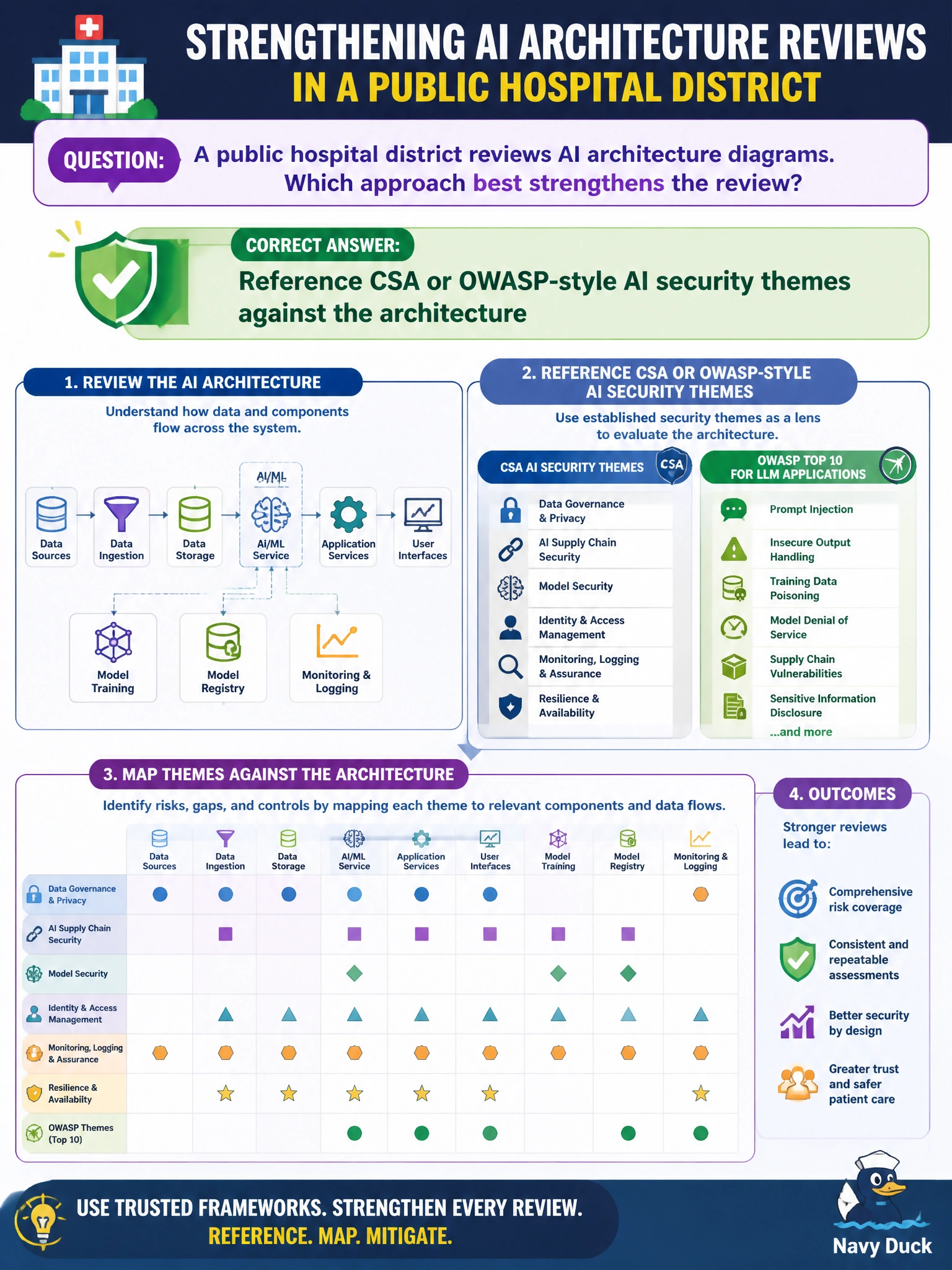
Short Explanation
Pretty boxes aren’t a control set. Walk the diagram against CSA/OWASP-style AI security themes so the hospital district catches real gaps.
Full Explanation
A public hospital district strengthens AI architecture review by referencing CSA or OWASP-style AI security themes against the proposed diagrams. Established themes—threats to data, models, supply chain, serving, abuse, privacy, and governance—give reviewers a shared checklist so gaps are visible instead of aesthetic. Mapping each diagram element to those themes surfaces missing controls (e.g., no model integrity path, flat trust zones, absent abuse detection) before clinical or administrative AI reaches patients and staff. Framework-aligned review also creates auditable evidence that architecture decisions were systematic.
Ignoring established AI security themes and relying only on logo aesthetics reviews marketing, not risk. Approving diagrams solely because they use trendy colors substitutes style for control coverage. Skipping framework checklists to finish the meeting faster trades speed for blind spots that hospital risk and compliance will later inherit.
Exam caveat: the point is structured reference to recognized AI security themes (CSA/OWASP-style), not memorizing one vendor’s logo. Aesthetics never equal assurance.
Operational check: for each architecture review, attach a completed AI security theme checklist mapped to diagram components, record gaps and owners, and withhold approval until critical theme gaps have remediation plans accepted by security and clinical stakeholders.