
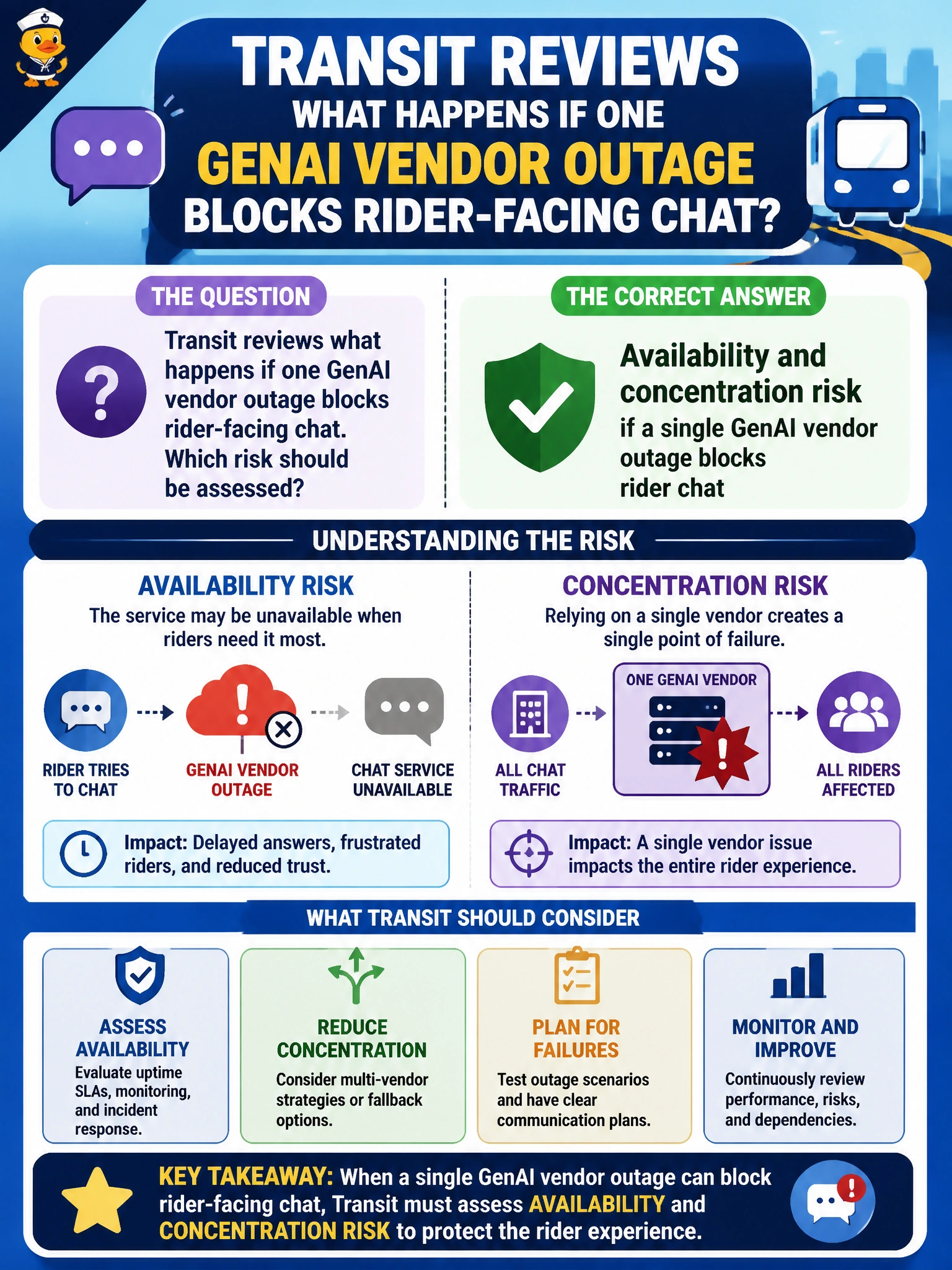
Transit reviews what happens if one GenAI vendor outage blocks rider-facing chat. Which risk should be assessed?
Select an answer to reveal the explanation.
Short Explanation
One vendor, one outage, silent rider chat—that’s concentration risk with a side of downtime. Put availability risk on the board before the next peak commute.
Full Explanation
Transit reviewing what happens if one GenAI vendor outage blocks rider-facing chat must assess availability and concentration exposure tied to that dependency. Availability and concentration risk if a single GenAI vendor outage blocks rider chat is correct because a sole provider creates a single point of failure for rider communications during disruptions, delays, or emergencies. Civic transit AI governance treats rider-facing channels as service availability concerns, not optional chat novelty.
Only risks related to seat-cushion fabric suppliers fails by concept: seat materials are unrelated to GenAI chat availability for riders. The claim that single-vendor GenAI outages cannot affect riders fails by concept: it denies the dependency the scenario describes instead of assessing it. Only risks from museum gift-shop inventory counts fails by concept: gift-shop inventory is outside transit rider-chat dependency and does not address concentration risk.
Exam caveat: concentration risk can exist even if historical uptime was good; past luck is not a control. Assessing the risk does not by itself require immediate multi-vendor procurement—it requires recognition, appetite decision, and mitigations such as fallbacks or contractual resilience.
Operational check: document the single-vendor GenAI dependency for rider chat on the transit risk register as availability/concentration risk; define a degraded-mode playbook (status page language, human agents, alternate channel); test failover or manual messaging in a drill; and bring residual concentration risk to leadership if no viable alternative exists before peak ridership periods.