
A 311 service uses automated decision assistance for some tickets. Which action best upholds resident user rights and transparency?
Select an answer to reveal the explanation.
Short Explanation
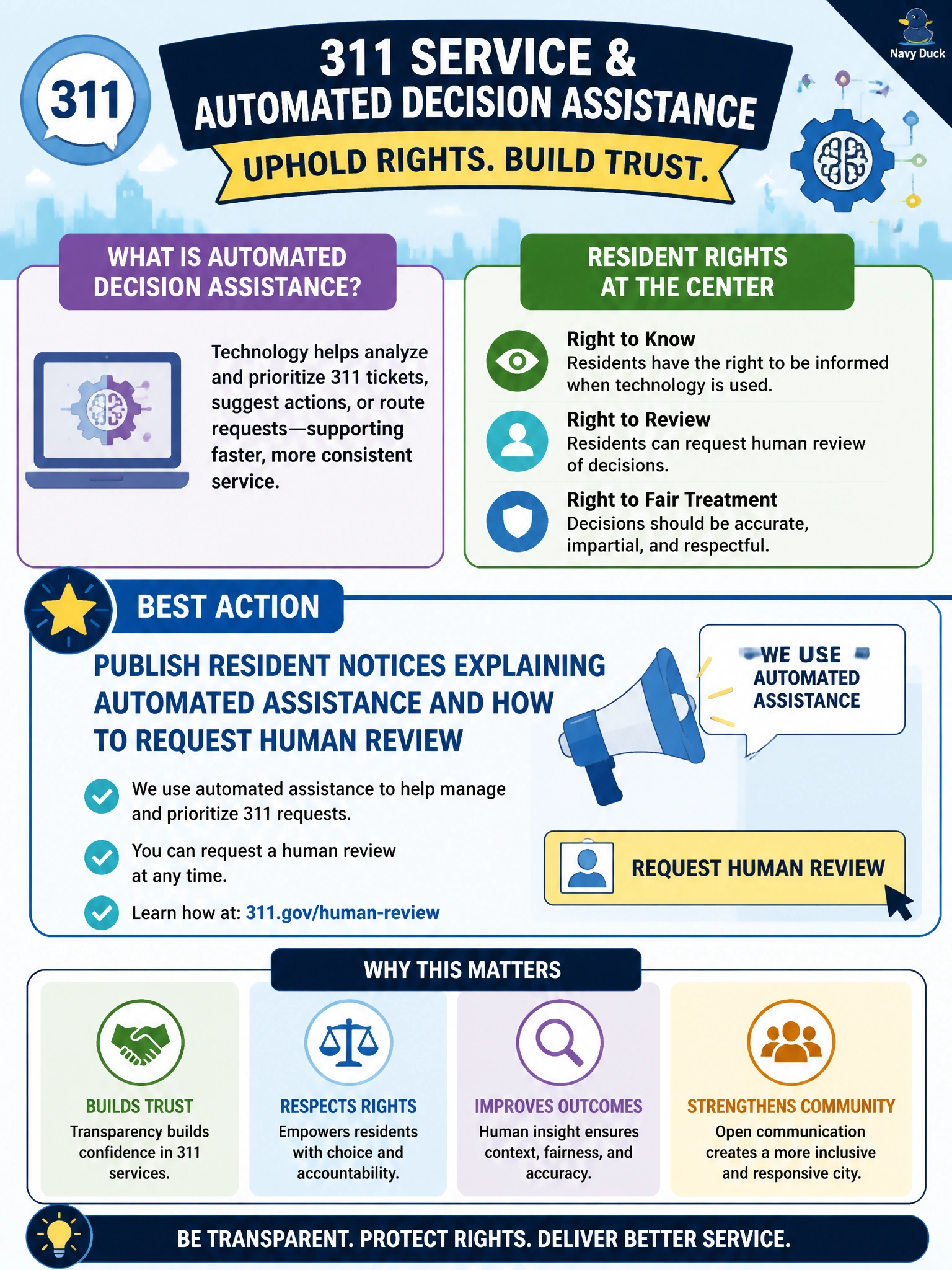
If AI helps decide or draft, residents deserve a plain notice—and a way to ask for a human. Vague slogans and hidden bots don’t cut it for civic transparency.
Full Explanation
For a 311 service that uses automated decision assistance on some tickets, resident user rights and transparency are upheld by publishing clear notices that explain when automated assistance is used and how to request human review. Civic automated assistance affects access to city services; residents need plain-language disclosure plus an operable escalation path so they can challenge or clarify outcomes without inventing a secret appeal process. Disclosure paired with human review is the operational expression of accountability for municipal chat and triage tools.
Hiding that AI assisted the response fails by concept because concealment defeats transparency and blocks informed requests for review. Requiring residents to waive all review rights before chatting fails because forced waiver is incompatible with meaningful user rights in a public-service channel. Posting only a vague slogan that “smart tools help” with no review path fails because slogan-level messaging neither informs nor provides escalation, so transparency remains incomplete.
Exam caveat: notice and human-review pathways must match the actual decision influence of the AI—if the tool drafts or ranks outcomes that affect service, disclosure and review still apply even when a human eventually clicks send. Operational check: publish the notice where residents start the 311 interaction, document how human-review requests are routed and timed, and sample tickets periodically to confirm the disclosed process matches production behavior.