
City legal is reviewing biometric CCTV analytics in public spaces. What should the compliance lead track first?
Select an answer to reveal the explanation.
Short Explanation
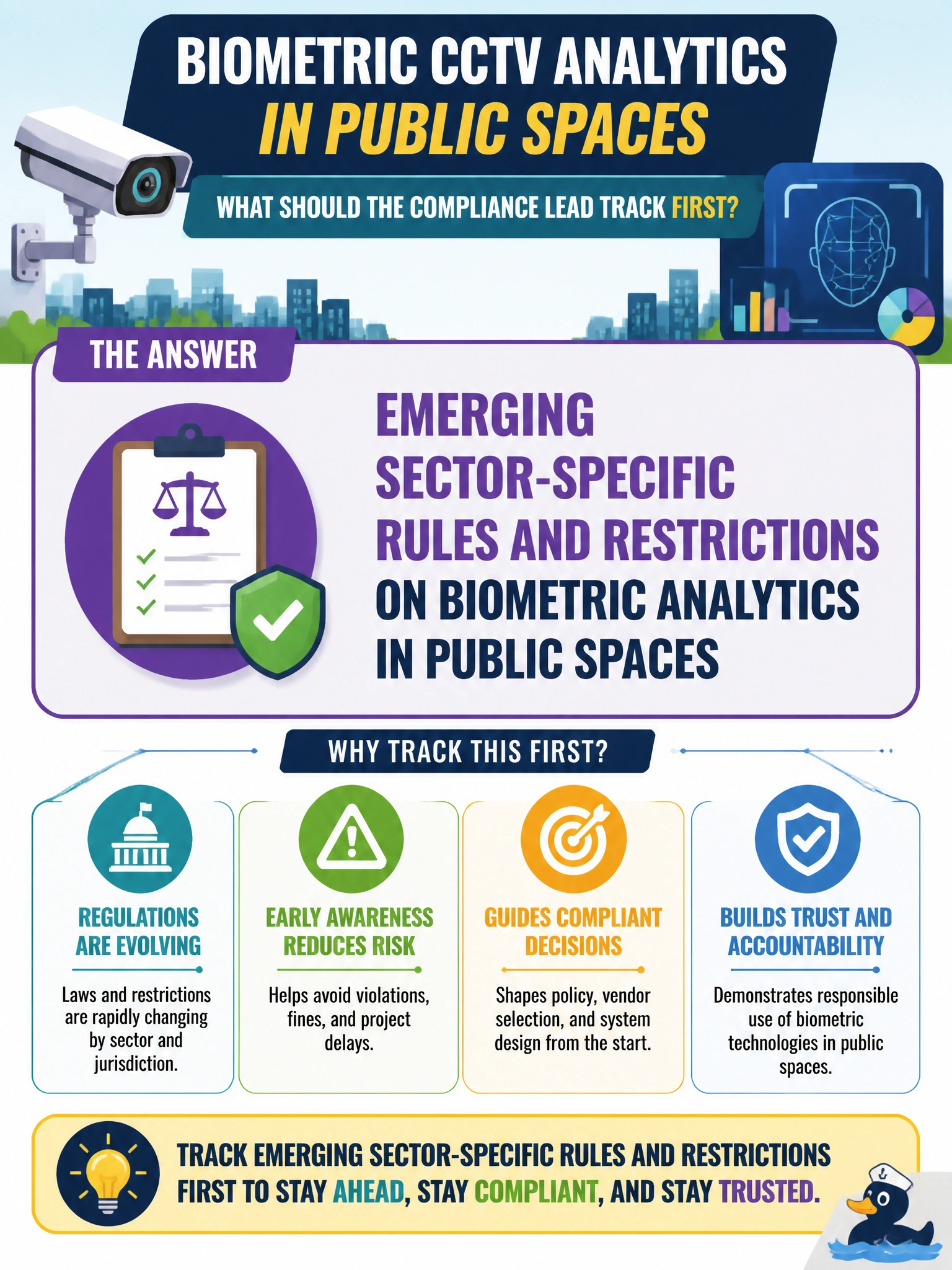
Biometric cameras in public aren’t just IT gear—they’re a legal minefield. Track the sector rules and restrictions first, not housing color or social-media streaming ideas.
Full Explanation
When city legal reviews biometric CCTV analytics in public spaces, the compliance lead’s first priority is tracking emerging sector-specific rules and restrictions that govern biometric processing in those environments. Municipal biometric analytics sit at the intersection of privacy, surveillance, and AI governance: statutes, ordinances, and guidance often impose notice, purpose limitation, retention, proportionality, and sometimes outright bans or heightened authorization requirements. Active regulatory tracking lets counsel map the city’s camera analytics design to current obligations before wider deployment or vendor lock-in.
Tracking only the color of camera housings for branding consistency fails by concept because aesthetics are not a legal-control input for biometric risk. Streaming unmonitored footage to social media fails because unauthorized public disclosure compounds privacy and trust harm and is not a compliance objective. Planning to ignore biometric statutes until after a lawsuit fails because reactive litigation is not legal-risk management and exposes the city to avoidable injunctions, damages, and public-trust loss.
Exam caveat: “sector-specific” means biometric and public-space rules may be stricter than general IT or generic AI policies; do not assume a citywide AI policy alone covers face or gait analytics. Operational check: keep a living register of applicable biometric/public-space AI constraints, assign an owner to review updates on a fixed cadence, and gate new analytics features behind a documented legal sign-off tied to that register.