
A transit agency is preparing for AI regulatory scrutiny. Which evidence pack best supports audit readiness?
Select an answer to reveal the explanation.
Short Explanation
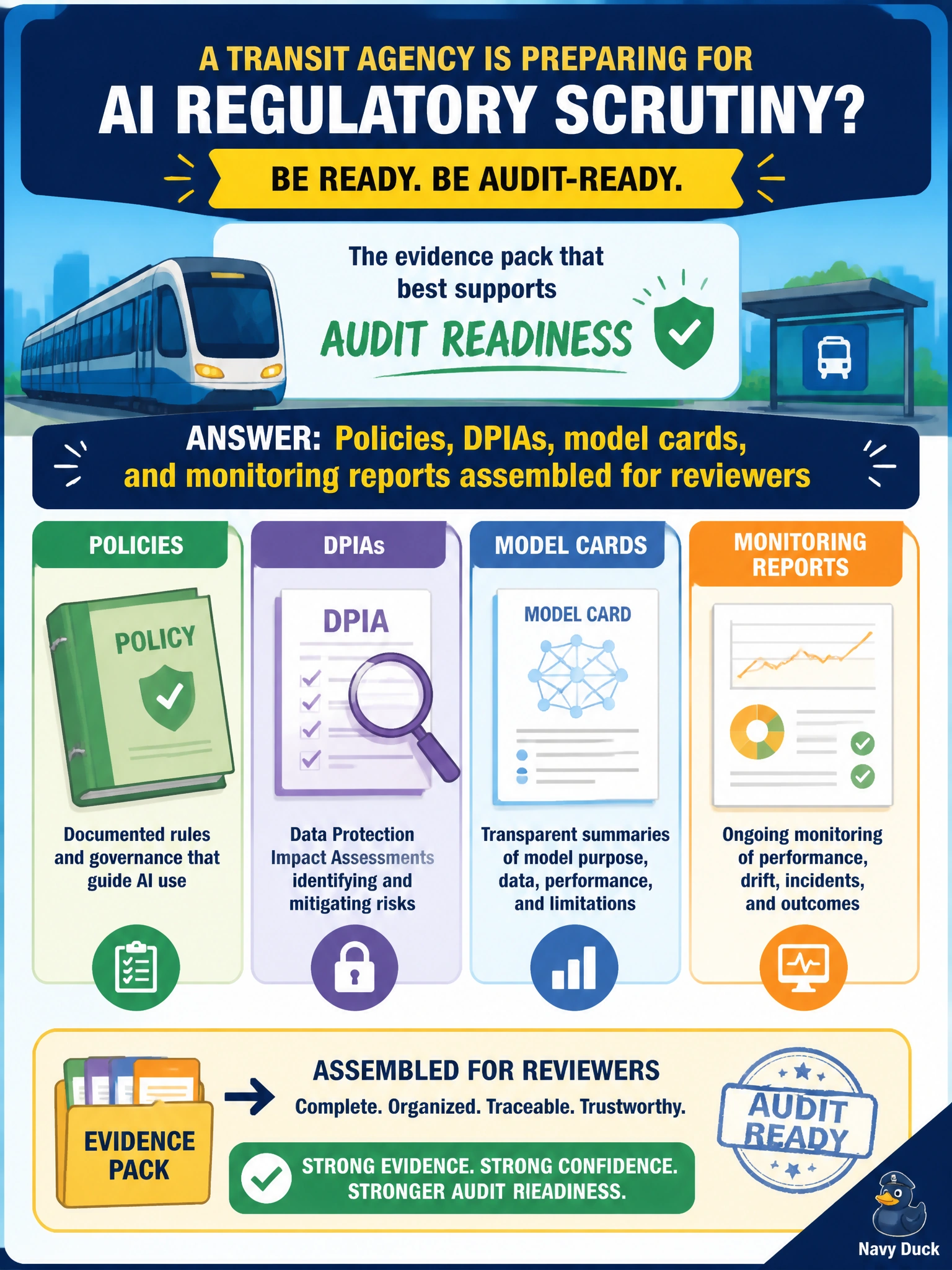
Auditors don’t grade your enthusiasm poster. They want policies, DPIAs, model cards, and monitoring reports—packed and ready when transit AI gets reviewed.
Full Explanation
Audit readiness for transit AI depends on an assembled evidence pack: policies that define allowed use and controls, DPIAs or equivalent assessments for higher-risk systems, model cards documenting intended use and limitations, and monitoring reports showing ongoing performance and incident handling. Reviewers—internal audit, regulators, or oversight boards—need retrievable artifacts that demonstrate control design and operating effectiveness, not enthusiasm about innovation or oral assurances from project teams.
Only oral briefings with no retained artifacts fail because oral claims are not durable evidence under scrutiny. A single motivational poster about innovation fails by concept: posters are communications products, not control evidence for AI systems affecting riders or operations. Unorganized chat screenshots with no policies or assessments fail completeness and authenticity expectations for formal regulatory or audit review.
Exam caveat: evidence packs should be risk-tiered and current; a low-risk FAQ bot needs less than a safety-adjacent or rider-rights-impacting system, but high-scrutiny reviews still expect coherent policy, assessment, model documentation, and monitoring. Operational check: maintain a per-system evidence index linking policy, DPIA or assessment, model card, and latest monitoring report; rehearse retrieval before audits so transit AI scrutiny does not become a scavenger hunt.