
A housing authority deploys an eligibility model with city staff and a vendor. What should documentation clarify?
Select an answer to reveal the explanation.
Short Explanation
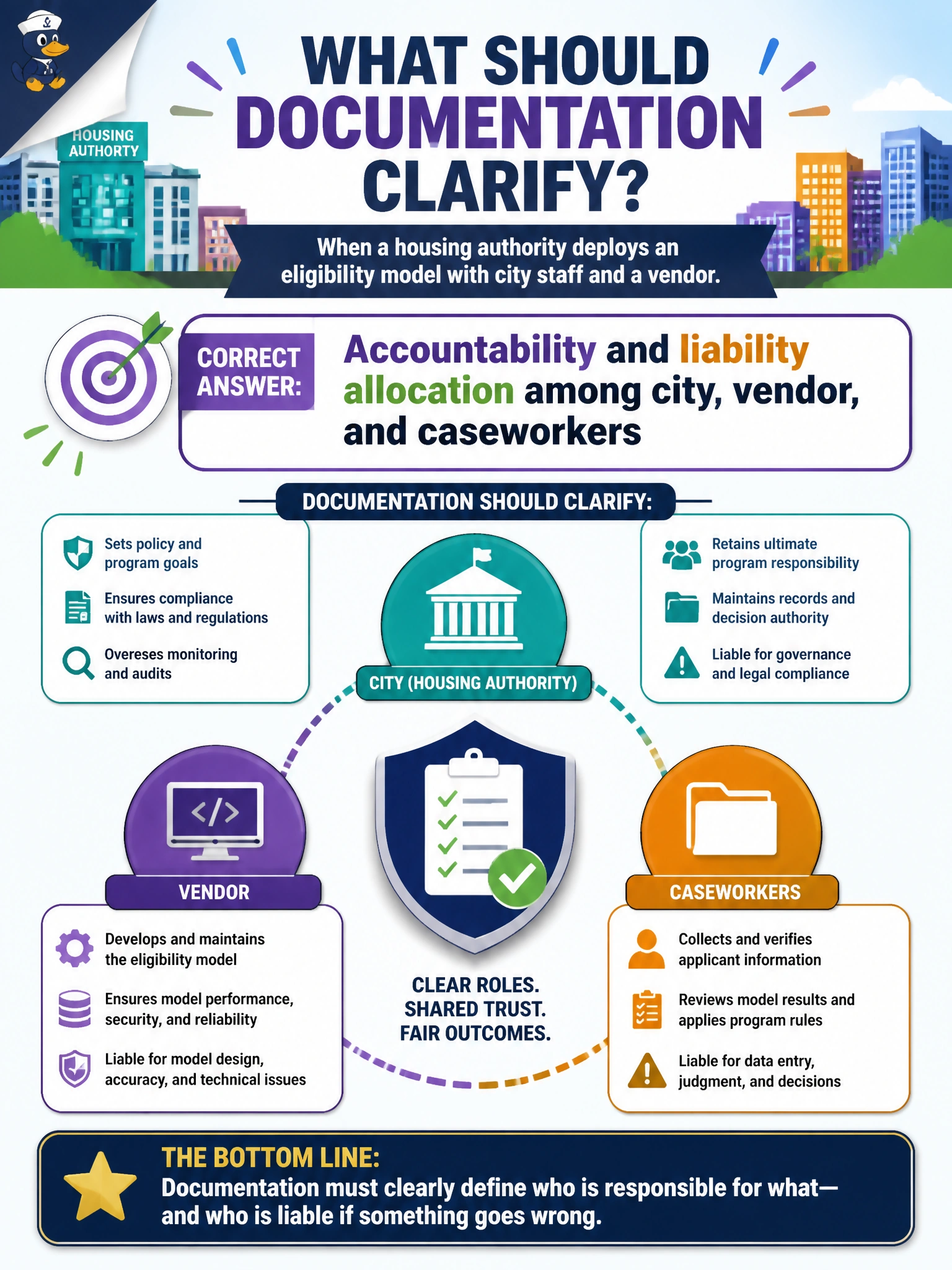
When an eligibility model misfires, “not my problem” isn’t a compliance strategy. Spell out how accountability and liability split among the city, the vendor, and caseworkers.
Full Explanation
Eligibility models jointly operated by a housing authority and a vendor require documentation that allocates accountability and liability among the city, the vendor, and caseworkers. Contracts and operating procedures should state who owns model performance monitoring, who handles resident appeals when AI-influenced decisions err, who notifies affected parties, and how financial or legal liability is shared for defects, bias incidents, or misuse. Clear allocation prevents finger-pointing during incidents and supports compliance reviews of housing determinations.
Stating that nobody is accountable if the model errs fails governance and due process for residents whose housing access is at stake. Assigning liability only to social media influencers fails by concept: influencers are not parties to municipal eligibility operations or vendor contracts. Leaving contracts silent on AI responsibility forever fails risk transfer and operational clarity—silence defaults to dispute after harm, not to safe operations beforehand.
Exam caveat: allocation does not let the city outsource residual public accountability for unlawful or unfair eligibility outcomes; it clarifies roles while the municipality remains answerable to residents and oversight bodies. Operational check: review the vendor agreement and SOPs for explicit AI accountability clauses, caseworker override and appeal duties, and incident liability language—then tabletop an eligibility-error scenario to verify each party knows its required actions.