
A permitting office uses AI that can conflict with zoning code interpretation. What control is most needed?
Select an answer to reveal the explanation.
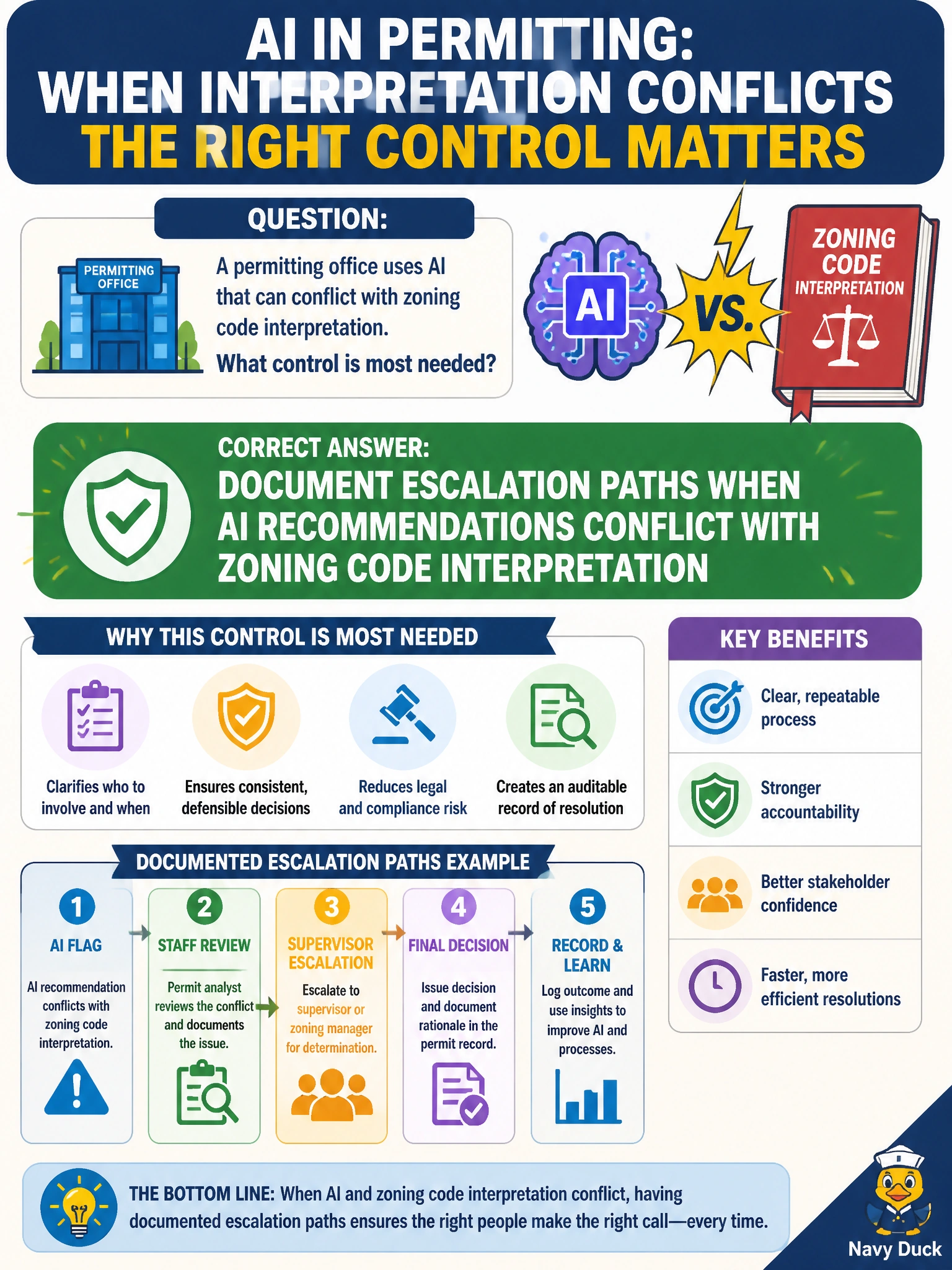
Short Explanation
When the AI and the zoning code disagree, you need a written off-ramp—who to call, how to escalate—not a rule that says “trust the model anyway.”
Full Explanation
When permitting AI can conflict with zoning code interpretation, documented escalation paths are the necessary control. Staff need a written path to supervisors, zoning officials, or legal counsel when model recommendations diverge from code, adopted interpretations, or case facts—without penalty for raising the conflict. Escalation preserves lawful decision rights: the code and authorized human interpreters remain authoritative, while AI remains an assistant that can be overruled and improved.
Forcing staff to follow AI even when it contradicts the code fails legality and due process. Hiding conflicts from supervisors to keep throughput high fails by concept: concealed conflicts create systemic noncompliance and corrupt training feedback. Deleting zoning references so AI cannot be checked fails verification design—removing the authoritative standard makes errors undetectable.
Exam caveat: escalation documentation should specify triggers, contacts, time expectations, and how outcomes feed model/process improvement; it is not merely a vague “ask someone.” Operational check: publish the escalation SOP in the permitting AI playbook, train staff on conflict examples, and review a sample of escalations to confirm AI-over-code outcomes never proceeded without authorized human resolution.