
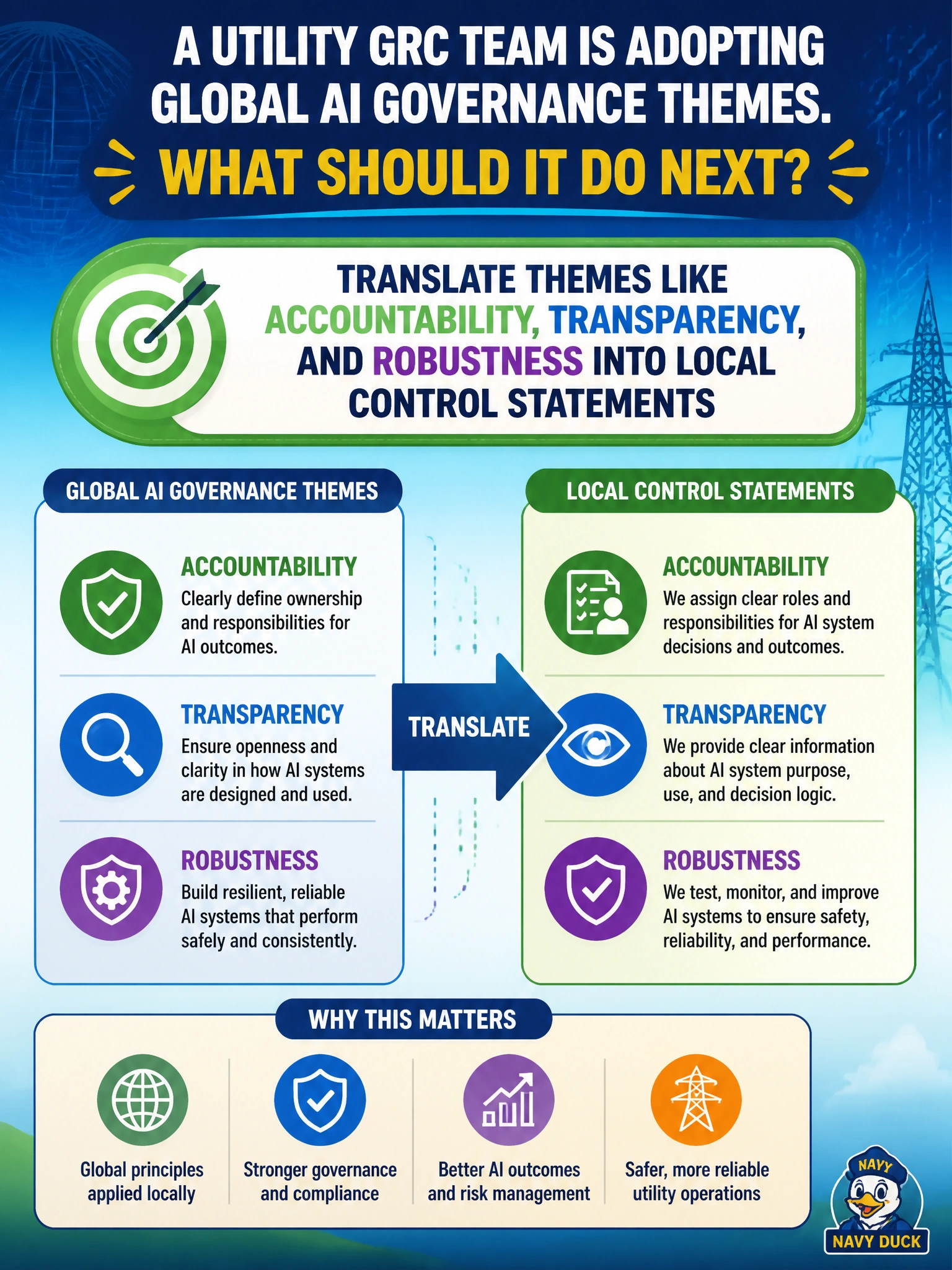
A utility GRC team is adopting global AI governance themes. What should it do next?
Select an answer to reveal the explanation.
Short Explanation
Accountability, transparency, and robustness look great on a poster—until you turn them into local control statements the utility can actually test. That’s the real work.
Full Explanation
Global AI governance themes—accountability, transparency, robustness, and similar principles—help a utility only after they are translated into local control statements the GRC team can test. Translation means writing utility-specific requirements (for example, named owners for predictive maintenance models, disclosed use of GenAI in customer communications, monitoring thresholds for drift, and incident escalation SLAs) and mapping them into policies, standards, and evidence collections. That step connects international language to water/energy operational reality and auditor expectations.
Leaving global themes as posters with no local controls fails operationalization. Adopting themes only for press releases, never for operations, fails by concept: communications claims without control statements create assurance gaps and reputational risk when incidents occur. Rejecting all framework themes without mapping to utility practice fails learning—wholesale rejection skips the useful work of selecting and localizing relevant controls.
Exam caveat: translation is selective and risk-based; utilities need not implement every global slogan verbatim, but chosen themes must become verifiable local controls. Operational check: maintain a theme-to-control matrix with owners and test procedures, and include sample control tests in GRC reviews so “accountability/transparency/robustness” are evidenced, not merely posted.