
A 311 office is writing AI use policy. What scope control should the policy define?
Select an answer to reveal the explanation.
Short Explanation
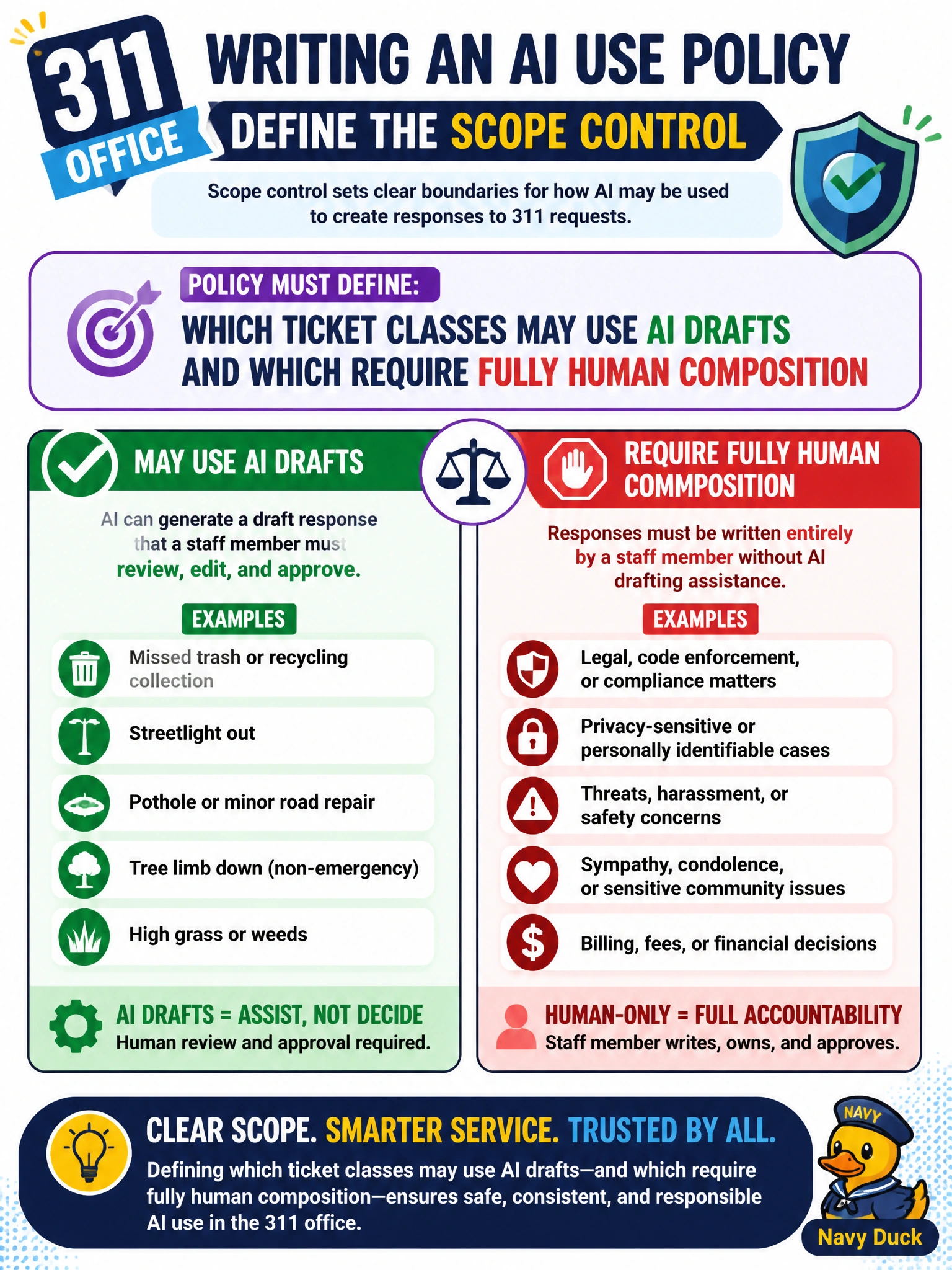
Not every 311 ticket is a good place for an AI first draft. The policy should spell out which classes can use AI drafts and which stay fully human—clear lanes, fewer surprises.
Full Explanation
311 AI use policy is a scope instrument: it must state which ticket classes may receive AI-assisted drafts and which classes require fully human composition. Differentiating routine informational replies from sensitive complaints, legal threats, accessibility accommodations, or high-stakes service disputes keeps automation inside risk appetite while still capturing efficiency where drafts are appropriate. Explicit scope also tells agents and supervisors what review is mandatory, what disclosure expectations apply, and when escalation overrides AI assistance—turning policy into day-to-day decision rights for the contact center.
Allowing AI to answer every ticket type with no human review ever fails because 311 spans risk tiers; unbounded automation ignores harm potential in vulnerable-resident cases. Requiring agents to hide AI-drafted replies from supervisors fails by concept: concealment breaks quality assurance, training feedback, and accountability when drafts misstate policy. Limiting policy to paper mail and never digital channels fails operational reality—digital is where AI drafts typically appear—and creates a channel loophole that hollows governance.
Exam caveat: “human composition” for restricted classes does not ban all tooling; it means the authoritative reply content is produced under human authorship standards defined by policy, not unsupervised model output. Operational check: map ticket taxonomies to AI-permitted vs human-required classes, train agents on the map, and sample audits to verify restricted classes were not AI-auto-sent without required human composition and supervisory visibility.