
An assessor’s office completes an AI maturity self-assessment. How should the results primarily inform planning?
Select an answer to reveal the explanation.
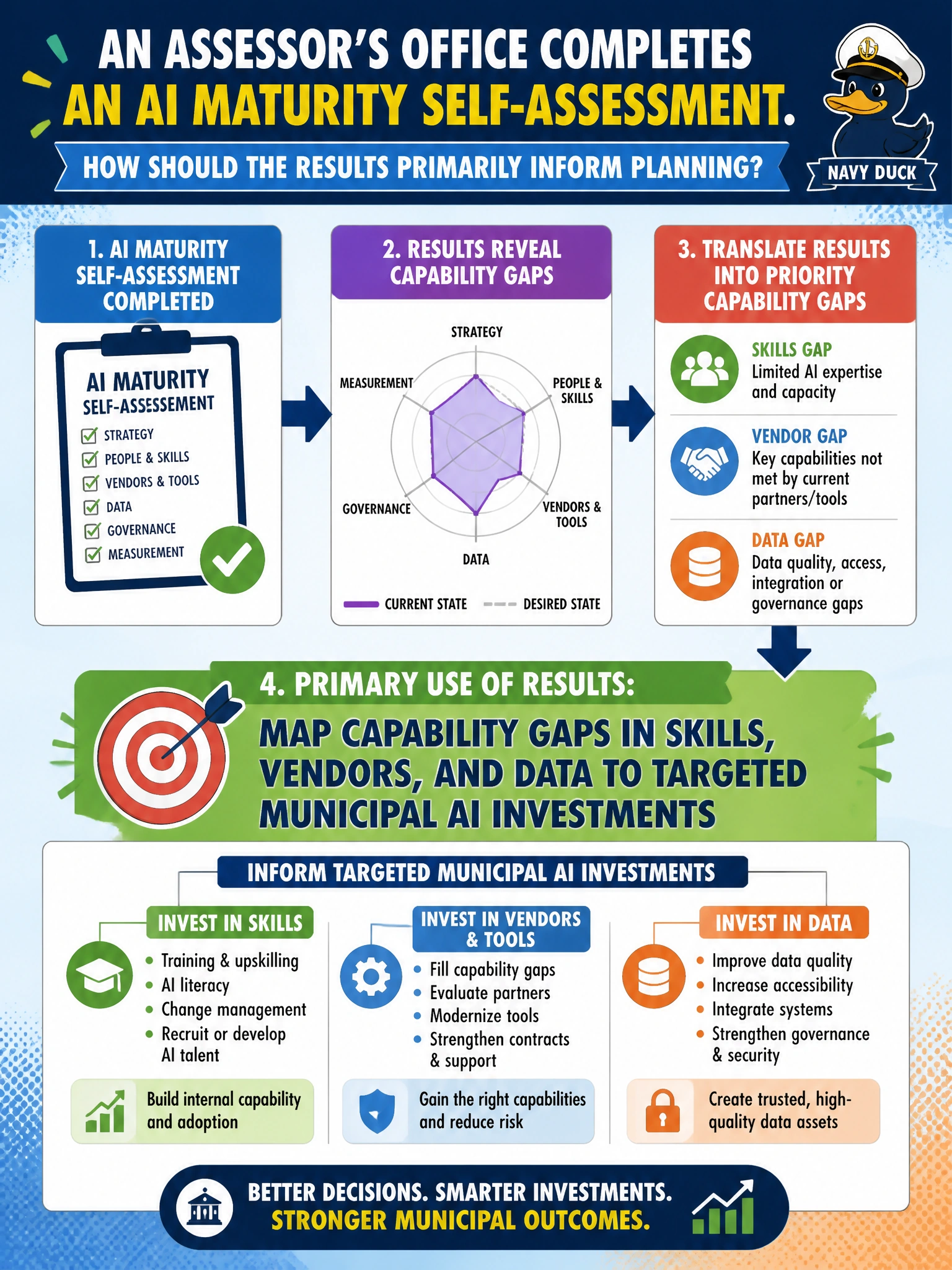
Short Explanation
A maturity score without a gap map is a report card you never open. Turn skills, vendor, and data gaps into a shopping list of investments the assessor’s office actually needs.
Full Explanation
The correct answer is mapping capability gaps in skills, vendors, and data to targeted municipal AI investments after an AI maturity self-assessment. An assessor’s office should treat maturity results as a diagnostic: where staff skills are thin, fund training or hiring; where vendor management is weak, strengthen procurement and oversight; where data is immature, fund quality and integration work. Targeted investments convert a score into a plan the office can execute and defend to leadership.
Ignoring gaps and funding the most expensive vendor package immediately fails by concept because spend without gap mapping often buys unused capability. Publishing the maturity score alone with no investment plan fails because a number without actions does not improve readiness. Classifying all gaps as unfixable so nothing changes fails as learned helplessness incompatible with continuous improvement.
Exam caveat: maturity assessments are inputs to investment planning, not vanity scores or excuses for inaction. Operational check: produce a gap-to-investment matrix from the self-assessment, prioritize the highest-impact gaps for the next budget cycle, and revisit maturity after those investments land.