
A parks department is sequencing AI roadmap funding. How should it align initiative timing?
Select an answer to reveal the explanation.
Short Explanation
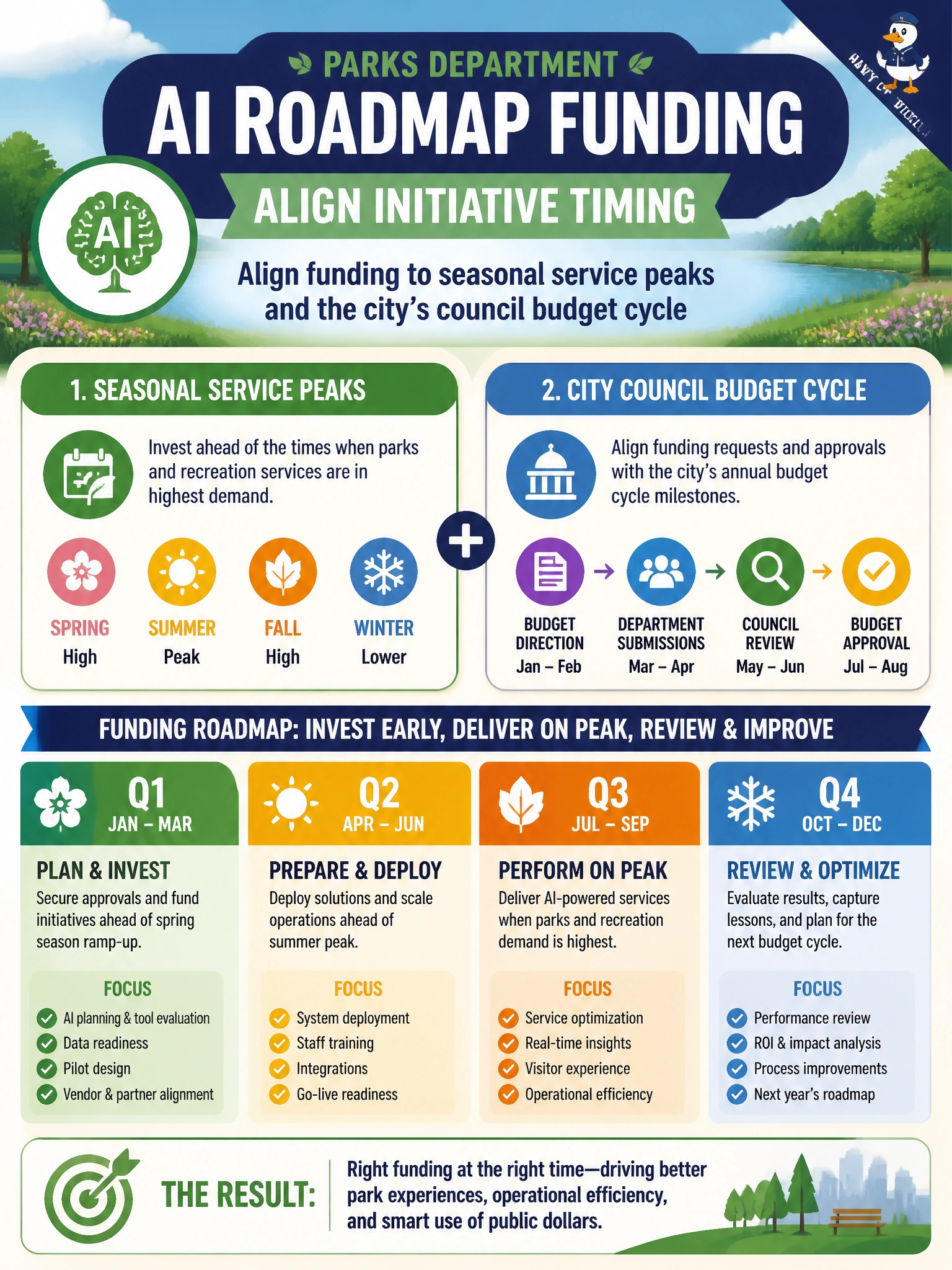
Think of the parks calendar like a season ticket—money and crews show up on a schedule. Time AI spend to peak seasons and council budget cycles so you’re not buying tools when nobody’s around to run them.
Full Explanation
Municipal AI roadmaps succeed when funding and rollout are synchronized with how the city actually appropriates money and how parks operations actually staff work. Aligning initiative timing to seasonal service peaks and the council budget cycle means capital and operating requests land in windows where appropriation authority exists, seasonal crews are available for training and change management, and peak-season service demand can absorb or benefit from the capability without starving core maintenance. For a parks department, that typically means sequencing discovery and procurement in quieter budget-prep periods, piloting before peak visitation, and sizing go-live support to the same seasonal calendar that drives mowing, recreation programming, and special-event surge staffing.
Ignoring council budget cycles and launching whenever a vendor demo is ready fails because vendor sales calendars are not appropriation calendars; unbudgeted commitments create mid-year reallocation pressure, incomplete training, and orphaned licenses when fiscal closeouts hit. Funding every AI idea only during peak summer staffing with no off-season prep fails because peak season is when crews are least available for configuration, data cleanup, and supervised rollout—timing spend solely to summer staffing inverts operational readiness. Tying spending solely to social-media campaign calendars for parks events fails by concept: marketing campaign timing optimizes outreach, not IT change windows, cybersecurity review, or council appropriation gates.
Exam caveat: “align to the budget cycle” does not mean delay forever or refuse multi-year roadmaps; it means map each funding tranche and go-live gate to known civic fiscal and seasonal constraints rather than treating AI as calendar-agnostic. Operational check: for each parks AI initiative, document the target appropriation window, the seasonal staffing plan for training and hypercare, and the contingency if council timing slips—then verify the vendor statement of work does not force a go-live outside those constraints.