
An elections office is sequencing AI use cases under high public trust requirements. Which approach is most risk-aware?
Select an answer to reveal the explanation.
Short Explanation
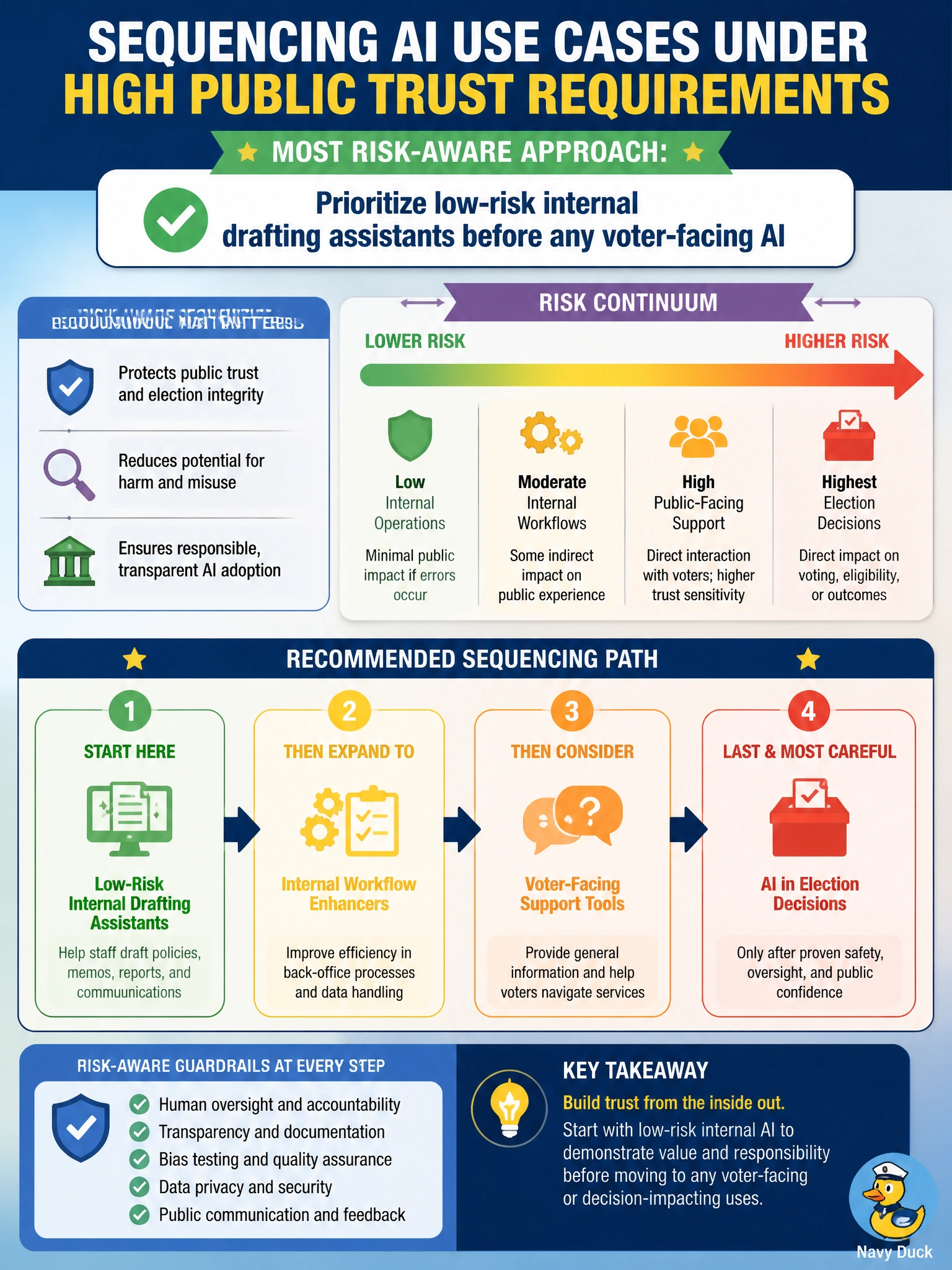
Elections are the last place to learn AI the hard way in public. Start with low-risk internal drafting helpers; keep voter-facing AI later—if ever—after the office has scars and skills.
Full Explanation
The correct answer is prioritizing low-risk internal drafting assistants before any voter-facing AI under high public trust requirements. An elections office must sequence use cases by risk to democratic legitimacy: start where blast radius is limited (internal drafting, summarization for staff with human review), build skills and controls, and only later—if ever—consider carefully bounded voter-facing tools. That risk-aware approach protects election integrity perception as much as technical accuracy.
Deploying voter-facing AI first to maximize visibility fails by concept because visibility multiplies trust risk before the office has operational maturity. Automating ballot decisions with no human canvass role fails because core election determinations require human accountability and statutory process. Skipping risk ranking because elections are “too important for process” fails logically: high importance increases, not decreases, the need for disciplined risk sequencing.
Exam caveat: high-trust domains (elections, justice, benefits) favor low-risk internal assists first. Operational check: maintain a risk-ranked use-case register, approve only internal assistive pilots initially, require human review on all AI-touched election communications, and escalate any voter-facing proposal through counsel and election officials.