
A water utility is excited about a GenAI customer-care bot but meter-data quality scores are poor. What readiness-driven sequencing decision is appropriate?
Select an answer to reveal the explanation.
Short Explanation
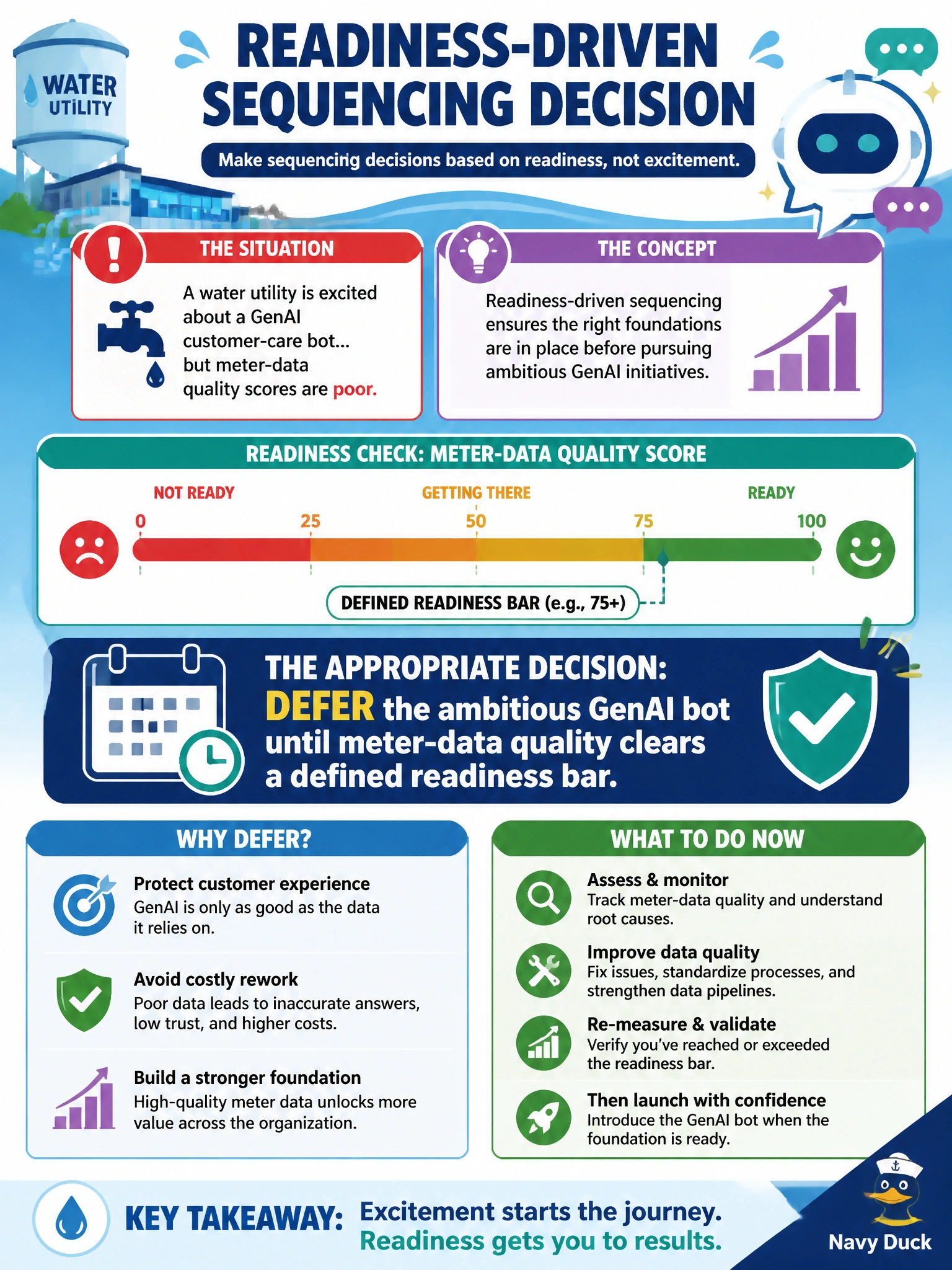
A shiny bot on rotten meter data is just a confident liar. Defer the GenAI customer-care idea until data quality clears the readiness bar—that’s adult sequencing.
Full Explanation
The correct answer is deferring the ambitious GenAI customer-care bot until meter-data quality clears a defined readiness bar. A water utility excited about GenAI still depends on trustworthy meter and billing context for accurate answers about usage, leaks, and bills. Readiness-driven sequencing puts data quality first: define thresholds for completeness, accuracy, and timeliness; remediate; then allow the bot pilot. Launching GenAI on poor meter data produces confident wrong answers that erode trust and create billing disputes.
Launching the bot immediately and hoping data quality improves later fails by concept because hope is not a control and residents experience errors immediately. Faking quality scores so the pilot calendar looks green fails as integrity fraud that hides risk from governance. Replacing meter data with invented readings for training fails because synthetic fabrication of operational truth destroys validity and can encode false patterns.
Exam caveat: readiness sequencing often means “data first, flashy GenAI later” when stems cite poor quality scores. Operational check: publish a meter-data quality bar, track it weekly, and keep the GenAI bot gated behind a documented pass decision by data and customer-service owners.