
A housing authority plans an 18-month AI roadmap. What does sound roadmap development emphasize?
Select an answer to reveal the explanation.
Short Explanation
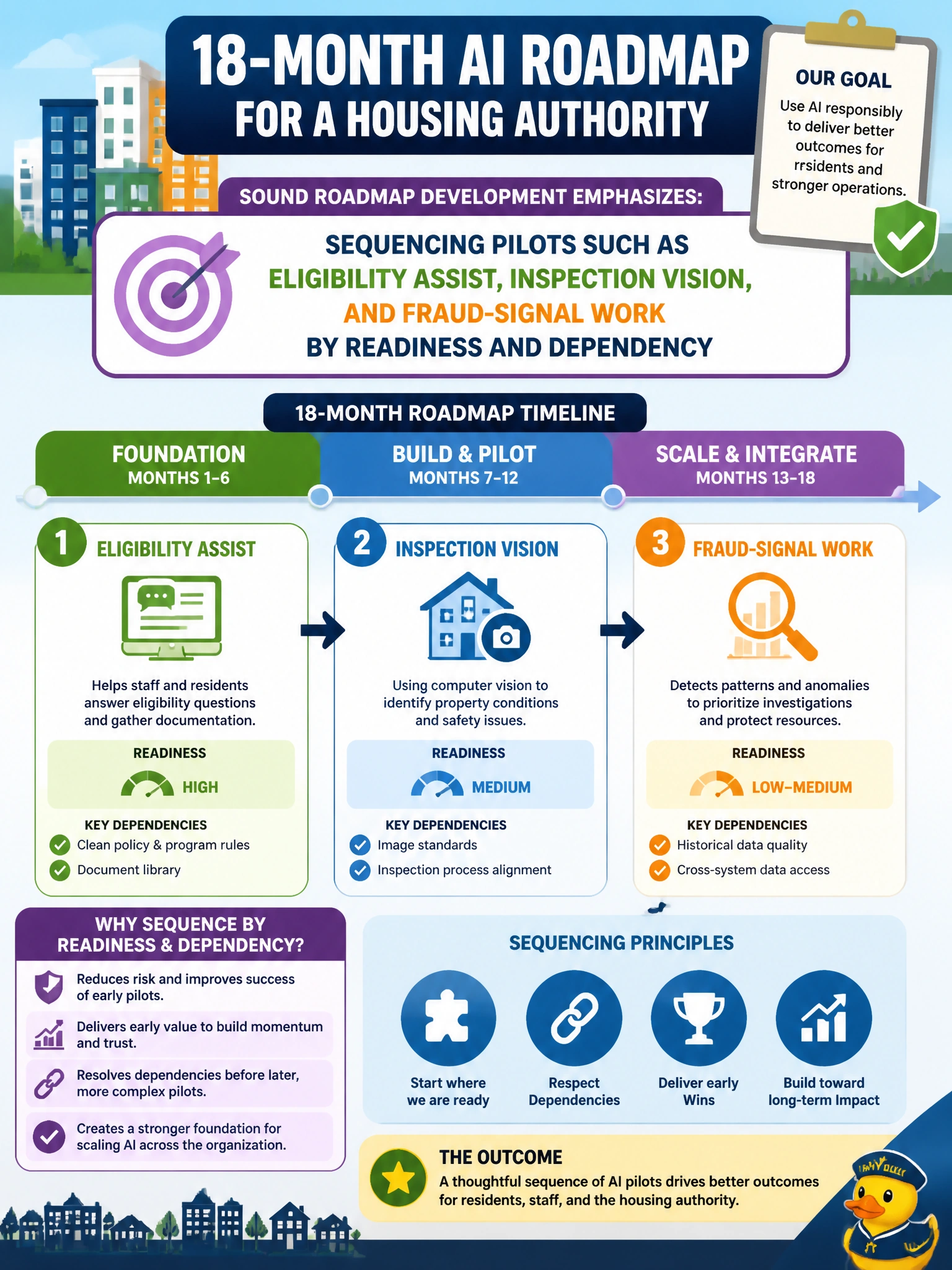
An 18-month roadmap is a playlist, not a dump truck. Sequence eligibility assist, inspection vision, and fraud signals by readiness and dependencies so each pilot sets up the next.
Full Explanation
The correct answer is sequencing pilots such as eligibility assist, inspection vision, and fraud-signal work by readiness and dependency. Sound 18-month roadmap development for a housing authority is about ordered learning: place foundational or lower-dependency work where data and process readiness exist, then stage later pilots that rely on cleaned eligibility data, inspection pipelines, or established oversight. Sequencing by readiness and dependency prevents simultaneous launches that starve scarce staff and create ungoverned overlap.
Launching every idea on day one with no sequencing fails by concept because parallel chaos ignores capacity and dependency risk. Keeping the plan secret from program owners until go-live fails because roadmap ownership requires service leaders who understand housing operations. Funding only tools with no link to housing services fails because strategy must connect spend to mission outcomes, not orphan tech purchases.
Exam caveat: roadmap items emphasize sequencing and dependencies over “everything now.” Operational check: build a Gantt-style pilot sequence with explicit dependency notes, gate each pilot on readiness evidence, and brief housing program owners before locking the 18-month plan.