
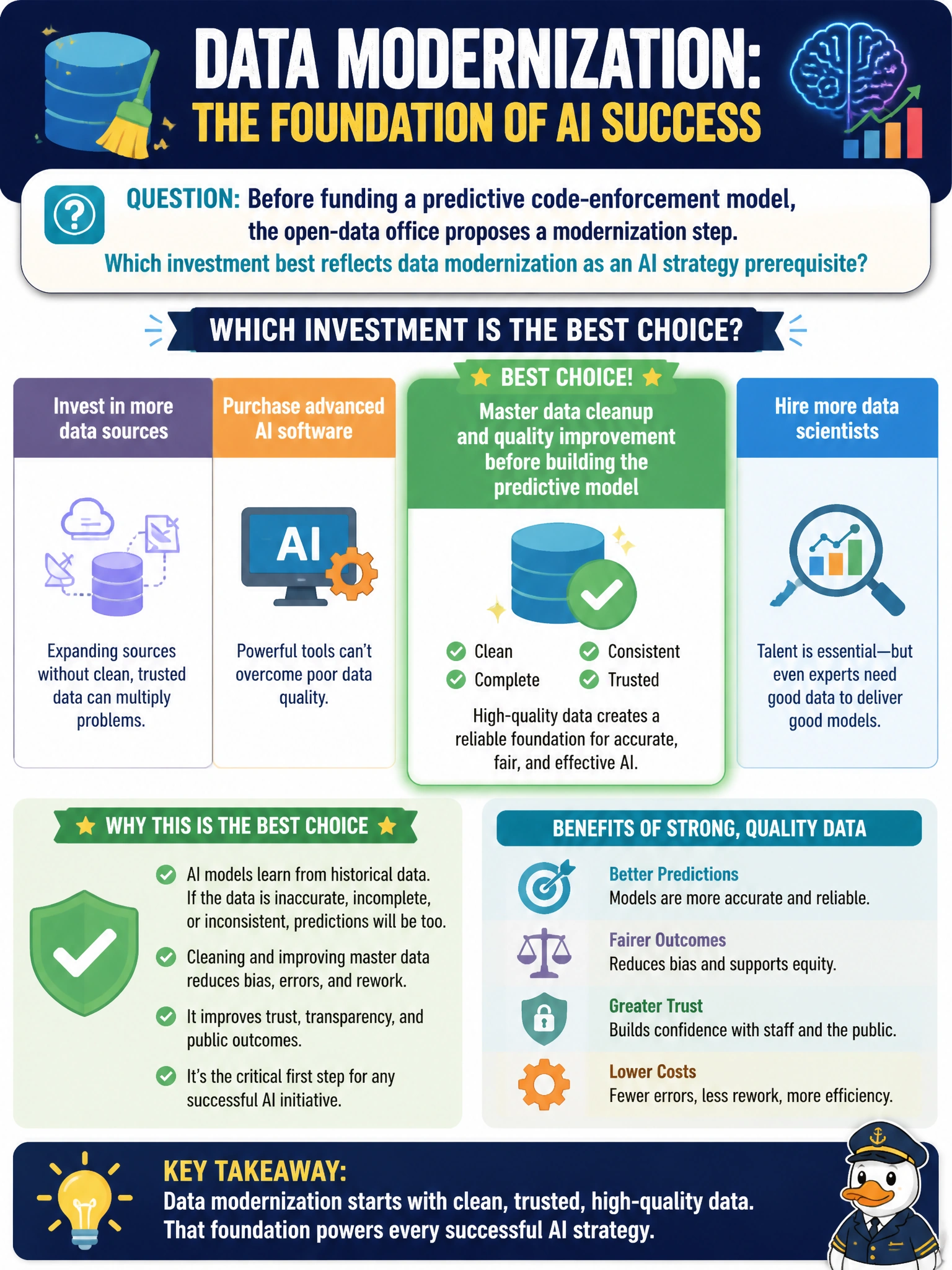
Before funding a predictive code-enforcement model, the open-data office proposes a modernization step. Which investment best reflects data modernization as an AI strategy prerequisite?
Select an answer to reveal the explanation.
Short Explanation
Predictive models hate dirty parcel files the way plows hate frozen hydrants. Clean the master data first—then the code-enforcement model has something trustworthy to learn from.
Full Explanation
The correct answer is investing in master data cleanup and quality improvement before building the predictive code-enforcement model. Data modernization as an AI strategy prerequisite means fixing parcel identity, duplicates, missing attributes, and inconsistent histories so the model learns from trustworthy civic records. Open-data and analytics teams correctly argue that prediction on dirty master data amplifies error into enforcement actions that touch residents’ property and livelihoods.
Buying a model first and inventing training labels afterward fails by concept because labels and ground truth must precede credible supervised learning, not follow purchase. Ignoring duplicate parcel records because “models fix everything” fails as a myth; models often amplify duplicate-driven bias and leakage. Skipping metadata so analysts move faster this week fails because missing metadata destroys lineage, reuse, and governance needed for sustainable AI.
Exam caveat: strategy questions often place data quality upstream of model build—do not pick “buy model first” shortcuts. Operational check: fund a time-boxed master-data cleanup with quality KPIs, block predictive model training until quality gates pass, and document lineage for code-enforcement features.