
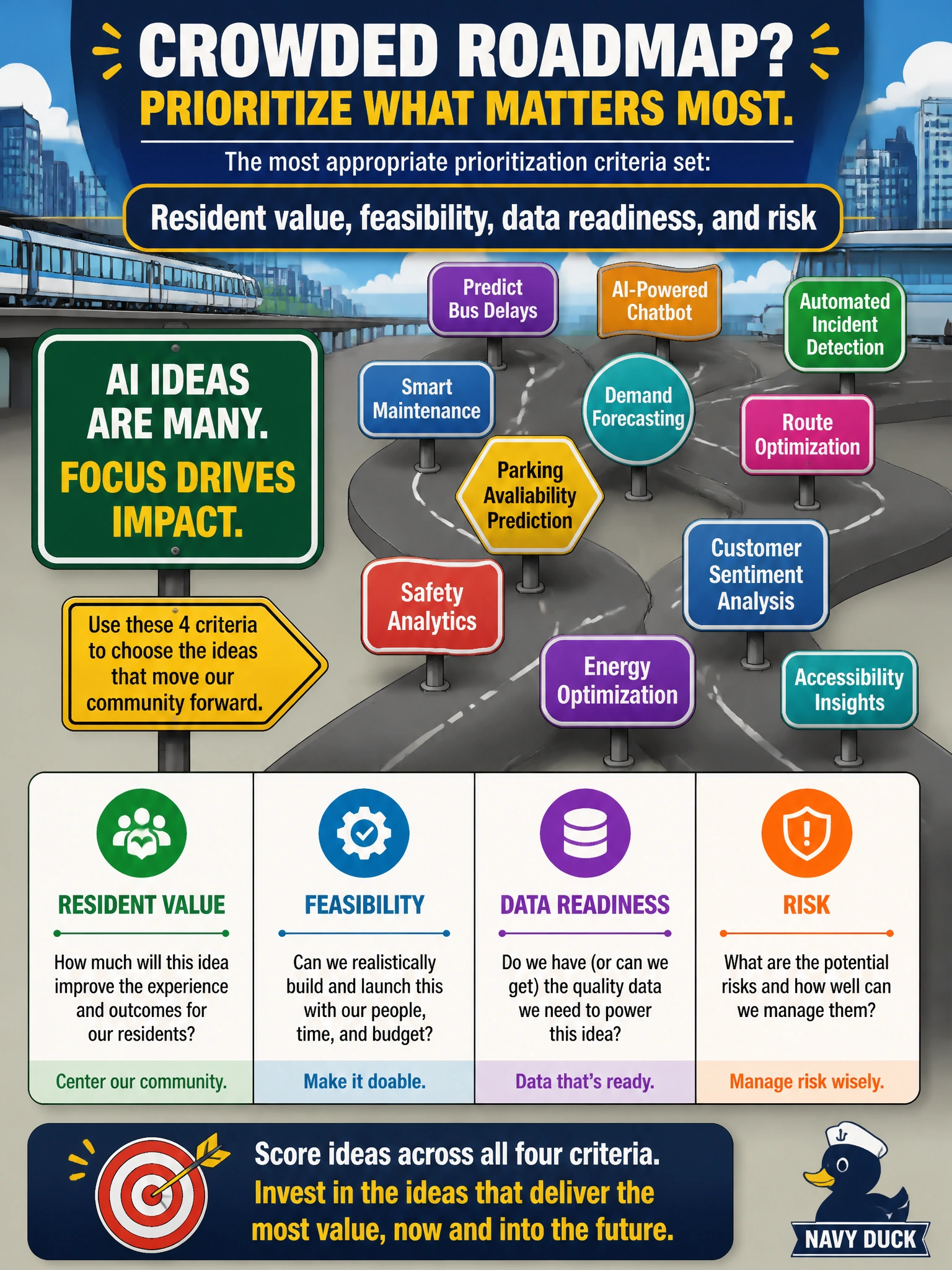
A transit authority must place AI ideas on a crowded roadmap. Which prioritization criteria set is most appropriate?
Select an answer to reveal the explanation.
Short Explanation
Roadmaps shouldn’t be a popularity contest of demos. Score use cases on resident value, feasibility, data readiness, and risk—then the queue almost ranks itself.
Full Explanation
The correct answer is prioritizing AI ideas using resident value, feasibility, data readiness, and risk. A transit authority with a crowded roadmap needs transparent criteria that explain why one use case advances and another waits. Resident value asks whether riders or operators gain meaningful benefit. Feasibility checks delivery capacity and integration reality. Data readiness asks whether labels, quality, and access exist. Risk covers safety, privacy, equity, and reputational exposure. Together these criteria produce a defendable portfolio order for board and public scrutiny.
Whoever emailed the CIO first fails by concept as a queue based on lobbying speed, not public value. Only the use case with the flashiest demo video fails because demo polish predicts salesmanship more than operational fitness. Alphabetical order of vendor logos fails as an arbitrary non-criterion unrelated to civic need or risk.
Exam caveat: prioritization stems reward multi-criteria public-value frameworks, not first-come or demo-driven selection. Operational check: score each transit AI proposal on the four criteria with written rationale, publish the ranked backlog to program owners, and re-score when data readiness or risk posture changes.