
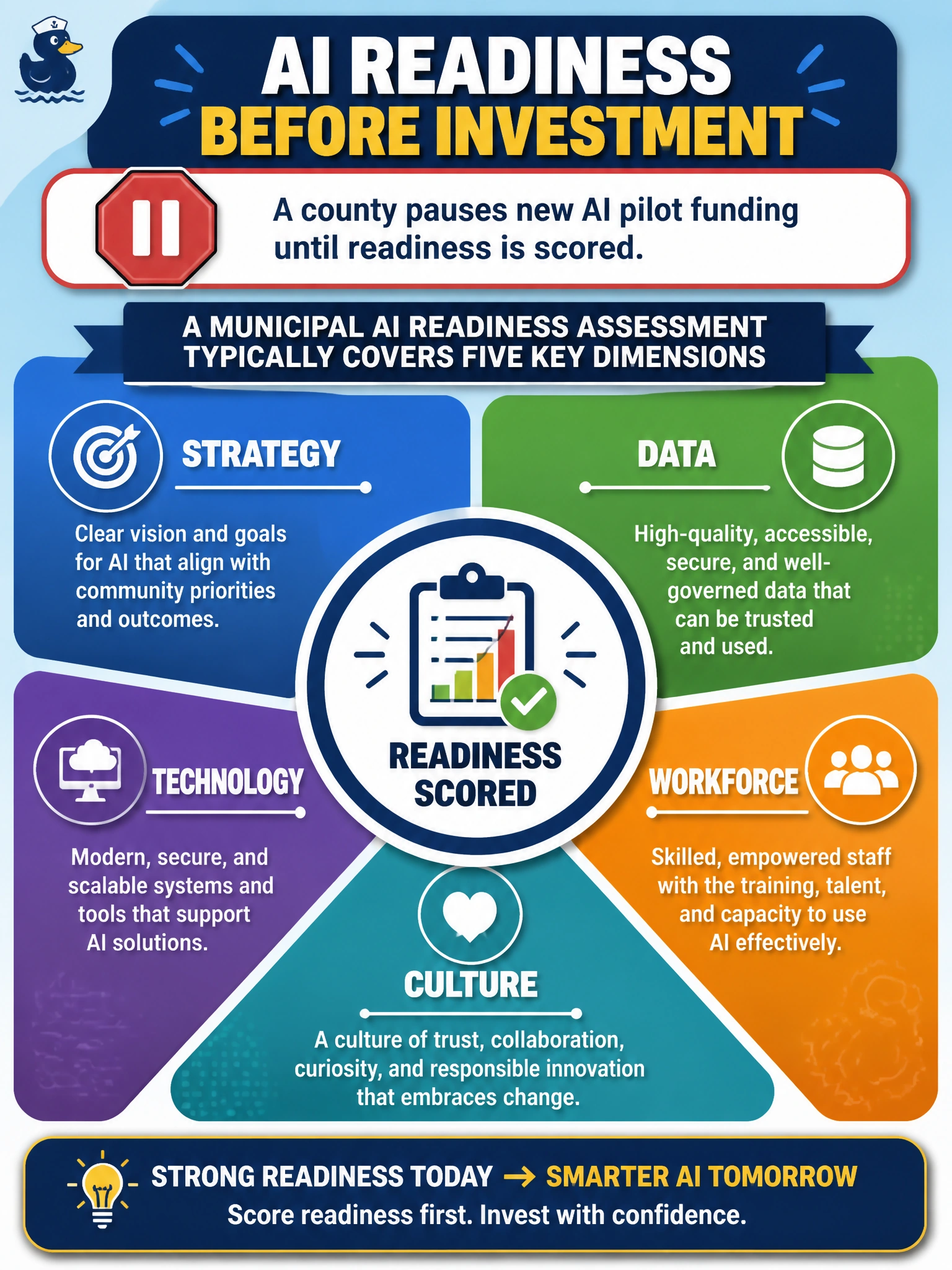
A county pauses new AI pilot funding until readiness is scored. Which dimensions should a municipal AI readiness assessment typically cover?
Select an answer to reveal the explanation.
Short Explanation
Readiness isn’t “do we have a shiny GPU?” It’s strategy, data, tech, people, and culture—five dials that tell you if a pilot will fly or face-plant.
Full Explanation
The correct answer is that a municipal AI readiness assessment typically covers strategy, data, technology, workforce, and culture. When a county pauses new AI pilot funding until readiness is scored, leadership needs a multidimensional picture: strategy alignment and sponsorship; data quality, access, and governance; technology platforms and security; workforce skills and staffing; and culture of responsible use and change readiness. Scoring those dimensions before releasing pilot funds reduces avoidable failures where a tool is bought into an unprepared organization.
Only the color theme of the vendor brochure fails by concept because aesthetics are not readiness. Only how many chat widgets appear on the homepage fails because UI presence does not prove organizational capacity. Only the number of GPUs in a single closet fails because hardware inventory is a narrow technology proxy and ignores strategy, data, people, and culture.
Exam caveat: readiness frameworks on CRAGE-style items are multi-pillar; single-metric answers are almost always distractors. Operational check: score each readiness dimension with evidence, set a funding threshold, and invest first in the lowest-scoring pillars (often data and workforce) before approving high-ambition pilots.