
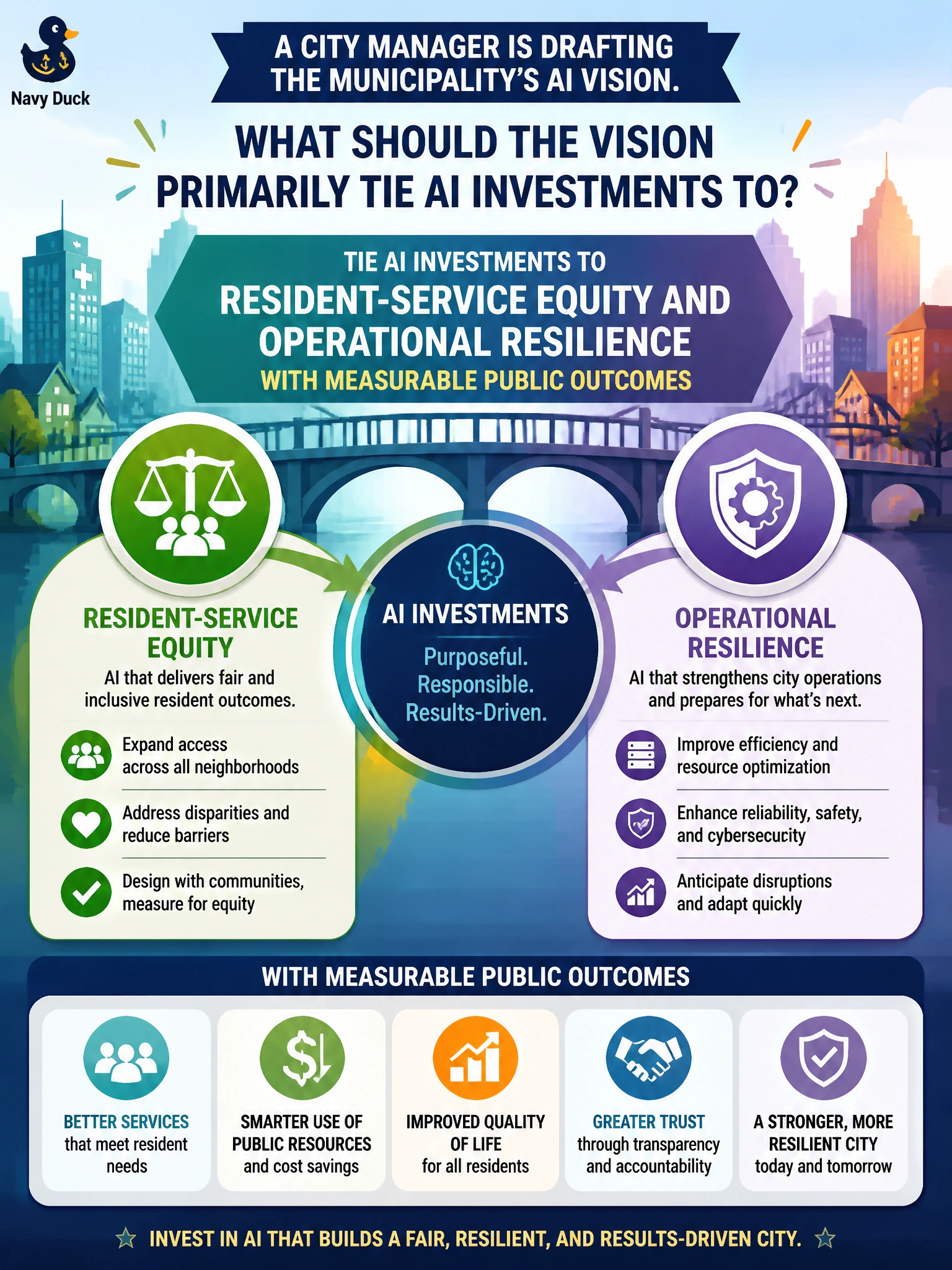
A city manager is drafting the municipality’s AI vision. What should the vision primarily tie AI investments to?
Select an answer to reveal the explanation.
Short Explanation
A vision isn’t a souvenir from a vendor booth. Tie AI to resident equity and operational resilience—with outcomes you can actually measure—so the city knows why it’s spending the money.
Full Explanation
The correct answer is tying the municipality’s AI vision primarily to resident-service equity and operational resilience with measurable public outcomes. A city manager drafting vision language should connect AI investments to why the city exists: fairer, more reliable services residents can feel, plus continuity under surge or disruption. Measurable outcomes—reduced wait times with equity stratification, fewer preventable outages, improved case completion for underserved ZIP codes—turn vision into a prioritization filter for budget and pilots rather than a technology fashion statement.
Whatever trendy demo impressed a conference booth last week fails by concept because vendor theater is not a public-value north star. Unlimited model count regardless of service need fails because portfolio sprawl without outcome linkage wastes funds and multiplies risk. Replacing council oversight with fully autonomous policy bots fails because democratic accountability is not an optional legacy process AI should erase.
Exam caveat: municipal AI strategy items usually center public value and measurable outcomes over novelty. Operational check: publish vision language that names equity and resilience outcomes, require every AI funding request to map to those outcomes with metrics, and review progress in the performance management cycle.