
311 leadership deploys an AI drafting assistant for resident replies. What responsible usage practice should staff training emphasize?
Select an answer to reveal the explanation.
Short Explanation
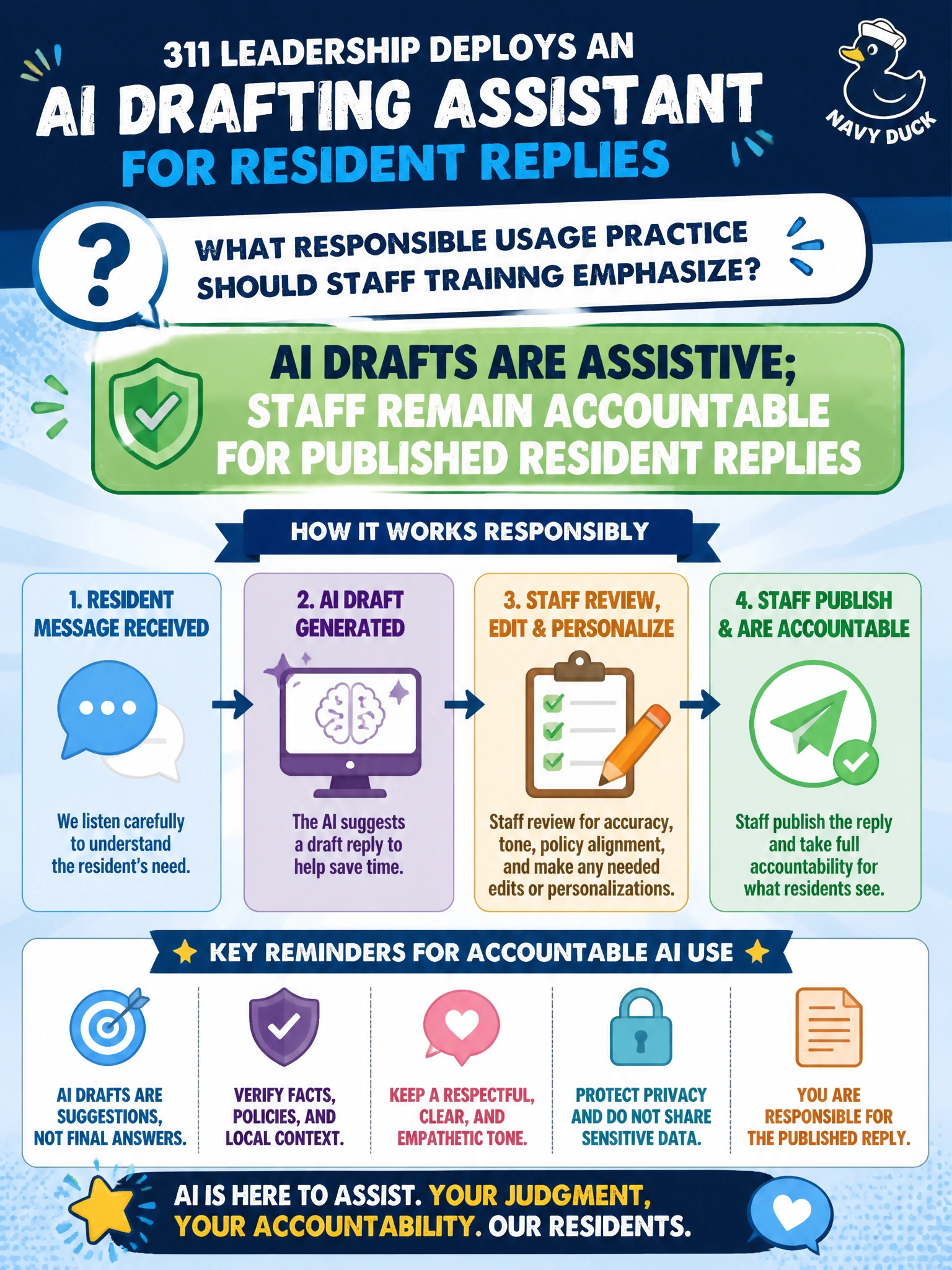
The bot can draft, but the badge still belongs to the human. Train 311 staff that AI is assistive and they own whatever goes out the door to residents.
Full Explanation
The correct answer is training staff that AI drafts are assistive and that staff remain accountable for published resident replies. When 311 leadership deploys an AI drafting assistant, the operational risk is rubber-stamping inaccurate, insensitive, or policy-wrong text to the public. Responsible usage practice emphasizes human accountability: staff must review, edit, and own every reply that leaves under the city’s name. The assistant accelerates drafting; it does not transfer duty of care to a model or a vendor.
Allowing staff to publish any AI draft without reading it fails by concept because speed without review invites factual and tone failures that damage trust. Automatically blaming the vendor if a resident complains about tone fails because operational accountability for published civic communications remains with the agency that sent them. Disabling logging so no one can reconstruct who approved a reply fails because it destroys auditability and learning when incidents occur.
Exam caveat: assistive vs. autonomous distinctions appear often; look for “staff remain accountable” language on public communications. Operational check: require review-before-send in the 311 tool, log author and approver identity, sample-audit AI-assisted replies weekly, and include accountability language in staff training and SOPs.