
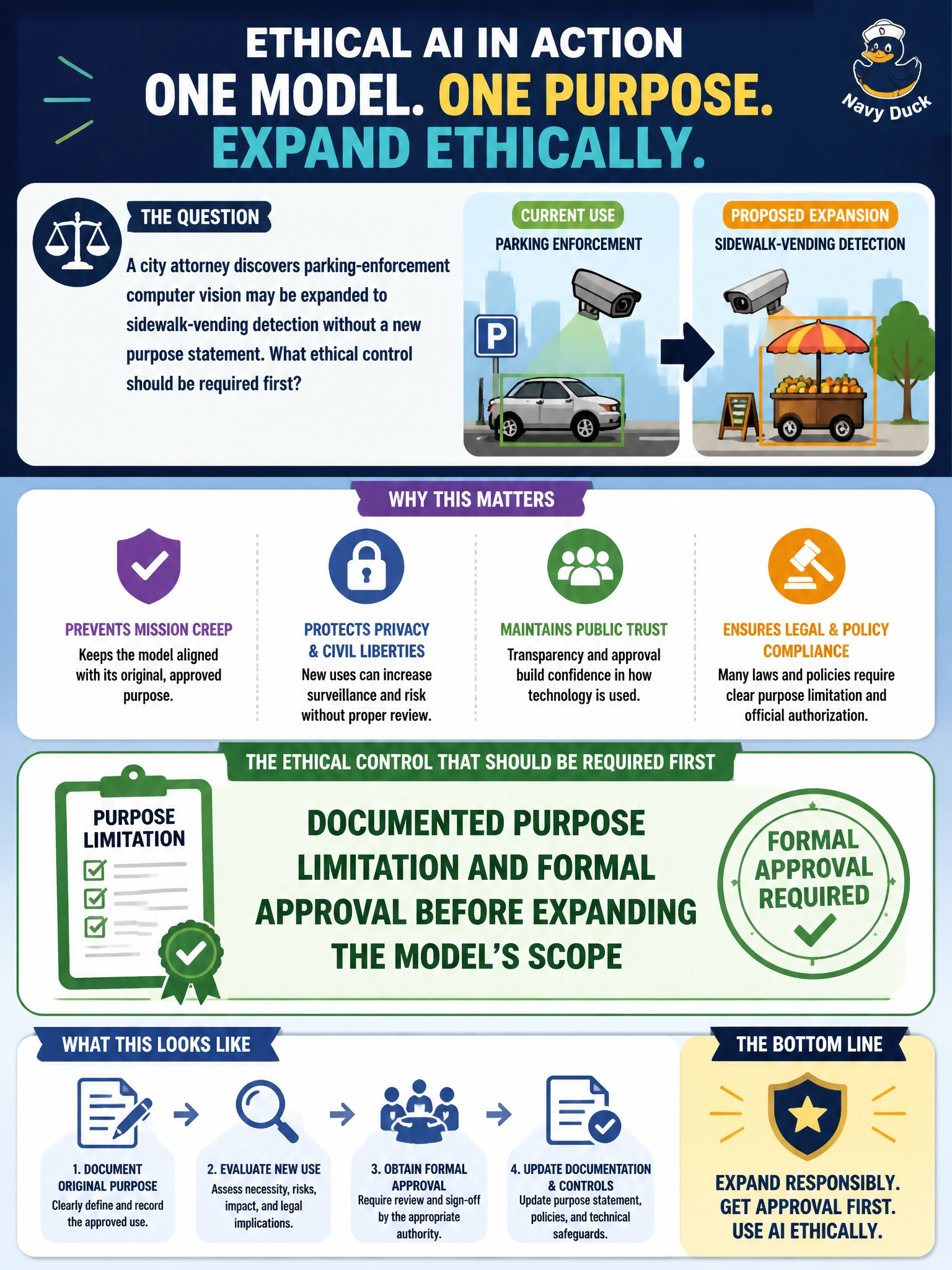
A city attorney discovers parking-enforcement computer vision may be expanded to sidewalk-vending detection without a new purpose statement. What ethical control should be required first?
Select an answer to reveal the explanation.
Short Explanation
Mission creep is how a parking camera quietly becomes a sidewalk-vending dragnet. Purpose limitation—write down the allowed use and get approval before expanding—keeps civic AI honest.
Full Explanation
The correct answer is documented purpose limitation and formal approval before expanding the model’s scope. When parking-enforcement computer vision may be expanded to sidewalk-vending detection without a new purpose statement, the ethical risk is function creep: a system authorized for one civic purpose quietly becomes another surveillance or enforcement tool. Purpose limitation requires stating the allowed use, legal basis, and limits in writing, then obtaining formal approval—often from counsel, privacy, or elected oversight—before expansion. That control protects residents from unauthorized secondary uses and keeps the city attorney’s advice actionable.
Deleting all parking data and abandoning enforcement entirely fails by concept because it overcorrects; the ethical fix is scoped authorization, not necessarily ending legitimate parking enforcement. Doubling the fine schedule before documenting any purpose fails because penalty severity does not create lawful purpose and may worsen equity harms. Hiding the expansion from council and the public fails because concealment violates transparency and democratic oversight expected for surveillance-adjacent municipal systems.
Exam caveat: purpose limitation and scope change approval are classic CRAGE privacy/ethics controls when stems hint at secondary use. Operational check: freeze the expansion, draft a purpose statement and DPIA-style review, obtain documented approval, update notices and retention rules, then only retrain or redeploy within the approved scope.