
Emergency management is building an alert-prioritization model. How should ethics review be integrated into a responsible AI development lifecycle?
Select an answer to reveal the explanation.
Short Explanation
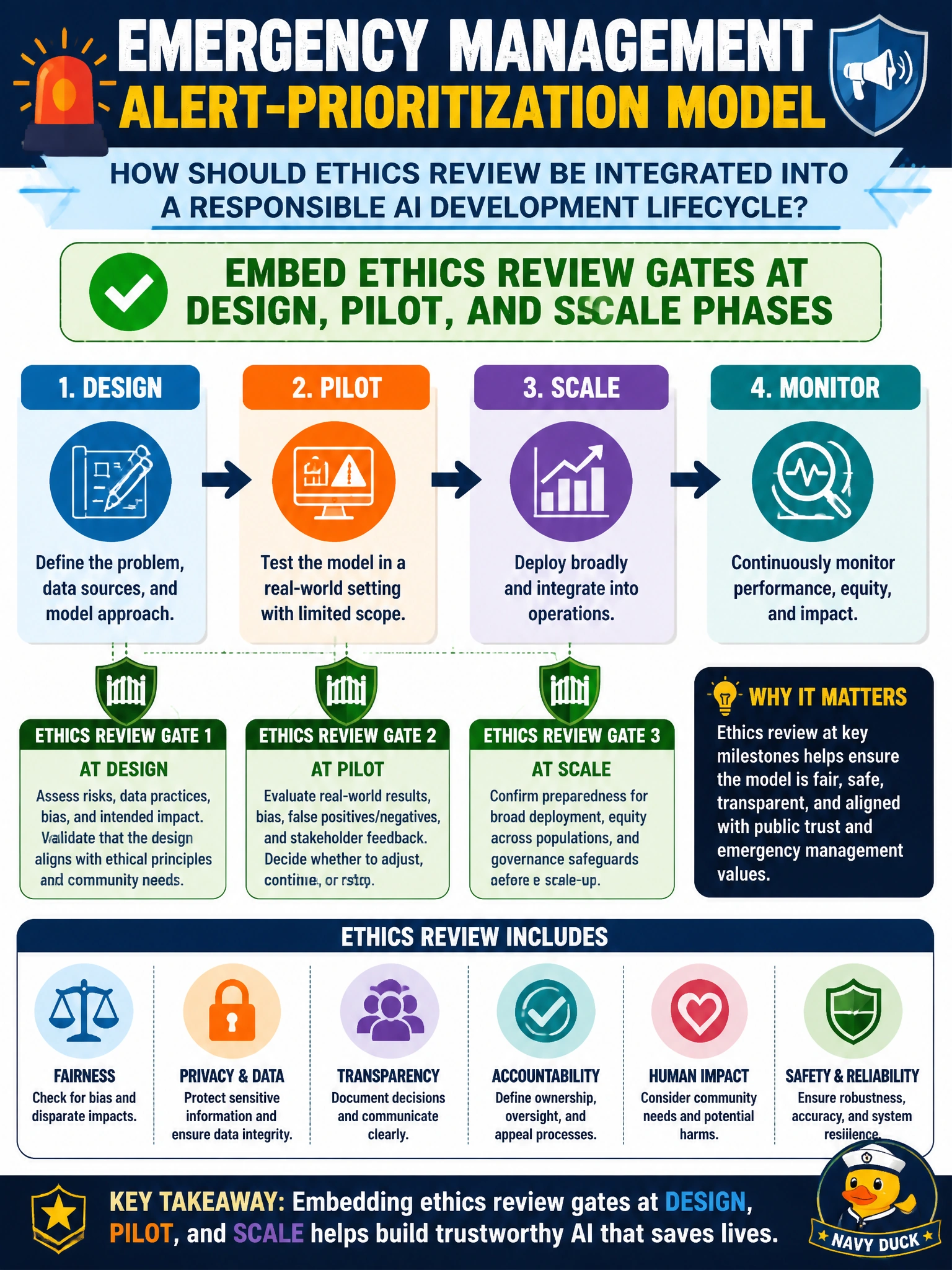
You’ll protect people and build trust by making ethics review part of the work from the start. Review gates at design, pilot, and scale help keep emergency alerts from becoming a surprise ethics fire drill.
Full Explanation
Embedding ethics review gates at design, pilot, and scale is the responsible approach for an emergency-management alert-prioritization model. Mistimed, misranked, or biased alerts can have life-safety and equity consequences across communities, so ethics should not be a single end-of-project checkbox. A design gate can surface concerns about purpose, data, and stakeholders early; a pilot gate can test real-world performance and disparate impact before broader use; and a scale gate can reconfirm controls, monitoring, and rollback before citywide reliance. Waiting until a major public scandal is reactive: preventable harm may already have occurred. Skipping ethics until the model is citywide and irreversible leaves little ability to unwind operational dependence in a crisis system. An optional ethics briefing after launch, once the model is fully deployed, does not constrain design choices or release decisions. Exam caveat: lifecycle questions call for continuous, gated review, not one-time ethics theater. Practical check: put mandatory ethics criteria into the project plan for design, pilot, and scale, require documented sign-off before promotion between phases, and repeat the review after material model or data changes.