
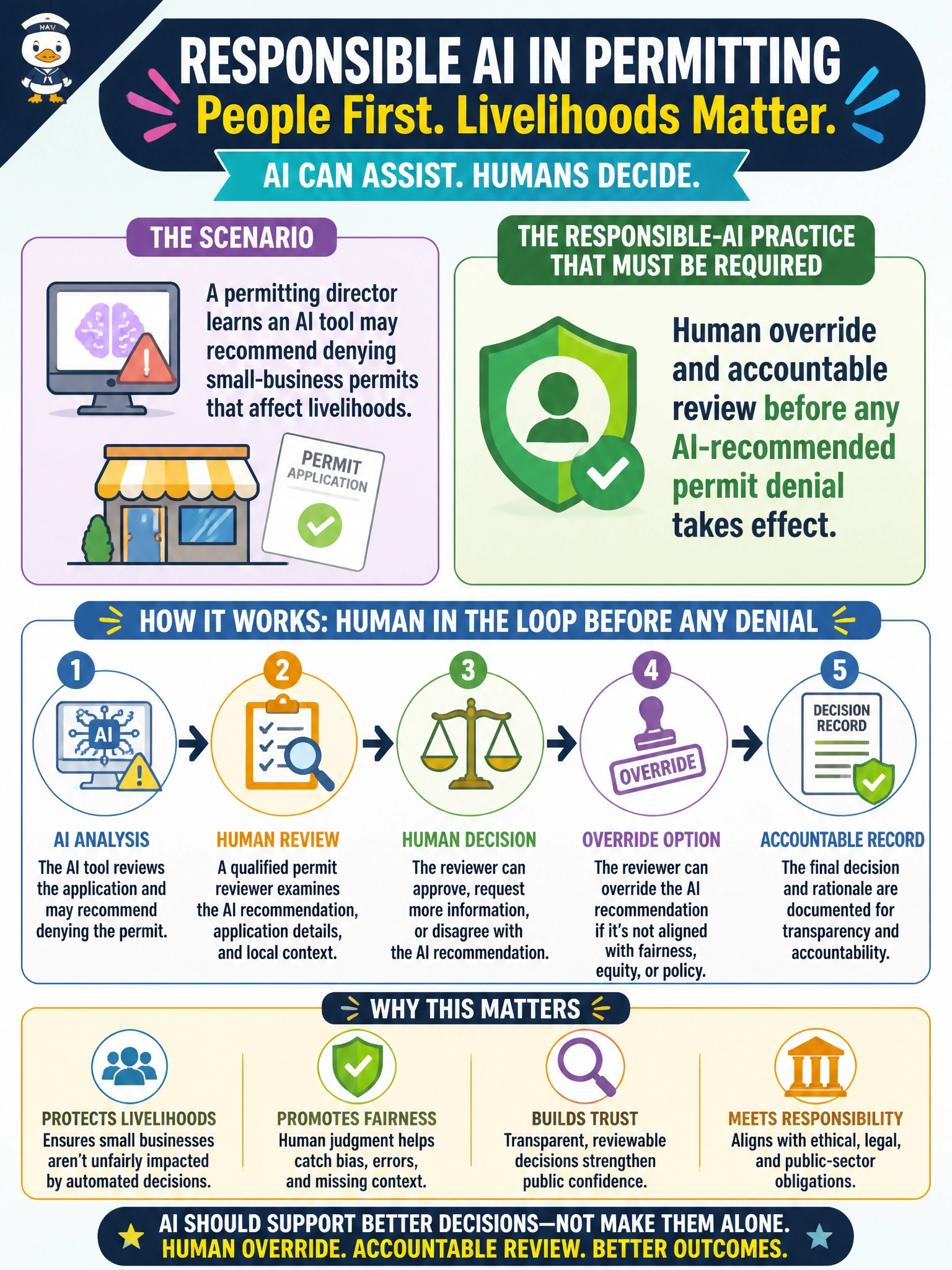
A permitting director learns an AI tool may recommend denying small-business permits that affect livelihoods. What responsible-AI usage practice should be required?
Select an answer to reveal the explanation.
Short Explanation
When a denial can cost someone their livelihood, treating the model like an infallible stamp is a bad plan. Responsible use keeps a human with authority in the loop—and on the hook—before the denial sticks.
Full Explanation
The correct answer is requiring human override and accountable review before any AI-recommended permit denial takes effect. When a permitting director learns a model may recommend denying small-business permits that affect livelihoods, the impact is high-stakes and often irreversible in the short term. Responsible AI usage therefore keeps a qualified human with authority in the decision path: the model may advise, but a named official must review evidence, document rationale, and own the denial before it becomes binding. That practice preserves due process expectations and municipal accountability.
Automatic denial with no clerk involvement fails by concept because maximizing throughput cannot justify removing human judgment from livelihood-affecting decisions; efficiency is not a substitute for due care. Publishing model weights on social media instead of reviewing outcomes fails because transparency theater about artifacts does not protect applicants from erroneous denials and may create other security or IP problems. Hiding the AI role so applicants never know a model was involved fails because concealment undermines notice, contestability, and public trust—core civic obligations when automated systems influence administrative outcomes.
Exam caveat: look for “human in the loop / on the loop” language when stems mention denials, eligibility, or enforcement. Operational check: configure the permitting workflow so AI denial recommendations cannot finalize without an authenticated reviewer, retain review notes with the case file, and publish that AI assists but does not unilaterally deny permits.