
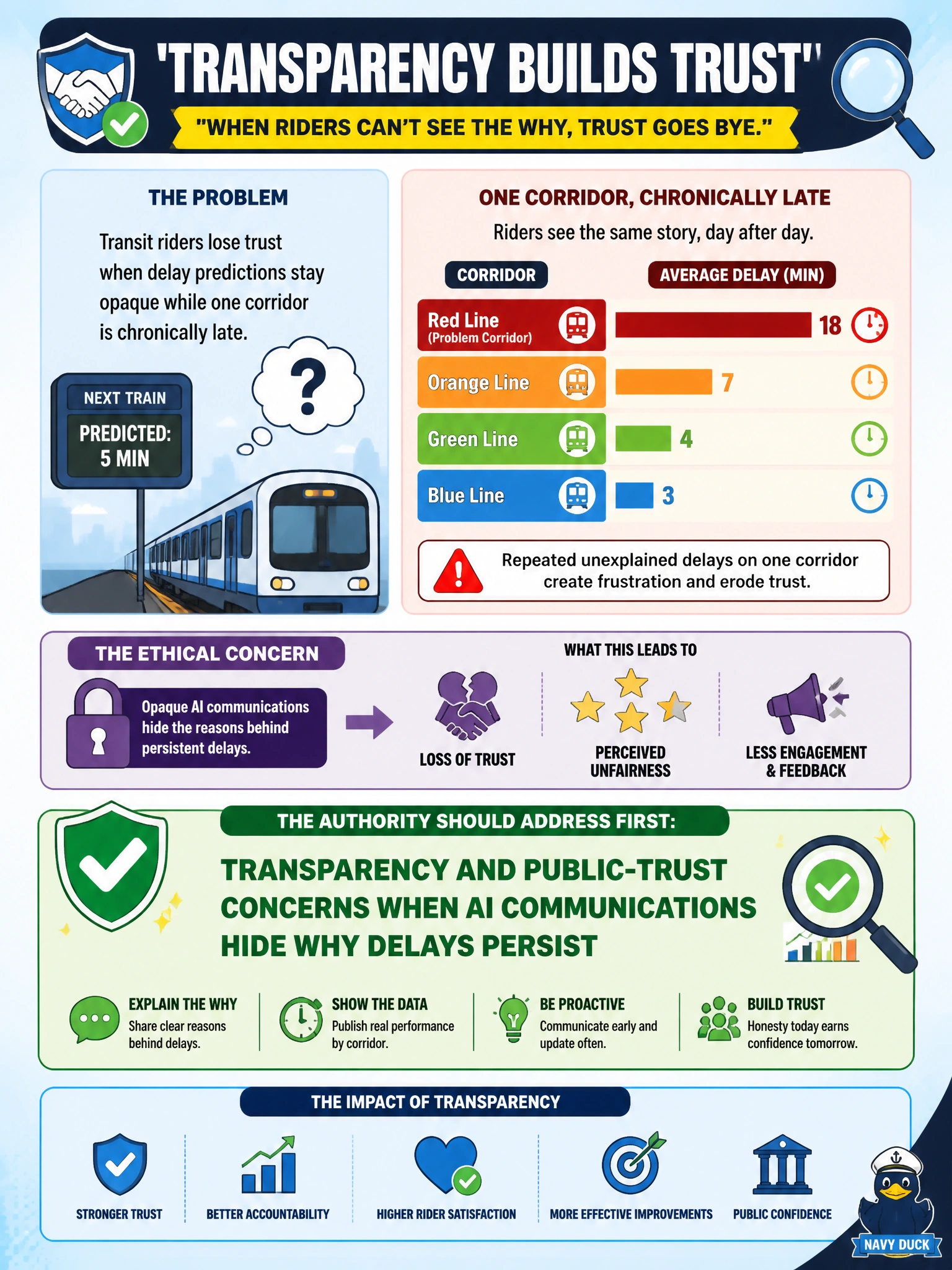
Transit riders lose trust when delay predictions stay opaque while one corridor is chronically late. Which ethical concern should the authority address first?
Select an answer to reveal the explanation.
Short Explanation
When the app keeps saying “delay” with no plain reason and the same corridor is always late, riders smell secrecy. Transparency is the trust grease for civic transit AI—explain the story or watch confidence drain.
Full Explanation
When transit riders lose trust because delay predictions stay opaque while one corridor is chronically late, the authority should address transparency and public-trust concerns when AI communications hide why delays persist. Explainability to the public is part of ethical civic AI operations, not a marketing extra.
Why the other options fail by concept: Saying rider trust is unrelated to how delay predictions are explained ignores observed legitimacy effects of opaque systems. Claiming opacity is required so competitors cannot copy municipal schedules confuses competitive secrecy with withholding operational causes from riders. Asserting that publishing any performance data always violates rider privacy automatically overstates privacy limits and blocks legitimate service transparency.
Exam caveat: Transparency is not dumping raw model weights; it is plain-language reasons, corridor-level performance reporting, and honest uncertainty. Privacy can still protect individual rider trajectories while publishing aggregate delay causes.
Operational check: Add rider-facing reason codes or plain explanations to delay predictions where feasible, publish corridor performance dashboards with known causes (crewing, signals, incidents), and route chronic-late corridors into service-planning review—not only more opaque model tweaks. Measure trust via complaints and survey items tied to prediction honesty.