
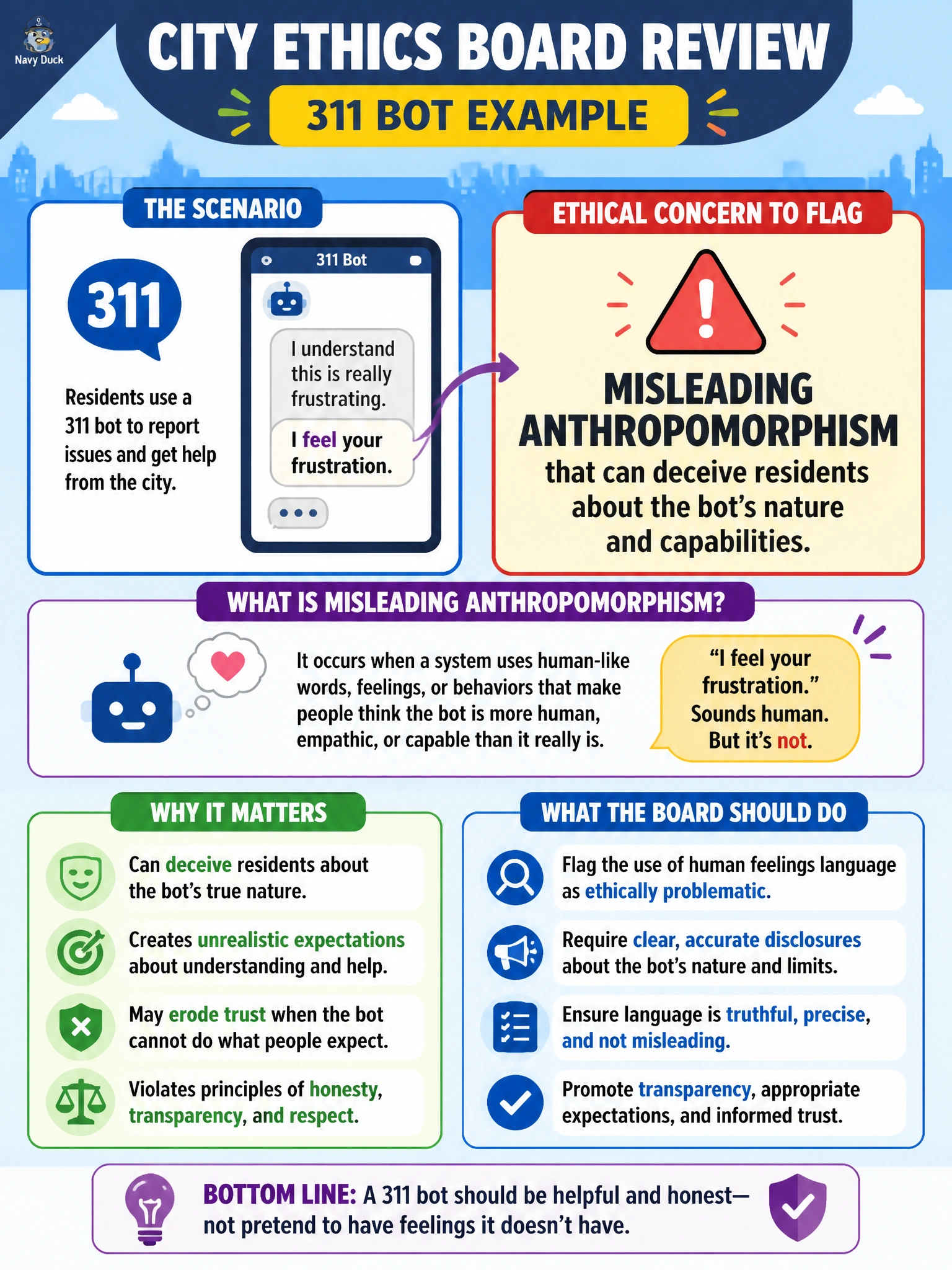
A city ethics board reviews a 311 bot that tells residents it “feels” their frustration. What ethical concern should the board flag?
Select an answer to reveal the explanation.
Short Explanation
A 311 bot that says it “feels” your frustration is putting on a costume. Residents deserve a clear “I’m software” vibe, not a fake heart. Ethics boards should call that anthropomorphism what it is: misleading.
Full Explanation
A city ethics board reviewing a 311 bot that tells residents it “feels” their frustration should flag misleading anthropomorphism that can deceive residents about the bot’s nature and capabilities. Simulated emotion implies empathy and understanding the system does not have and can inflate trust inappropriately.
Why the other options fail by concept: Claiming bots must claim emotions to comply with municipal accessibility rules invents a non-requirement; accessibility does not mandate fake feelings. Saying simulated feelings always increase legal enforceability of bot answers confuses UX tone with legal effect. Asserting anthropomorphism is impossible in software and needs no policy ignores a well-documented design pattern that policy routinely addresses.
Exam caveat: Friendly tone and clear disclosure can coexist—bots may be polite without claiming inner experience. High-stakes 311 contexts (safety, benefits) make deception risks sharper because residents may over-rely on “caring” agents.
Operational check: Revise bot copy to disclose that it is an automated system, ban first-person emotion claims (“I feel”), provide escalation to humans, and add an ethics/UX review checklist for anthropomorphic language before release of resident-facing conversational AI.