
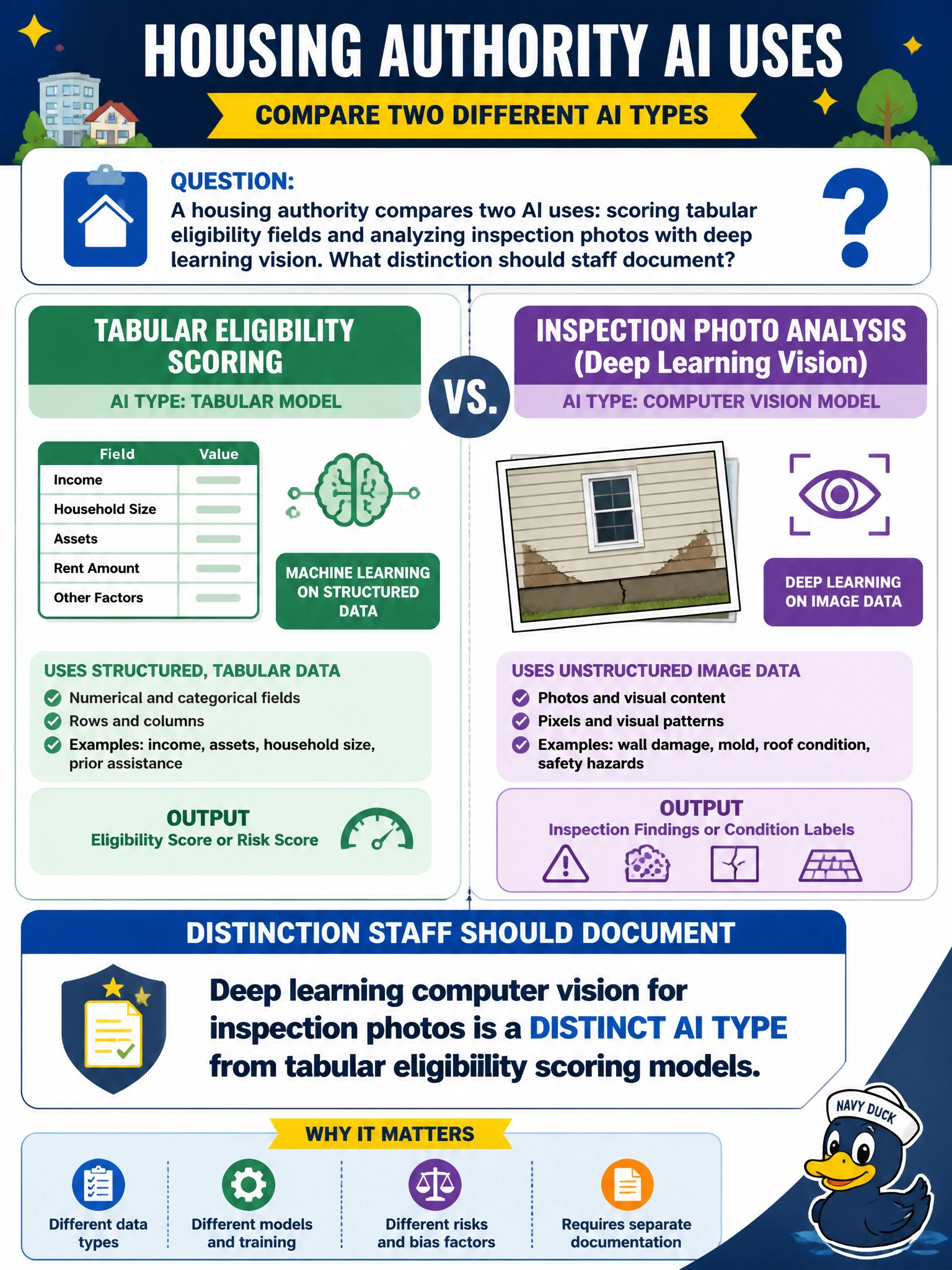
A housing authority compares two AI uses: scoring tabular eligibility fields and analyzing inspection photos with deep learning vision. What distinction should staff document?
Select an answer to reveal the explanation.
Short Explanation
Tabular eligibility scoring is like grading a spreadsheet checklist; deep learning vision is like teaching a system to spot cracked paint and missing railings in photos. Same housing mission, different AI animals—and inventories should say so.
Full Explanation
A housing authority comparing scoring of tabular eligibility fields with deep learning vision analysis of inspection photos should document that these are distinct AI types. Deep learning computer vision for inspection photos differs in data modality, model family, failure modes, and oversight needs from tabular eligibility scoring models. Same mission, different technical and governance profiles.
Why the other options fail by concept: Treating both uses as identical because any numeric score and any photo review share one model type erases modality and architecture differences that drive risk and testing. Claiming tabular eligibility scoring is never AI while photo analysis always is is definitionally wrong—tabular ML is widely AI. Asserting only vision models require governance while tabular scores fall outside AI inventories creates a dangerous exemption for high-stakes benefit decisions often driven by tabular models.
Exam caveat: “Tabular” does not mean low risk; eligibility scores can determine housing access. Vision models bring privacy (dwelling imagery), labeling quality, and environment-shift issues. Inventories and DPIAs should cover both, with controls matched to each type.
Operational check: Split inventory entries—one for the eligibility scorer (features, training population, fairness metrics, appeal path) and one for inspection vision (image sources, retention, accuracy by defect type, human override). Require separate model cards and monitoring dashboards rather than one blended “housing AI” record.