
A county assessor briefs the board on how AI used for deed summarization evolved over decades. Which narrative best reflects that evolution for civic governance literacy?
Select an answer to reveal the explanation.
Short Explanation
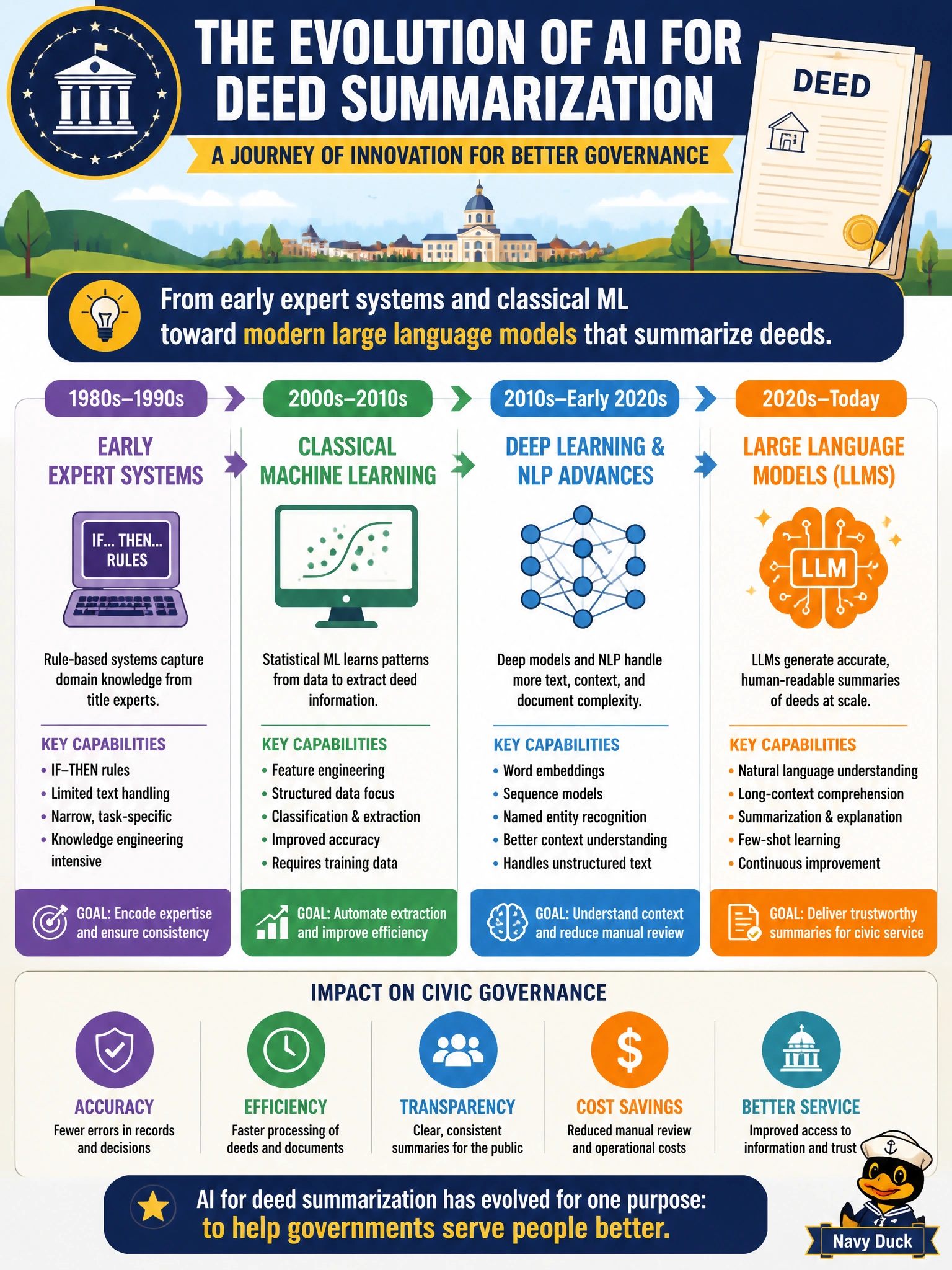
Picture AI’s career like going from a checklist expert system, to spreadsheet-style machine learning, to today’s big language models that can draft a deed summary. The assessor’s board does not need a sci-fi origin story—just that honest timeline of tools.
Full Explanation
When a county assessor briefs the board on how AI used for deed summarization evolved, the accurate civic narrative runs from early expert systems and classical machine learning toward modern large language models that summarize deeds. That arc—rules and knowledge bases, then statistical ML, then foundation/LLM approaches—matches how municipal records technology actually matured and gives boards a usable literacy frame for oversight.
Why the other options fail by concept: A story of cloud-only chatbots in the 1960s jumping directly to blockchain ledgers erases decades of methods and injects unrelated ledger technology as if it were the AI timeline. Claiming mandatory deep reinforcement learning for every assessor task then abandoning language models entirely is ahistorical and operationally false. Narrating overnight 1980s clerk replacement and AI that requires no training data today promotes myths that undermine procurement and risk conversations.
Exam caveat: Evolution is not a strict replacement of everything that came before; expert rules and classical ML still appear in assessor workflows alongside LLMs. Boards should ask which generation of technique a proposed deed tool uses, what data it needs, and what failure modes apply—not assume “AI” always means the newest chatbot.
Operational check: In the briefing packet, timeline the office’s own tools (expert checklists → classical models → LLM summarization pilots), map each to data needs and human review, and require vendors to state where their deed product sits on that continuum with training/evaluation evidence—not slogans about “next-gen AI.”