
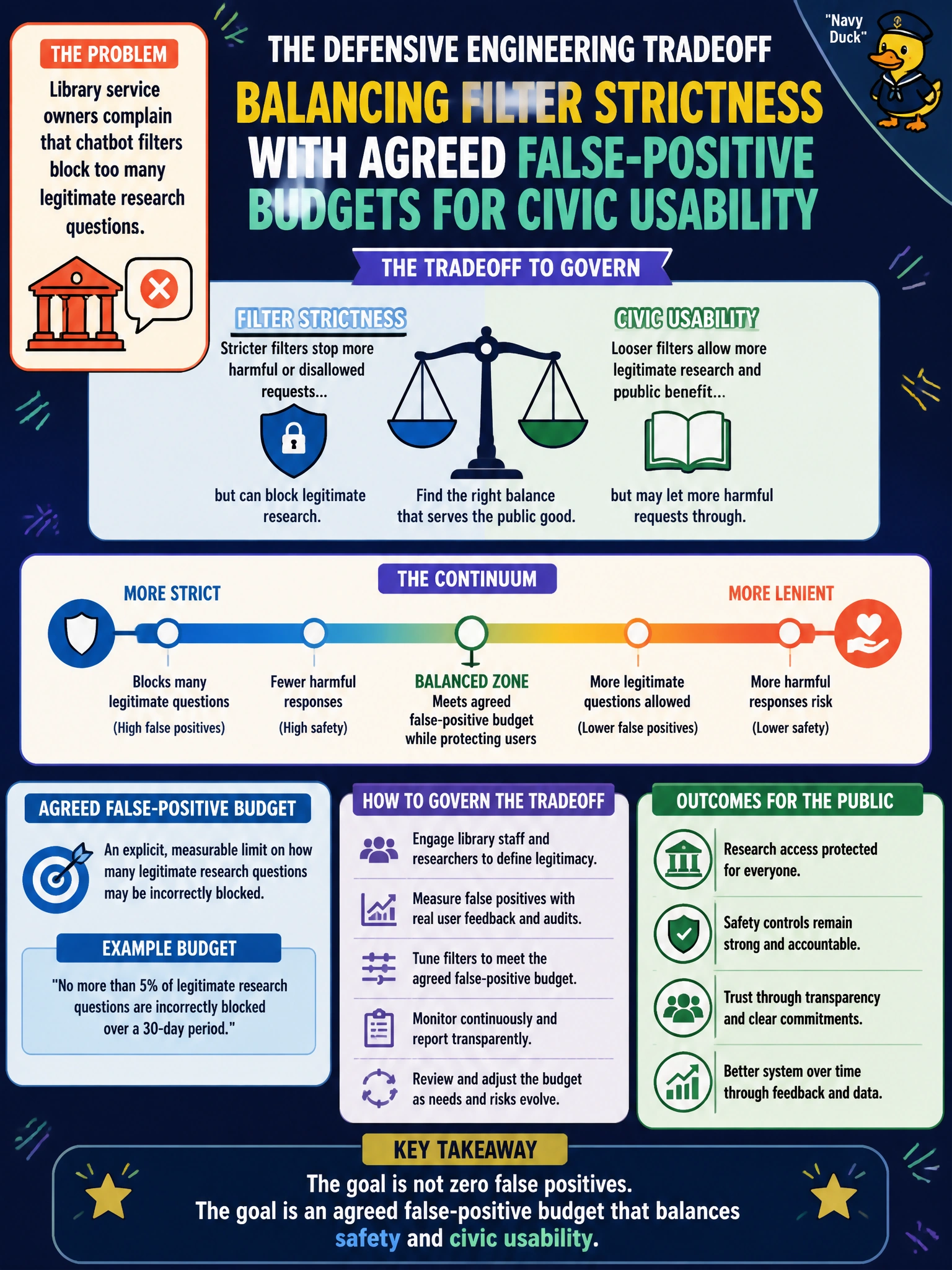
Library service owners complain that chatbot filters block too many legitimate research questions. What defensive engineering tradeoff must be governed?
Select an answer to reveal the explanation.
Short Explanation
Filters that block half the research desk aren’t “secure”—they’re broken UX. Agree a false-positive budget with service owners. Soft rugs don’t tune filters.
Full Explanation
Library service owners complaining that chatbot filters block too many legitimate research questions highlight a defensive engineering tradeoff that must be governed: balancing filter strictness with agreed false-positive budgets for civic usability. Over-strict filters look 'secure' on paper but destroy research assistance, drive shadow IT, and eventually get disabled—increasing real risk. Governance should set explicit false-positive budgets and review forums with service owners so security and library stakeholders jointly tune allow/deny behavior, exception paths, and monitoring rather than unilaterally maximizing block rates. That tradeoff management is part of sustainable civic AI defense: controls that residents and librarians cannot use will not survive. Softer study-room rugs, pastel catalog-terminal skins, and foil-edged bookmark stacks fail conceptually: library décor does not set false-positive budgets or tune security filters. Amenities are not the usability–security tradeoff. Exam caveat: answers that only say 'make filters stricter' ignore the stem’s complaint about blocking legitimate research; look for governed balance with false-positive budgets. Operational check: define an agreed false-positive rate for the library chatbot with service owners, sample blocked queries weekly, adjust filters or add supervised overrides, and document decisions in the AI risk forum.