
County IR responds to a suspected AI abuse case on a municipal assistant. What evidence set is specifically important?
Select an answer to reveal the explanation.
Short Explanation
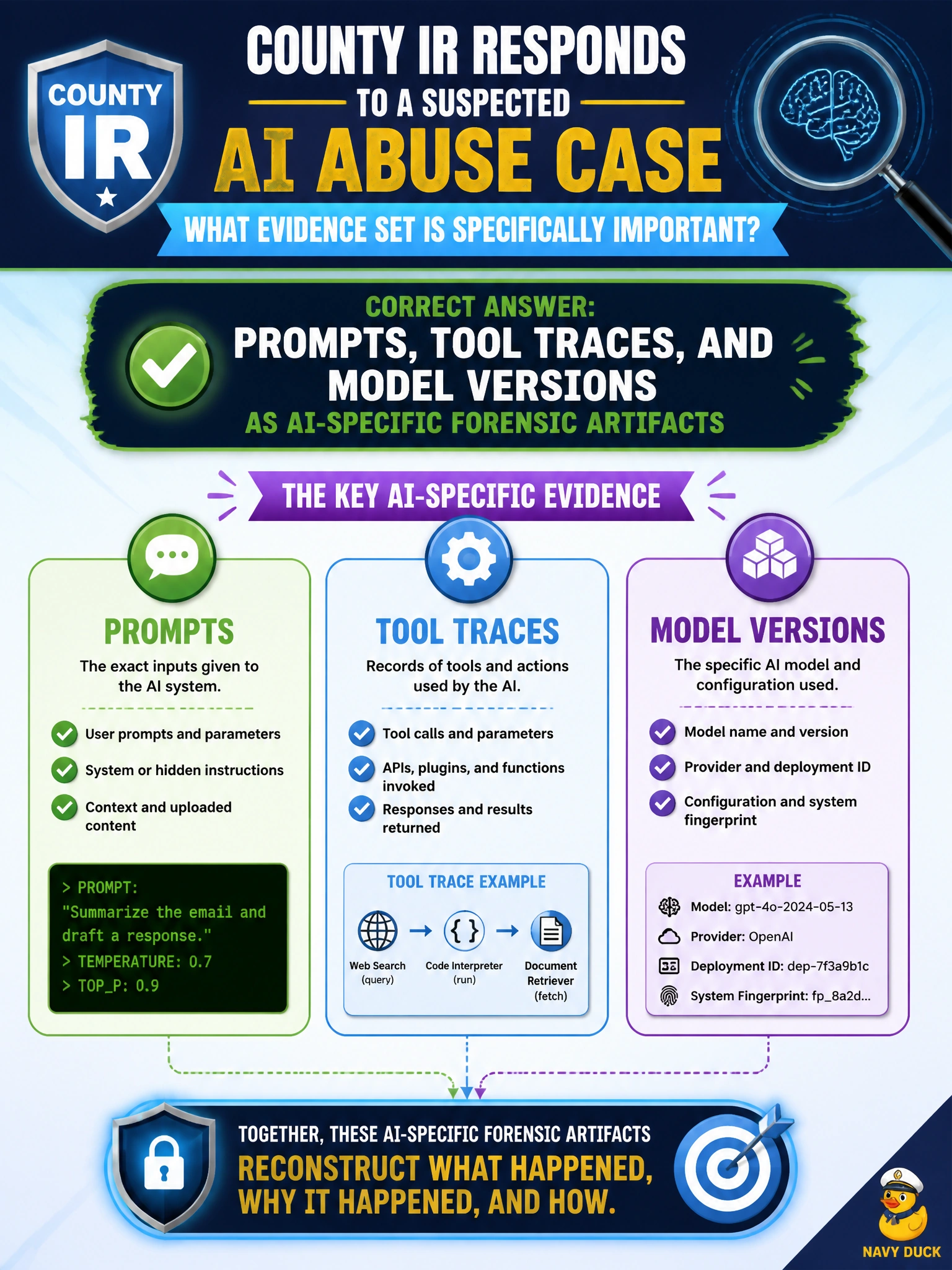
AI forensics isn’t just disk images—grab prompts, tool traces, and which model version was live. Massage chairs don’t preserve evidence.
Full Explanation
When county IR responds to a suspected AI abuse case on a municipal assistant, the specifically important evidence set is prompts, tool traces, and model versions as AI-specific forensic artifacts—alongside traditional logs. Attribution and remediation depend on what was asked, what tools executed, what the model returned, and which model/prompt/config version was live; disk images alone often miss the conversational and tool-plane trail that defines AI abuse. Preserving those artifacts quickly (with privacy handling) enables reconstruction of injection paths, unauthorized tool use, and whether a recent prompt or model change introduced the weakness. Municipal IR playbooks that omit AI artifacts systematically under-investigate assistant abuse and weaken after-action learning. Massage-mode IR war-room chairs, scented whiteboard markers, and holographic incident stickers fail by concept: war-room amenities do not collect or preserve prompts, tool traces, or model versions. Comfort items are not AI forensics. Exam caveat: classic host forensics may still be necessary, but the stem asks what is specifically important for AI abuse—prompt/tool/model artifacts. Operational check: update the IR checklist to snapshot prompt/output logs, tool-call traces, gateway request IDs, and model/config version hashes at first response, store them under retention policy, and verify a drill where investigators can replay the abuse path from those artifacts.