
A transit authority needs a purple-team AI security report that executives can act on. What should the report emphasize?
Select an answer to reveal the explanation.
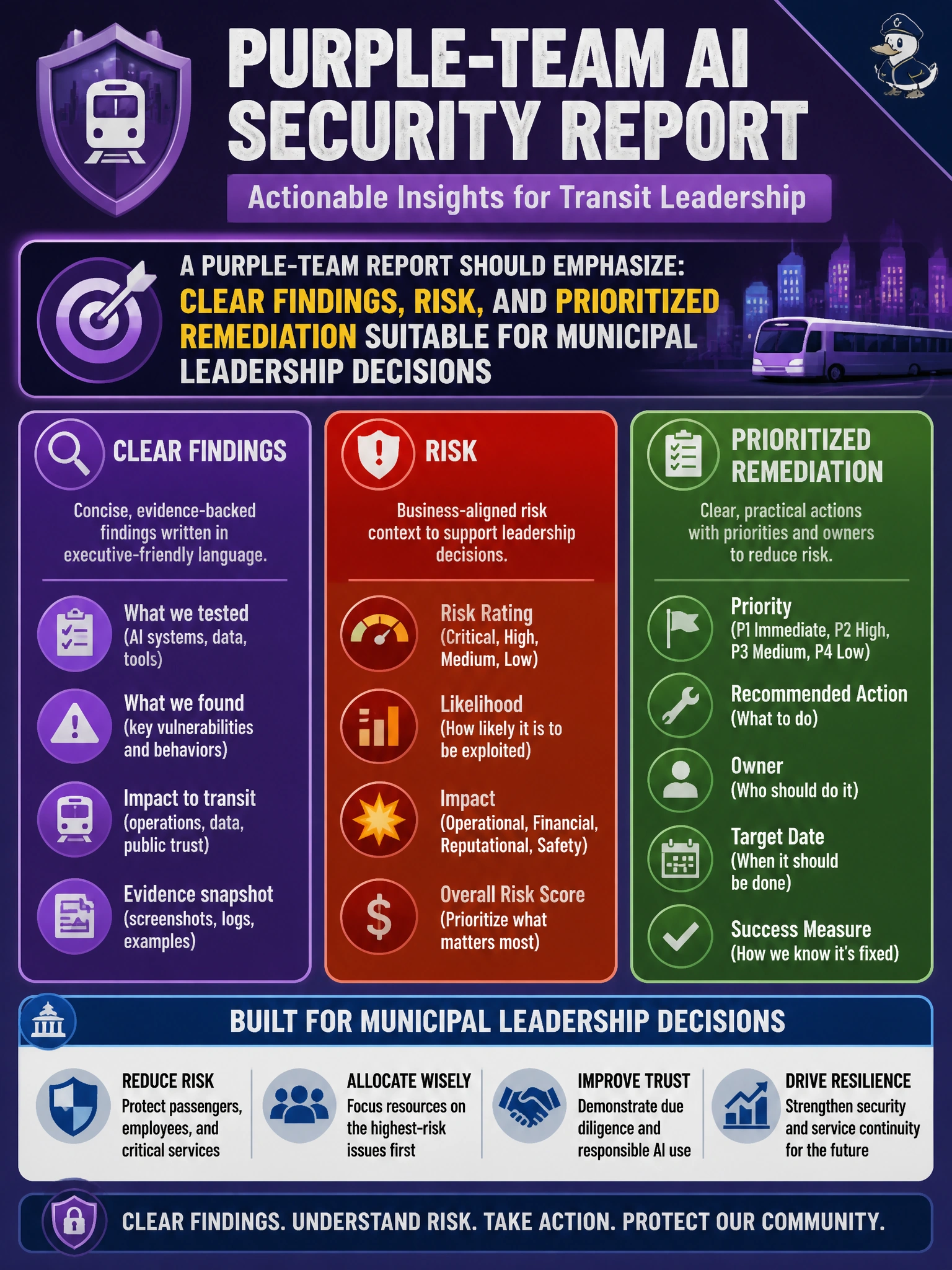
Short Explanation
Leaders need the bruise map and the fix list. A dense dashboard of model metrics and validation charts just buries you in data you can't act on.
Full Explanation
A purple-team AI security report that executives can act on should emphasize clear findings, risk, and prioritized remediation suitable for municipal leadership decisions. Transit executives need business and safety risk, affected services, likelihood and impact framing, owners, and sequenced fixes—not only model evaluation metrics and validation results, or granular compliance evidence that stalls decision-making.
Mapping adversary techniques to detection coverage is a legitimate operational step, but it happens inside security teams and says nothing about what the resulting report should emphasize for executives. Including model evaluation metrics and validation results in the executive summary buries decision-makers in performance data they don't need to approve remediation. Organizing granular control testing evidence for compliance audit preparation optimizes for what's interesting to auditors, not for what transit executives need to prioritize. The report that serves leadership is the one built around clear findings, risk framing, and a prioritized remediation path they can actually act on.
Exam caveat: executive summaries must remain accurate; simplifying risk language is not license to hide severity. Technical appendices can retain detail for engineers while leadership pages stay actionable and decision-ready.
Operational check: structure transit AI purple-team reports with finding, risk to riders and operations, priority, owner, and due date; brief leadership with a remediation backlog and schedule follow-up verification after fixes land.