
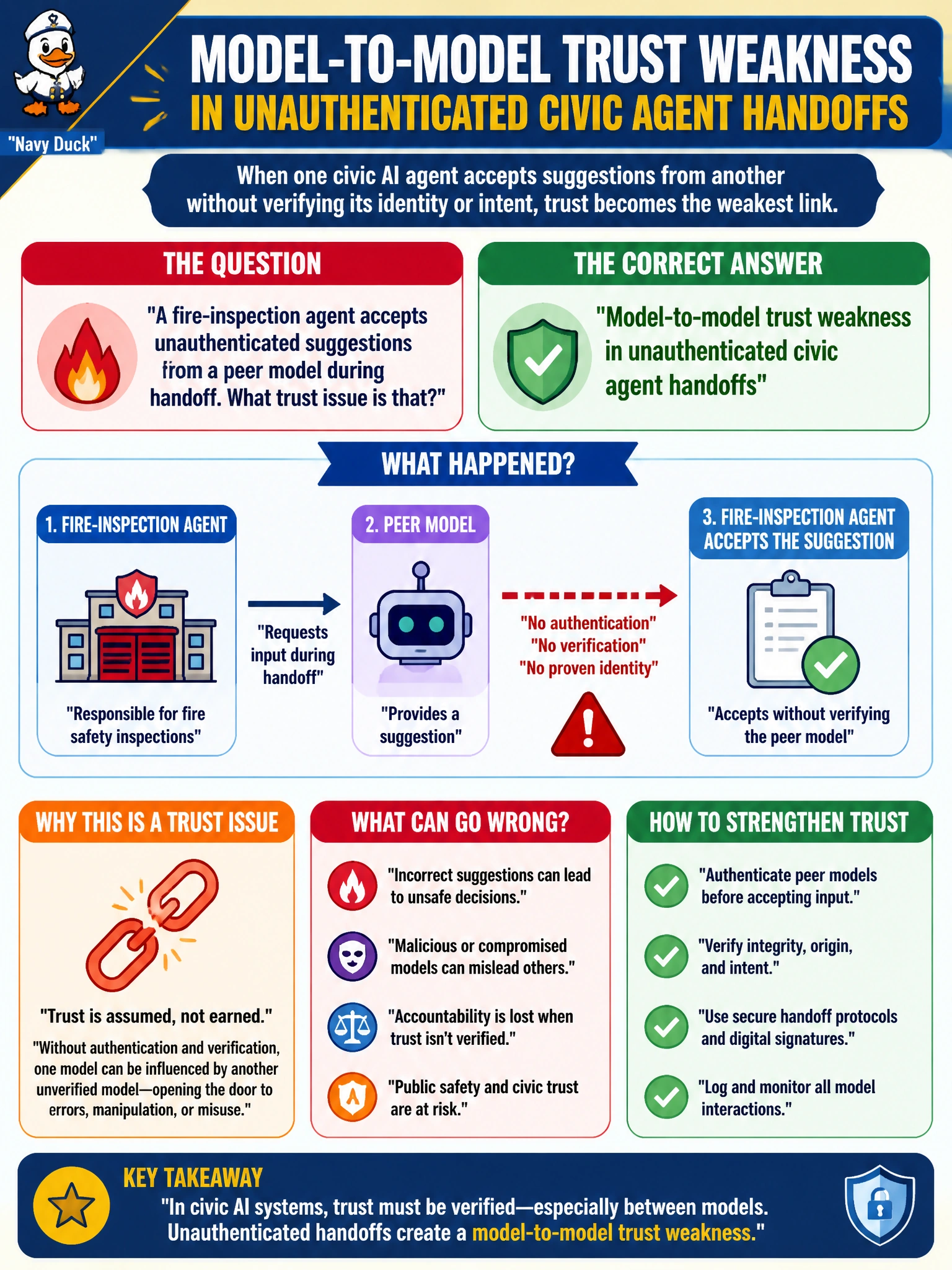
A fire-inspection agent accepts unauthenticated suggestions from a peer model during handoff. What trust issue is that?
Select an answer to reveal the explanation.
Short Explanation
Peer models whispering without ID checks is a trust weakness—anyone in the handoff chain could be a stranger. Authenticate model-to-model, not stale template versioning in inspection report generation workflow.
Full Explanation
A fire-inspection agent that accepts unauthenticated suggestions from a peer model during handoff exhibits a model-to-model trust weakness in unauthenticated civic agent handoffs. Peer suggestions can alter findings, severity, remediation deadlines, or next steps; without authenticating the source model or broker and validating payload integrity, an attacker or confused deputy can inject inspection outcomes. Civic agent designs should authenticate and authorize model-to-model channels the same way they would service-to-service APIs, not treat peer-generated text as inherently trusted because it arrived from another model. Stale template versioning in inspection report generation workflow, misplaced trust calibration in prior inspection approval rate trends, or degraded confidence scoring from peer response latency variation does not secure handoff trust. Exam distractors emphasize station housekeeping; the correct issue is unauthenticated model-to-model trust. Caveat: even authenticated peers need schema validation and policy checks so a compromised high-trust peer cannot silently downgrade life-safety findings or clear hazards without human review. Operational check: in an authorized exercise, inject an unauthenticated peer suggestion during handoff and confirm the inspection agent rejects it, alerts operators, and leaves the official inspection record unchanged.