
Finance wants a value narrative for the AI portfolio. What should that narrative primarily do?
Select an answer to reveal the explanation.
Short Explanation
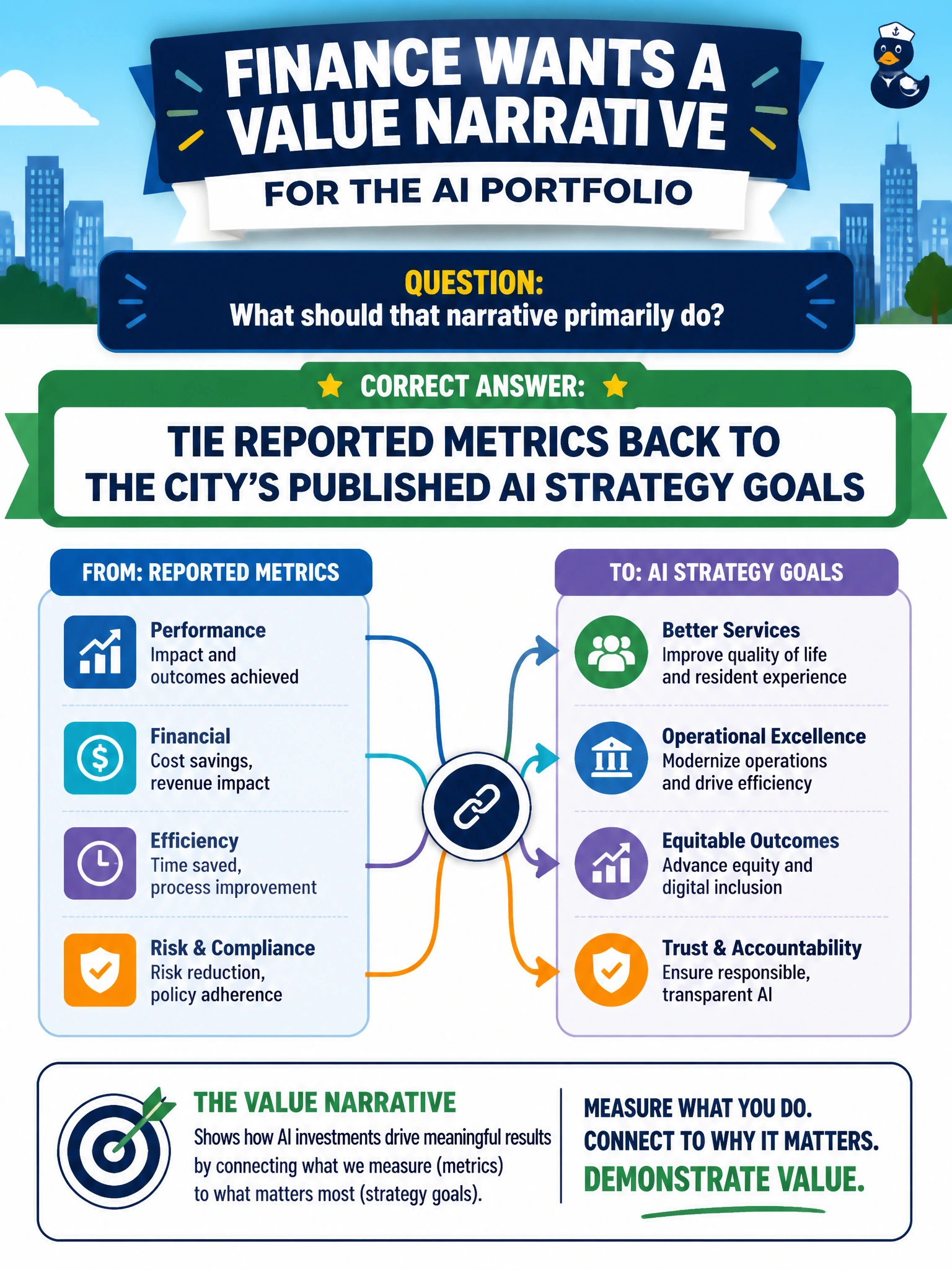
Don’t wander off with shiny side stats. Hook every metric back to the published AI strategy goals—like checking the map before you brag about the miles driven.
Full Explanation
A finance-facing value narrative for the city's AI portfolio should primarily tie reported metrics back to the city's published AI strategy goals. That linkage shows whether spend and outcomes advance adopted civic priorities—service access, equity, risk reduction, workforce capacity—rather than drifting into ad-hoc storytelling. Strategy-anchored narratives also make multi-year budget asks auditable against commitments council already endorsed. Listing every model hyperparameter change from the last sprint fails because engineering churn is not portfolio value and overwhelms finance stakeholders. Highlighting only the most flattering vanity metrics fails because selective bright spots mislead capital and operating decisions and undermine trust when auditors compare claims to full dashboards. Replacing the published AI strategy with ad-hoc quarterly themes fails because moving goalposts destroy comparability and invite politicized metric shopping. Exam caveat: distractors often celebrate "transparency via more detail" or "agility via new themes"; the sustainment concept is strategic traceability of value claims. Operational check: map each reported KPI to a numbered goal in the published municipal AI strategy, drop metrics that do not map, and have finance and the AI program office co-sign the narrative before it enters budget books.