
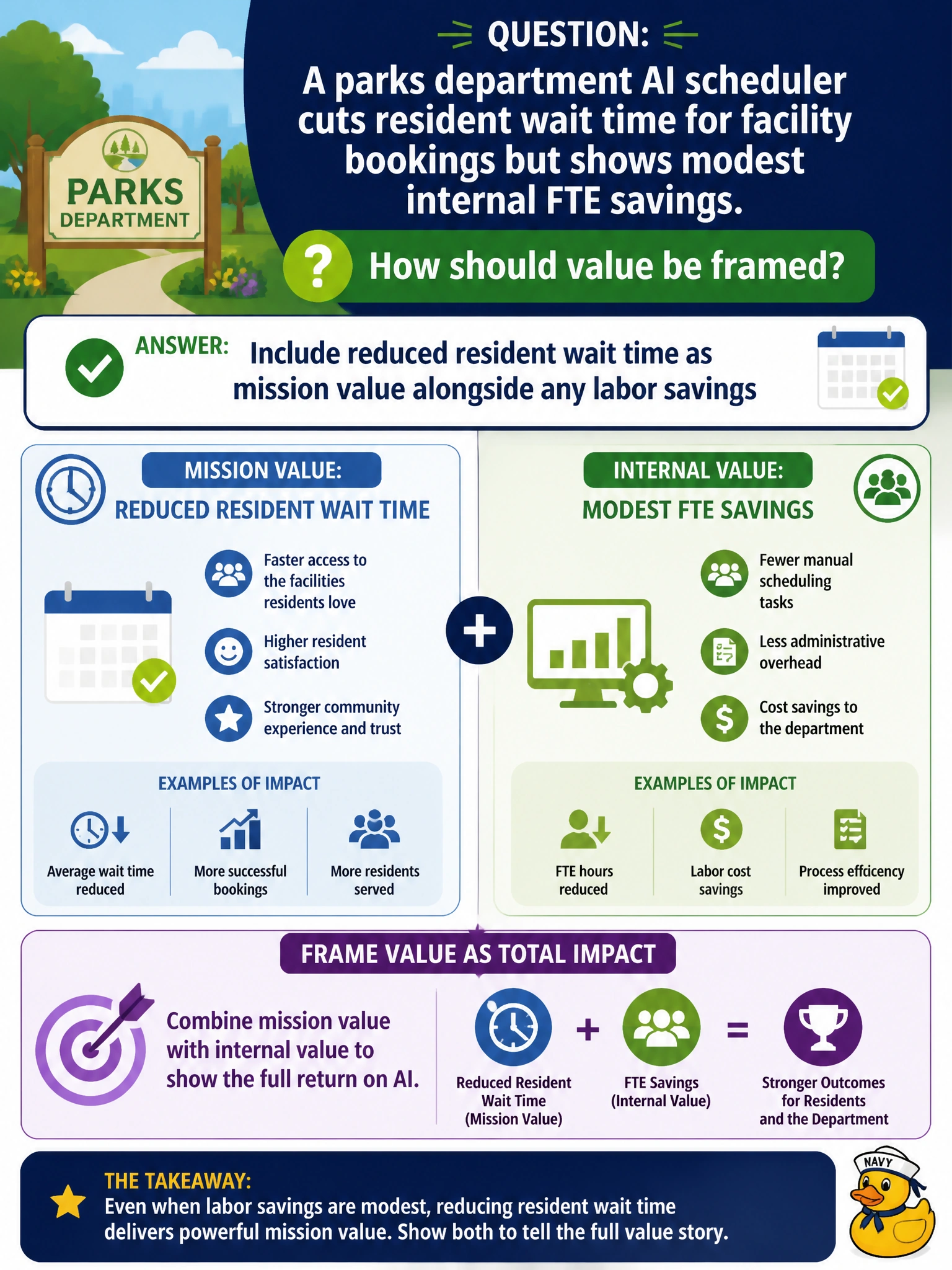
A parks department AI scheduler cuts resident wait time for facility bookings but shows modest internal FTE savings. How should value be framed?
Select an answer to reveal the explanation.
Short Explanation
Cities don’t exist to shrink headcount charts—they exist to serve people. Shorter booking waits are real mission value even when FTE savings look modest.
Full Explanation
Civic AI value measurement should include resident and mission outcomes such as reduced wait time for facility bookings, not only internal labor savings. A parks scheduler that cuts resident wait time but shows modest FTE savings still delivers public-service impact that belongs in value framing alongside any labor effects. Narrow FTE-only framing understates why municipalities exist—to serve people—and can undervalue citizen-experience gains that matter to council and communities. Claiming only internal FTE savings count and resident wait time is irrelevant rejects mission value. Hiding wait-time gains because they complicate the finance spreadsheet subordinates public outcomes to spreadsheet convenience. Claiming value solely from the number of AI models deployed confuses activity and architecture count with realized benefit for residents. Exam caveat: items contrast internal efficiency with resident mission metrics; include both where relevant for municipal AI. Operational check: instrument booking wait times and satisfaction, report them beside FTE or overtime effects, avoid model-count vanity, and present dual value narratives to finance and council so service improvements are not discarded for lacking large headcount cuts.